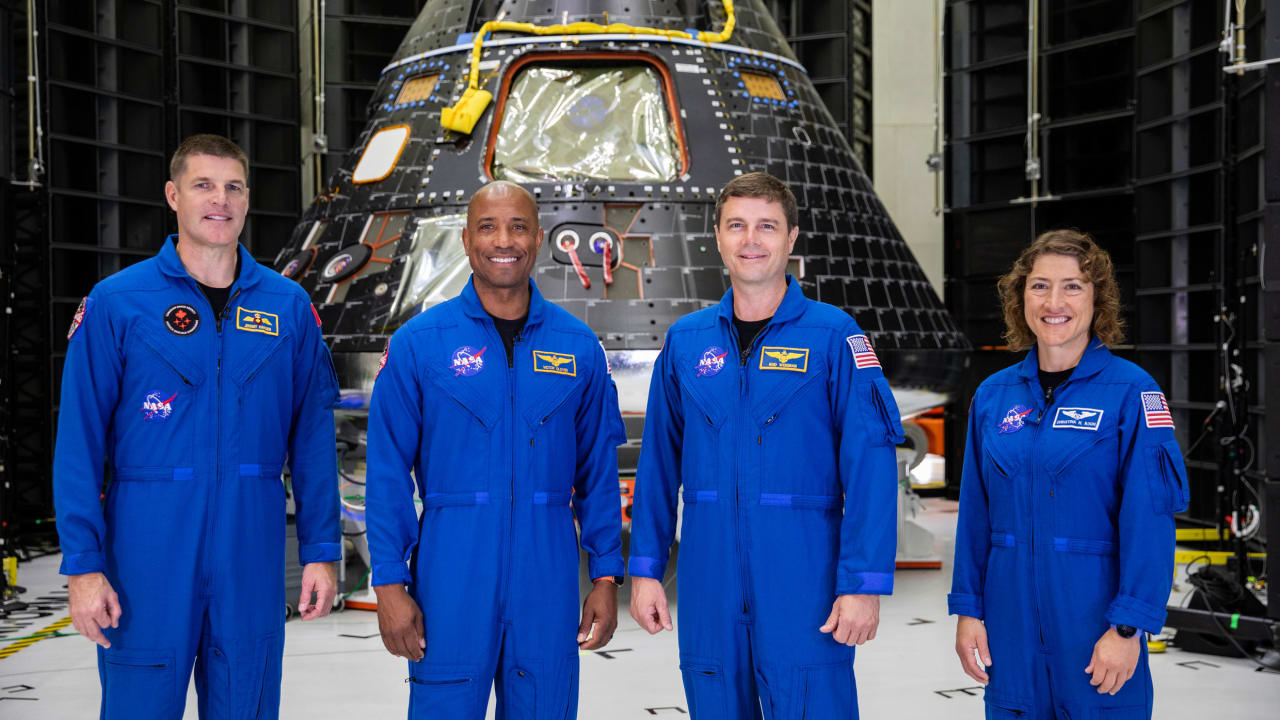
NASA just launched the Artemis II crew into the history books. While you're reading this, four astronauts are strapped into a capsule screaming toward the lunar far side. It’s the first time humans have left Earth's orbit since 1972. But if you think this is just a nostalgic victory lap for the United States, you’re missing the actual story.
This isn't about planting another flag or taking high-def selfies. It's about who gets to control the lunar south pole. For the first time in fifty years, NASA isn't just racing against its own budget or public apathy. It’s racing against a Chinese space program that's hitting its stride with terrifying precision.
The South Pole land grab
The Moon is mostly a wasteland, but the south pole is the "beachfront property" everyone wants. We’ve known for a while that shadowed craters there hold water ice. Water means oxygen. It means hydrogen for rocket fuel. Basically, it’s the gas station for the rest of the solar system.
China isn't hiding its intent. While NASA battles through the delays that pushed Artemis II into this year, Beijing is quietly stacking wins. Their Chang’e-6 mission already snatched samples from the far side. Now, their Chang’e-7 probe is prepping to scout the south pole for the exact same resources NASA is targeting.
It’s not just about science anymore. It’s about presence. If China sets up their International Lunar Research Station (ILRS) in the prime spots first, international law gets murky. The Artemis Accords—signed by over 60 countries—try to set some ground rules, but China hasn't signed them. They're building their own club with Russia and a growing list of partners.
Why NASA is looking over its shoulder
Honestly, NASA is nervous because China doesn't have to deal with the "political whiplash" that kills American space projects. Every four to eight years, a new U.S. administration threatens to pivot goals or cut funding. China’s CNSA operates on twenty-year roadmaps that don't change just because there’s a new face in the front office.
Right now, the timeline is uncomfortably tight:
- NASA’s Plan: Land humans by 2028 with Artemis IV.
- China’s Plan: Land humans by 2030.
Two years is a blink in space time. If SpaceX’s Starship—which NASA needs for the actual landing—hits more technical snags, that 2028 date will slip. Meanwhile, China just tested the core stage of its Long March-10 rocket. They’re also flight-testing the Mengzhou "Dream Ship" spacecraft this year. They aren't just talking; they’re building hardware.
The private sector wildcard
The one thing NASA has that China doesn't is a chaotic, hyper-competitive private sector. Companies like SpaceX and Blue Origin are doing things for a fraction of the cost of traditional government contracts.
But this reliance is a double-edged sword. If Elon Musk gets distracted or Jeff Bezos’s New Glenn rocket stays on the pad too long, NASA’s lunar dreams stall. China’s state-run model is slower but incredibly steady. It’s the classic tortoise and the hare, except the tortoise has nuclear-powered lunar base plans.
Real stakes beyond the science
You might wonder why we’re spending billions on moon dirt when things are messy here on Earth. It’s because the "Cislunar" economy is becoming a real thing. We're talking about satellite refueling, lunar mining, and even orbital manufacturing.
If China establishes the dominant "operating system" for the Moon—their own GPS-like navigation satellites and communication relays—every other country might have to play by their rules to operate there. That’s why NASA is pushing so hard to get Artemis II around the Moon right now. They need to prove the hardware works before the window of opportunity slams shut.
How to track the race
Stop watching for big speeches and start watching the launch manifests. The real indicators of who's winning aren't found in press releases.
- Watch the Starship orbital tests. If SpaceX can’t master orbital refueling by the end of this year, NASA’s 2028 landing is toast.
- Follow the Chang’e-7 mission. If China successfully lands this probe at the south pole and finds accessible ice, they'll have the "high ground" literally and figuratively.
- Check the "Artemis Accords" member list. Every time a new country signs on, it’s a diplomatic win for the U.S. block.
The Moon isn't just a nightlight anymore. It’s the eighth continent, and the first permanent residents are going to be decided in the next thirty-six months. Keep your eyes on the south pole.
Download a satellite tracker app to see when the International Space Station or the Tiangong station passes over you. It’s a good reminder that while we argue down here, the real moves are happening 250 miles up—and soon, 240,000 miles away.