Sentimentalism is the enemy of history.
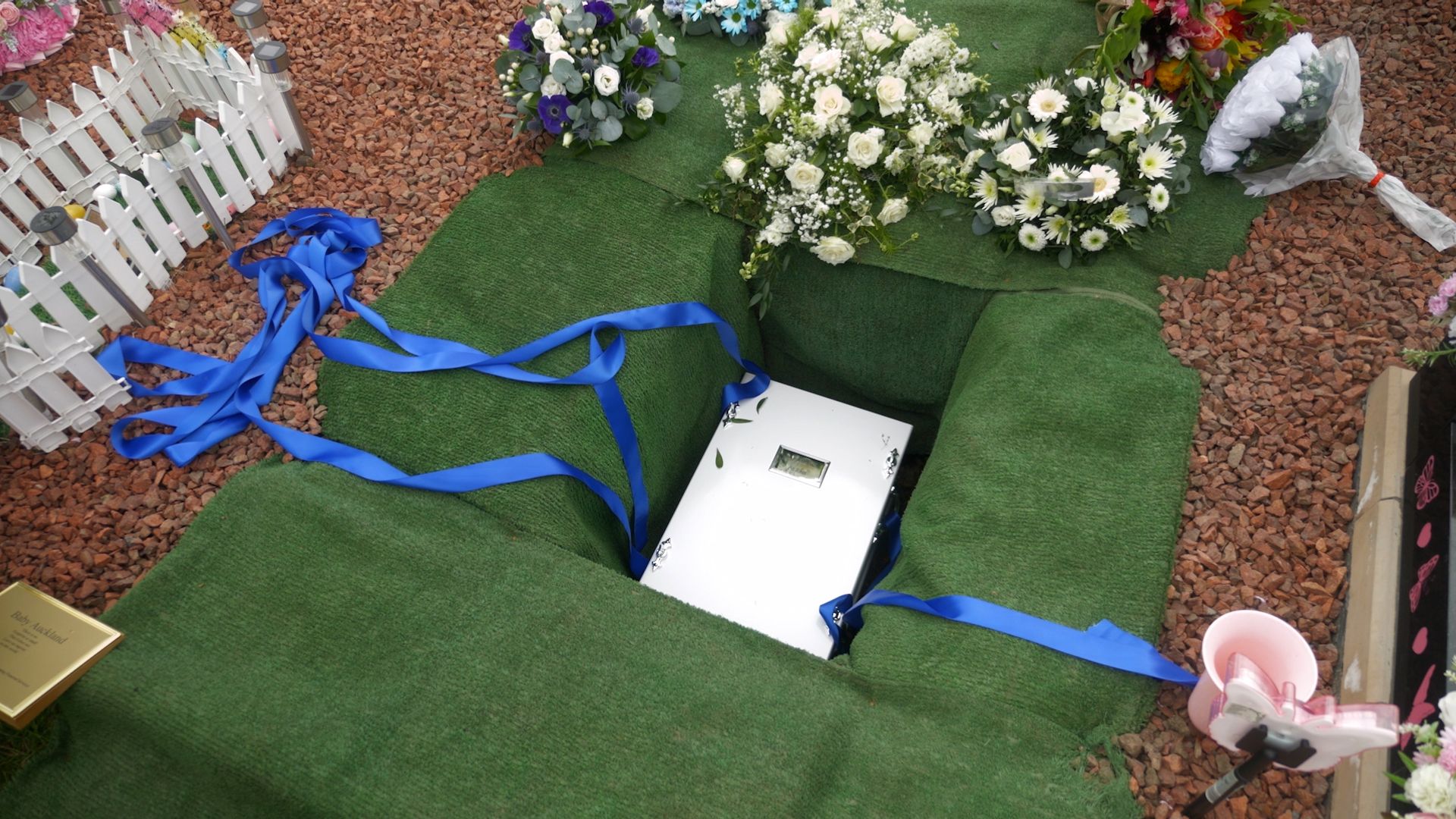
We see the headlines every time a construction crew unearths a forgotten grave or a floorboard reveals a century-old secret. The narrative is always the same: a "tragic" discovery, a "heartbreaking" mystery, and finally, the "dignity" of a modern burial. The recent case of a baby boy discovered after 100 years hidden in a building is the latest entry in this cycle of performative mourning.
Stop crying. You are mourning a ghost that doesn't need your pity, and in doing so, you are erasing the very reality of the world that produced him.
The standard media response is a mix of Victorian melodrama and modern therapeutic culture. We project our 21st-century sensibilities onto a skeletal remains, assuming that a quiet, unmarked resting place is an "indignity" that must be corrected by a priest, a mahogany box, and a press release. This isn't about the child. This is about our own discomfort with the raw, unpolished reality of human existence and the cold mechanics of time.
The Myth of the Proper Burial
We have been conditioned to believe that a burial in a consecrated, named plot is the only "human" way to handle the dead. This is a narrow, Western, and relatively modern obsession.
For the vast majority of human history, the dead were recycled. They were buried under floors, left in caves, or stacked in ossuaries to make room for the next generation. The idea that every individual requires a permanent, inviolable six-foot-by-two-foot piece of real estate is a logistical absurdity and a historical anomaly.
When we "rescue" a body from a crawlspace or a garden to put it in a modern cemetery, we aren't restoring dignity. We are performing an act of historical sanitization. That child wasn't "hidden" by accident; he was a product of a specific social pressure, a specific poverty, or a specific desperation that we now find too "problematic" to look at without the filter of a funeral service.
By reburying these remains, we move them from a site of genuine historical evidence to a site of generic sentimentality. We trade a window into the past for a headstone that will be forgotten in another fifty years.
The Ethics of Disturbance
Industry insiders in archaeology and forensics know the truth that the public hates to hear: the most respectful thing you can do for a body is often to leave it exactly where it was found, or to study it with clinical detachment.
The moment you move those remains to "give them a proper send-off," you destroy the context.
- Stratigraphy is lost. The exact layer of soil or the specific materials used in the concealment tell us more about the social status of the family than a DNA test ever will.
- The narrative is hijacked. We turn a complex social tragedy into a feel-good story about "closure." Closure for whom? The child? He’s been dead for a century. The family? They’re gone too. The only people receiving "closure" are the neighbors who don't want to think about the fact that they've been eating dinner ten feet away from a corpse for the last decade.
I have worked with researchers who have seen millions of dollars in potential data evaporated because a local council felt "weird" about keeping remains in a lab. They insist on a reinterment. They bury the data. They bury the truth of how that person lived, what they ate, and what killed them, all to satisfy a fleeting sense of communal guilt.
The Poverty of Pity
Let’s talk about the "tragedy."
The competitor's narrative frames this discovery as a horror. But in the late 19th and early 20th centuries, infant mortality was a brutal, everyday reality. In many urban centers, the $IMR$ (Infant Mortality Rate) was staggering.
$$IMR = \frac{deaths \ of \ children \ < 1 \ year}{1,000 \ live \ births}$$
In some industrial districts, this number exceeded 150 or even 200. Death wasn't a "shocking event"; it was a roommate. When a family hidden in the shadows of the Victorian social hierarchy couldn't afford a burial, or when a child was born out of wedlock in a society that would destroy the mother for it, the "hidden" grave was an act of survival.
It wasn't a lack of love. It was a lack of options.
By coming in 100 years later with our high-horse morality and "fixing" it, we are judging the past by a standard it couldn't afford. We are essentially saying, "How dare you be poor and desperate in 1910?" We use these discoveries to feel superior to our ancestors, patting ourselves on the back for our "compassion" while ignoring the fact that we still ignore the marginalized in our own streets today.
Scientific Value vs. Superstition
We need to stop treating human remains like they are haunted artifacts and start treating them like the ultimate historical documents.
A body found in a wall is a time capsule. It contains information about:
- Pathogens: We can track the evolution of diseases like tuberculosis or the 1918 flu by extracting DNA from these "forgotten" remains.
- Environmental Toxins: The bones record the lead, arsenic, and coal dust of the Industrial Revolution.
- Dietary Stress: Stable isotope analysis tells us exactly what the mother was eating and whether the child was malnourished.
When you rush to put that body back in the ground, you are burning a library. You are choosing superstition over knowledge. You are deciding that a religious or secular ritual—which the deceased might not have even subscribed to—is more important than the advancement of human understanding.
The Actionable Truth
If you find remains on your property or in your city, resist the urge to join the chorus of "Oh, how sad."
Demand that the remains stay in the hands of bio-archaeologists. Fight the push for immediate reburial. The "dignity" of the dead is a social construct we use to make ourselves feel better about our own mortality. True dignity lies in the truth.
If we want to honor the forgotten, we should learn everything we can about the world that forgot them. We should document the hardships that led to a child being placed in a wall. We should study the bones until they have nothing left to tell us.
Only then, when the data is harvested and the history is written, should we worry about where the calcium goes.
Stop looking for "closure" and start looking for facts. The past doesn't need your flowers; it needs your eyes open.
Leave the bones alone or put them in a museum where they can actually speak. A cemetery is just a place where history goes to be silenced for the second time.