The Saturday morning routine in most households with young children is a loud, chaotic symphony of spilled cereal, cartoons, and the relentless energy of a weekend finally unlocked. Michael Thompson expected exactly that when he walked into his seven-year-old son’s bedroom. Instead, he walked into a terrifying, silent anomaly.
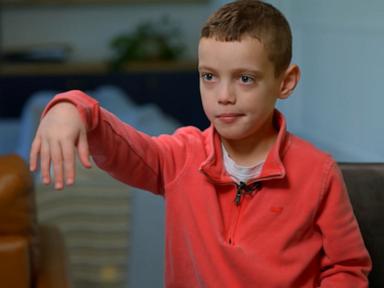
His son, Ethan, was sitting on the edge of the bed. He was trying to put on his shoes. But one side of his small body refused to cooperate.
When Michael spoke to him, Ethan looked up. The boy tried to smile, but the expression collapsed. The right side of his face remained heavy, melting downward like warm wax. When he tried to reply to his father’s question, the words didn't just stumble—they dissolved into an unrecognizable slurred whisper.
Panic is a cold weight in the chest. For most parents, the immediate assumption in a moment like that would be a strange virus, a severe migraine, or perhaps a bad fall from the bed the night before. Kids bump their heads. Kids get clumsy.
But Michael’s mind went somewhere else. Somewhere dark, precise, and accurate.
He didn't wait to see if Ethan would snap out of it. He didn't offer him a glass of water or tell him to lie down for an hour. He picked up his son, ran to the car, and drove toward the emergency room as if his life depended on it. Because Ethan's life did.
Ethan was having a stroke.
The Adult Illness Hiding in Pediatric Wards
We are conditioned to view strokes as a closing chapter of life. We associate them with grandfather clocks, silver hair, and the wearing down of blood vessels over seven or eight decades of existence. It is an illness of the old. Or so we are told by the collective, unexamined mythology of modern medicine.
The reality is far more unsettling.
Stroke is consistently one of the top ten causes of death in children. Let that sink in. It occurs in roughly one out of every four thousand live births, and remains a persistent threat throughout childhood. Yet, because of the overwhelming cultural narrative that strokes belong exclusively to the elderly, pediatric strokes are routinely misdiagnosed or caught too late.
When an older adult slurs their words, bystanders call 911 within seconds. When a child slurs their words, adults assume they are tired, throwing a tantrum, or suffering from a developmental delay.
The biological mechanism, however, remains brutally indifferent to age. A stroke occurs when the blood supply to part of the brain is interrupted or reduced, depriving brain tissue of oxygen and nutrients. Within minutes, brain cells begin to die. Think of the brain as a complex, sprawling metropolis. A stroke is a sudden, catastrophic blackout that hits the power grid. Every minute the power stays off, another neighborhood is lost to the dark forever.
In adults, this blackout is usually caused by years of plaque buildup, smoking, or high blood pressure. In children, the triggers are different, hiding in the shadows of their developing bodies. They can be triggered by undiagnosed congenital heart defects, blood clotting disorders, or even a seemingly minor physical trauma—like a neck injury from sports—that tears a delicate artery. Sometimes, a common childhood infection like chickenpox can cause inflammation in the brain’s blood vessels weeks after the spots have faded.
The danger isn't just the physical damage to the brain. It is the invisible clock ticking in the room.
The Currency of Microseconds
In the world of neurology, there is a brutal, foundational maxim: time is brain.
For every minute a stroke goes untreated, the brain loses an estimated 1.9 million neurons. Every hour without intervention ages the brain by roughly 3.6 years. When a child is on the table, those numbers feel less like statistics and more like an avalanche.
The gold standard for treating the most common type of stroke—an ischemic stroke, caused by a clot—is a medication called tissue plasminogen activator, or tPA. It is a chemical sledgehammer designed to break apart the clot and restore the flow of blood before the tissue dies permanently.
But there is a catch. A massive one.
The window to administer this medication safely is incredibly narrow, usually within three to four and a half hours from the very first onset of symptoms. If you miss that window, the risk of dangerous bleeding in the brain skyrockets, and the medication becomes a hazard rather than a savior.
This is where the tragedy of pediatric stroke truly lies. Studies show that the average time from symptom onset to diagnosis in children can drag on for over twenty hours. Parents wait to see if the child feels better. Pediatricians, rarely seeing strokes in their daily practice, test for migraines, epilepsy, or inner ear infections first.
By the time the word "stroke" is finally uttered in the radiology department, the window has slammed shut. The blackout in the metropolis has become permanent.
Michael Thompson, however, had a weapon that most parents don't possess. He had a memory.
Years earlier, his own uncle had suffered a stroke. Michael had watched the sudden, terrifying transformation of a strong man into someone who couldn't hold a fork or say his own name. He remembered the doctor in the intensive care unit explaining the warning signs, hammering home the acronym that everyone should know but few truly memorize.
He recognized the drooping face. He recognized the useless arm. He recognized the garbled speech.
Because he knew what to look for, he didn't doubt his own eyes. He didn't waste time rationalizing a catastrophe.
Decoding the Silent Signals
Recognizing a stroke in a child requires a strange kind of vigilance. It requires looking past the youth of the victim to see the ancient mechanics of the disease.
The medical community relies on the FAST acronym to help laypeople identify a stroke in progress. It is a simple tool, but when applied to a child, it requires a careful, observant eye.
- F is for Face Drooping: Ask the child to smile. Does one side of the face lag behind? Is their smile uneven or lopsided?
- A is for Arm Weakness: Ask the child to raise both arms in the air. Does one arm drift downward? Do they seem unable to grip an object with one hand?
- S is for Speech Difficulty: Is their speech slurred, thick, or strange? Can they repeat a simple sentence back to you, or do the words jumble together?
- T is for Time to Call 911: If a child shows even one of these symptoms, the time for observation is over. Emergency services must be contacted immediately.
In infants, the signs are even more elusive. A baby having a stroke might not show a facial droop; instead, they might experience seizures confined to one side of their body, or exhibit an extreme, unexplained lethargy. They might look entirely normal except for a sudden, persistent preference for using only one hand—an milestone that shouldn't actually develop until a child is much older.
It is a terrifying list for any parent to contemplate. No one wants to look at their child eating breakfast and watch for a neurological collapse. It feels like inviting disaster into the kitchen.
But ignoring the possibility doesn't grant immunity. It only grants the disease a head start.
The Long Road Back Across the Bridge
Ethan arrived at the hospital within forty-five minutes of his father noticing that first, heavy smile. Because of that speed, the medical team was able to intervene while the power grid in his brain was still salvageable.
They dissolved the clot. They stabilized his blood pressure. They saved his life.
But surviving a stroke is not the end of the story; it is simply the opening line of a new, grueling chapter. The brain of a seven-year-old possesses a magnificent, almost miraculous quality known as neuroplasticity. It is the organ's ability to reorganize itself, to forge new pathways around damaged areas, to let healthy neighborhoods take over the work of the ones that went dark.
Children heal in ways adults cannot. Their brains are still being written, which means they can rewrite the broken parts.
But that rewriting is not automatic. It is earned through hundreds of hours of physical therapy, occupational therapy, and speech therapy. It is earned through tears in a clinic room when a thumb refuses to touch a forefinger. It is earned when a child has to relearn how to hold a pencil, how to skip, how to say the word "apple" without stumbling over the consonants.
Six months after that terrifying Saturday morning, Ethan was back on a playground. If you watched him closely, you might notice a tiny, almost imperceptible lag in his right step when he ran fast. You might see him use his left hand to stabilize a juice box because his right hand still gets tired occasionally.
But he was running. He was laughing. He was talking.
His father often thinks about what would have happened if he had turned back to the television that morning. If he had told Ethan to just go back to sleep for a little while. If he had assumed, as almost anyone would, that seven-year-olds simply do not have strokes.
The difference between the boy running on the grass and a profoundly different reality was a matter of minutes, a father’s sharp eye, and the willingness to believe that the unthinkable could happen to the person he loved most.