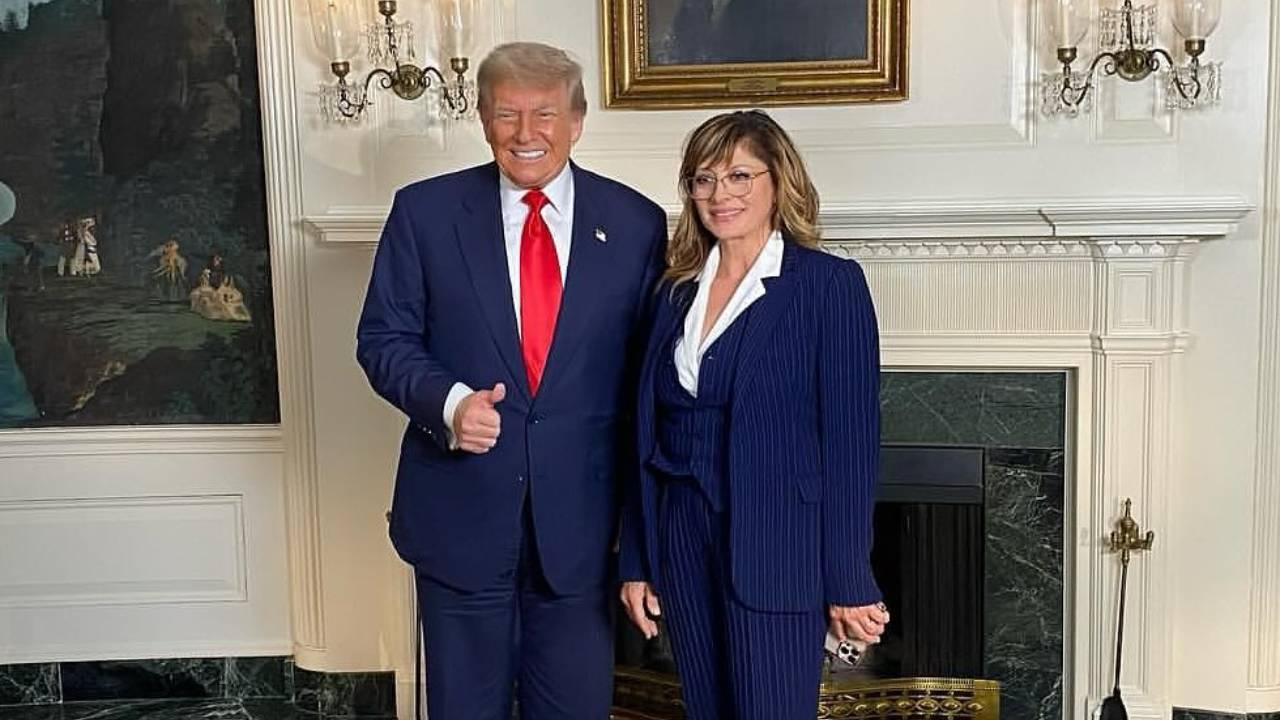
The red studio light usually hums a quiet, rhythmic warning. It tells the person sitting beneath its glow that millions are watching, waiting, hanging onto every inflection of a syllable. For years, Maria Bartiromo sat beneath that light, navigating the volatile currents of global finance and political theater. Then, the screen went dark.
Television is an intimate medium. It invites strangers into our living rooms while we drink morning coffee or unwind after a grueling shift. When a familiar face disappears from that glowing box, a strange vacuum forms in the household routine. Loyal viewers notice the empty chair before they notice the missing headline. They feel the absence of a voice that had become part of their daily rhythm.
Almost immediately, the shockwaves traveled far beyond the studio walls. Donald Trump took to his digital pulpit to address the sudden departure, bestowing a label that immediately set the internet ablaze. A true warrior. Those three words carry immense weight in modern political lexicon. They frame a career not merely as a job report, but as a battlefield deployment.
Consider what happens next in the ecosystem of modern broadcasting. When a high-profile anchor exits a major network like Fox News, the departure rarely stays contained within corporate memos or ratings reports. It becomes a cultural flashpoint. Millions of devoted fans found themselves staring at their televisions with a sharp sense of disbelief. The former president channeled that collective friction directly, declaring bluntly that his supporters would simply not be happy about the change.
Discontent spreads fast. In living rooms across the country, the sentiment curdled into frustration. People who tuned in specifically for that familiar perspective felt stripped of their daily anchor. Trust in media institutions is already a fragile commodity, stretched thin by endless partisan divides and corporate restructuring. Every time a prominent voice is muted or steps away, the audience feels a sudden jolt of alienation.
Trust is earned in drops and lost in buckets. When viewers tune in day after day, year after year, they form a parasocial bond with the person delivering the news. They rely on that anchor to articulate anxieties they might only feel vaguely. When that dynamic breaks, the reaction is intensely personal. It feels less like a corporate pivot and more like a betrayal of shared alignment.
The political gravity surrounding this specific exit cannot be overstated. Figures like Bartiromo do not merely report the news; they operate at the messy intersection where Wall Street capital meets populist fervor. To her base, she stood as an unyielding fixture against institutional skepticism. To her critics, she represented something entirely different. That polarization is precisely why her next moves—and the public reaction to them—matter so deeply.
Silence in a broadcast studio never lasts long. Someone else will sit in that chair. Another red light will hum in the quiet morning hours. But the audience has long memories. They remember who fought their corner, who spoke their language, and who vanished from the screen when the pressure mounted.
The broadcast has ended. The set has emptied. Yet out here in the quiet hum of the real world, the static lingers.


