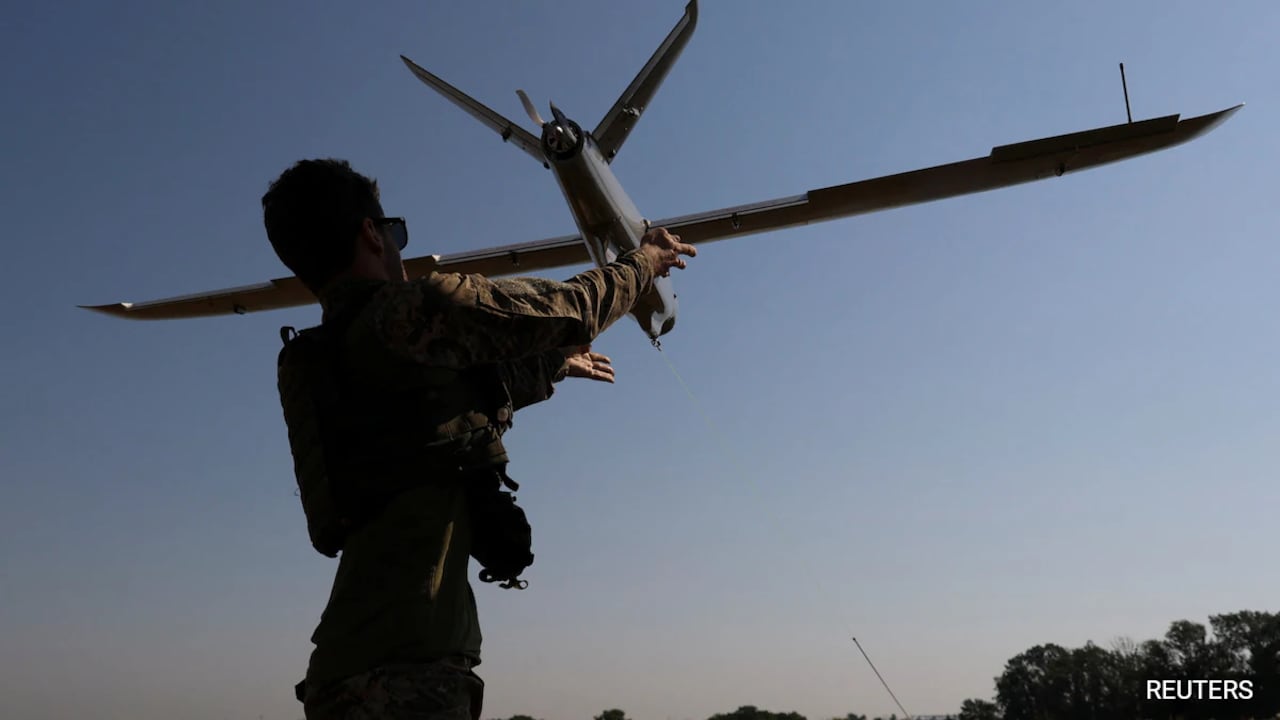
Mainstream media reporting on long-range drone strikes behaves like an easily startled child. When Ukrainian uncrewed aerial vehicles strike high-rises in Moscow, the immediate reaction is a predictable mix of moral hand-wringing over civilian anxiety and dismissive hand-waving about the operations being mere symbolic PR stunts. This narrative is fundamentally broken. It misinterprets the mechanics of modern attrition, miscalculates the economic math of modern air defense, and misunderstands how authoritarian regimes actually collapse.
The western press looks at a shattered window in Moscow City and asks whether the strike will make regular Russians turn against the Kremlin. That is the wrong question. It assumes a democratic feedback loop that does not exist in Russia. The real objective of these long-range operations has nothing to do with swaying public opinion through terror. It is about forcing an unsustainable allocation of strategic resources.
The Geometry of Impossible Air Defense
To understand why these strikes are working, you must understand the geometry of air defense. Mainstream defense analysts treat air defense as a shield. It is not a shield; it is a net with massive holes, and the physics of the problem favor the attacker.
Imagine a scenario where a military must protect a landmass as vast as the Russian Federation. Russia spans over 17 million square kilometers. Even if you isolate just the European portion of the country, the area requiring coverage is immense. A standard modern air defense radar, like those used in the S-400 Triumf system, has a maximum tracking engagement envelope, but its low-altitude capability is severely limited by the curvature of the earth and local terrain masking.
When a low-flying, carbon-fiber drone with a tiny radar cross-section moves at 120 miles per hour just above the tree line, a multi-million-dollar radar system cannot see it until it is practically on top of the battery.
To achieve total coverage against low-altitude threats across western Russia, the Kremlin would need to deploy thousands of point-defense systems like the Pantsir-S1. They do not have them. No military does. Therefore, the Russian Ministry of Defense faces a brutal, zero-sum choice:
- Pull Pantsir and Tor systems off the front lines in Donetsk and Zaporizhzhia, leaving their armored columns and supply depots exposed to Ukrainian frontline tactical drones and cruise missiles.
- Leave the capital, its ministries, and its elite suburbs entirely undefended, shattering the illusion of total domestic security.
Ukraine is utilizing cheap, mass-produced civilian-adjacent components to create a permanent strategic dilemma for Russian planners. Every Pantsir bolted to a roof in Moscow is a Pantsir that cannot protect a ammunition dump in Crimea. This is not a PR campaign. It is a spatial distortion field forced upon Russian military logistics.
The Asymmetric Cost Curve That Breaks Budgets
The financial math behind these operations is even more devastating than the spatial geometry. The media loves to report on the dramatic explosions, but the real victory is found in the spreadsheets of the respective ministries of finance.
A Ukrainian-manufactured long-range strike drone, such as the Bober (Beaver) or the Trembita, costs anywhere from $20,000 to $100,000 to produce. They are built using off-the-shelf internal combustion engines, fiberglass hulls, and basic GPS guidance packages supplemented by visual odometry or cheap anti-jamming modules.
Now look at what it costs to intercept them. A single missile fired from a Pantsir-S1 system costs approximately $100,000 to $150,000. If the Russians are forced to use an S-400 interceptor because a threat was detected late, a single 48N6 missile burns through roughly $1.2 million.
When an attacker launches a swarm of twenty cheap drones, the total offensive capital expenditure is less than $1 million. The defensive expenditure required to neutralize that swarm—factoring in missile consumption, fuel for constant combat air patrols by Flanker fighter jets, radar wear-and-tear, and structural damage from falling debris—can easily exceed $20 million.
I have watched defense ministries burn through capital trying to solve low-cost drone problems with high-cost kinetic interceptors. It is an economic death spiral. You cannot win a war where your cost to defend is two orders of magnitude higher than your enemy's cost to attack. By bringing the drone war to Moscow, Ukraine forces Russia to play the losing side of this economic equation inside its most expensive airspace.
Piercing the Moscow Bubble
The political objective of these strikes is deeply misunderstood. Commentators frequently ask, "Will this make Muscovites protest?"
No, it will not. That view ignores twenty-five years of deeply entrenched political apathy in the Russian Federation. The domestic contract between the Kremlin and the urban elite in Moscow and St. Petersburg is simple: political acquiescence in exchange for a European standard of living and insulation from the realities of the state's peripheral wars. The war was something that happened to ethnic minorities from Buryatia or Dagestan, or desperate men from impoverished regions signing military contracts to clear their debts.
Strikes on Moscow do not spark revolution; they dissolve the state's core promise of competence. When air raid sirens wail in elite suburbs like Rublyovka, where the oligarchs and security officials live, the illusion of absolute state protection evaporates.
The disruption to commercial aviation alone creates massive systemic friction. Every time a drone enters the Moscow airspace region, airports like Vnukovo, Domodedovo, and Sheremetyevo are forced to shut down operations. Flights are diverted to Nizhny Novgorod or Kazan.
Consider the secondary economic shocks of these shutdowns:
- Aviation Logistics: Airlines burn thousands of tons of excess fuel holding in patterns or diverting, ruining tight operational schedules.
- Insurance Rates: International and domestic hull insurance for aircraft operating within western Russia spikes dramatically.
- Supply Chain Friction: High-value just-in-time components that rely on air freight face unpredictable delays, stalling domestic manufacturing that is already struggling under sanctions.
The goal is not to terrorize the population; it is to make the management of the war taxingly expensive for the technocrats running the Russian economy. It forces the state to allocate billions of rubles to civil defense, early warning infrastructure, and corporate security mitigation that would otherwise go toward the production of artillery shells and tanks.
The Flawed Premise of Civilian Victimhood Narratives
Western reporting frequently focuses on the psychological trauma of civilians hearing explosions in the night. While any civilian distress is an undeniable consequence of conflict, elevating this to the primary analytical takeaway completely misses the structural reality of total war.
Russia has spent years launching thousands of Iranian-designed Shahed loitering munitions and Kalibr cruise missiles into Kyiv, Kharkiv, and Odesa, intentionally targeting energy grids and heating infrastructure to freeze populations out of their cities. To characterize Ukraine’s precision targeting of military headquarters, ministry buildings, and electronic warfare development centers in Moscow as an equivalent form of terror is an intellectual failure.
The data shows an incredibly high degree of targeting discipline in Ukraine's deep-strike campaign. The targets hit in Moscow are consistently tied to the state apparatus: the IQ-Quarter building in Moscow City (which housed the Ministry of Economic Development, the Ministry of Industry and Trade, and the Ministry of Digital Development), the Komsomolsky Prospekt military intelligence buildings, and factories producing components for the Almaz-Antey air defense consortium.
When civilian structures are damaged, it is almost exclusively the result of Russian electronic warfare jamming or kinetic interceptors knocking the drones off their pre-programmed GPS tracks. The physical damage to apartments is a direct artifact of Russia's choice to operate heavy air defense systems inside densely populated urban areas rather than intercepting targets at the border.
The Future of Distributed Attrition
The reliance on massive, centralized military industrial output is a twentieth-century relic. Ukraine has bypassed its lack of long-range ballistic missiles by building a decentralized network of small, private drone manufacturing hubs. These entities operate out of converted garages, abandoned warehouses, and underground basements scattered across the country.
This model is virtually immune to strategic bombing. Russia can hit large state-owned defense plants, but it cannot hit three hundred independent workshops shifting locations every two months. This decentralized production infrastructure allows for rapid iteration of guidance software, anti-jamming algorithms, and airframe design.
We are witnessing a transition toward automated, low-altitude saturation warfare. The integration of basic machine-learning models for optical target recognition means that the next generation of these drones will not even require a GPS signal in their terminal phase. They will fly toward a general geographic coordinate, detect the silhouette of a specific building or radar dish using a cheap camera chip, and guide themselves in regardless of Russian electronic warfare jamming.
If the West wants to understand where this conflict is heading, it must stop analyzing it through the lens of mid-twentieth-century industrial warfare or emotional human-interest reporting. Stop counting the broken windows in Moscow and start calculating the diversion rates of commercial airliners, the relocation of air defense batteries from the southern front, and the sheer capital asymmetry of the interception math.
Ukraine's long-range drone campaign against Moscow is a masterclass in asymmetric pressure. It proves that in modern warfare, you do not need to match an adversary tank-for-tank or missile-for-missile to break their strategic posture. You just need to find the systemic friction points in their geography and their economy, and apply relentless, low-cost pressure until the entire apparatus begins to crack under its own weight.