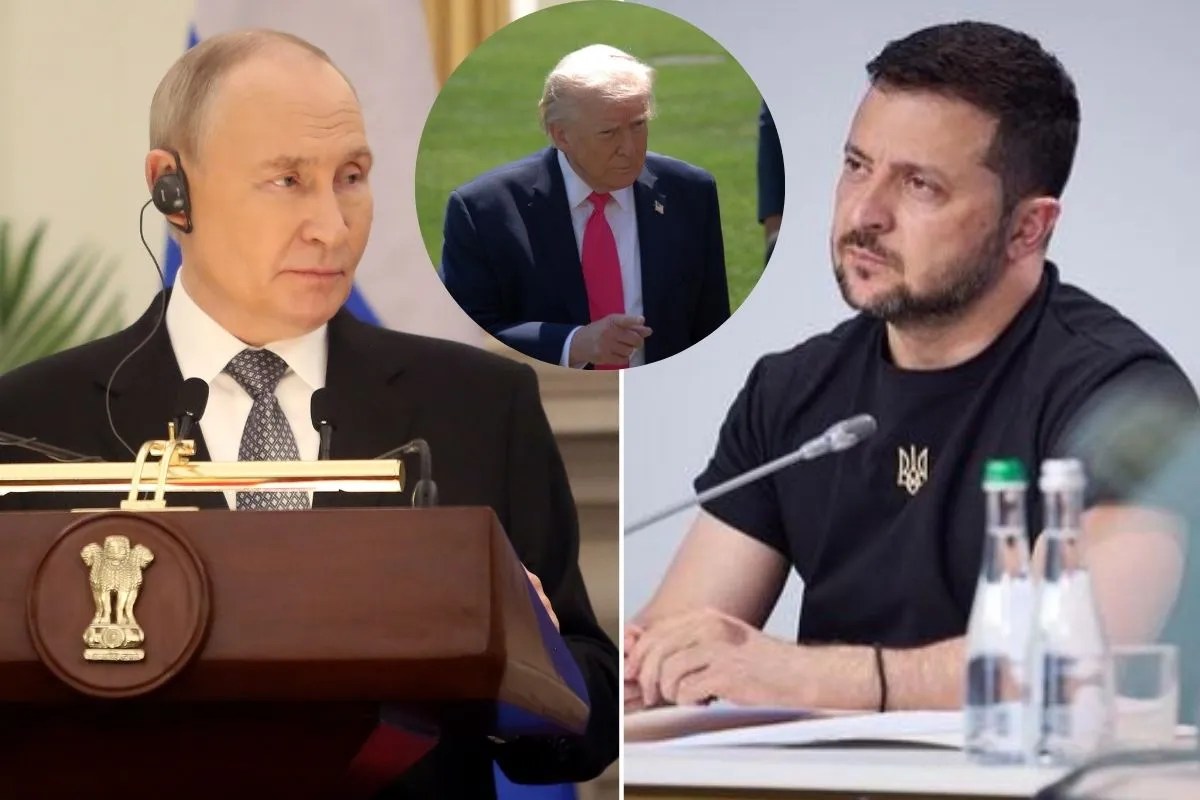
Diplomacy rarely bleeds cleanly. In the ornate halls of the Kremlin, American special envoys Steve Witkoff and Jared Kushner recently spent over three hours locked in negotiations with Russian President Vladimir Putin, searching for a framework to halt the grinding war in Ukraine. The resulting silence from Moscow was deafening. While Russian officials offered polite diplomatic platitudes about a substantive and constructive dialogue, no breakthrough emerged. Washington wants a quick political exit ticket, but the structural realities of the battlefield refuse to bend to executive fiat.
The White House is caught in a high-stakes squeeze between an entrenched adversary holding the initiative and an ally fighting for physical survival. Understanding where this standoff stands requires stripping away the theater of Washington peace summits and examining the concrete leverage points, or lack thereof, currently available to the American administration.
The Kremlin Calculus on the Ground
Moscow is not negotiating from a position of weakness. President Putin’s strategy rests on a cold, arithmetic certainty: time works in favor of the larger economy and the deeper manpower pool. When American intermediaries arrive in Russia carrying proposal drafts, they are met with a leadership that views battlefield advances as the only metric that matters.
The core demands from the Kremlin have barely shifted since the early months of the full-scale invasion. Russia insists on formal control over annexed territories, structural demilitarization parameters for Kyiv, and an absolute legal barrier preventing Ukraine from joining NATO. Short of these outcomes, Moscow sees little incentive to lock in a permanent ceasefire that would merely allow Western nations to rearm Ukrainian forces for a future round.
Recent tactical pauses, such as short-lived directives to halt specific strikes on government centers during high-level visits, are tactical signals rather than strategic concessions. They demonstrate control, keeping Washington engaged while the broader grinding campaign across the eastern front continues unabated.
Kyiv and the Cost of Territorial Compromise
For Ukrainian leadership, the calculus is existential. President Volodymyr Zelenskyy faces an impossible domestic and political trap. Handing over sovereign territory to an invading force destroys the foundational moral argument of the resistance. Yet, the pressure from Washington to accept compromise frameworks has intensified as American political patience wears thin.
Behind closed doors, the discussions frequently circle back to territorial partition and security guarantees. Western-backed proposals often suggest freezing the conflict along current front lines while offering long-term bilateral security commitments. However, Kyiv knows from bitter historical experience that paper guarantees rarely stop determined armies. Without ironclad, boots-on-the-ground defensive architectures backed by major Western powers, any pause in fighting simply becomes a countdown to the next offensive.
Furthermore, domestic resilience in Ukraine is strained. Continuous long-range bombardment targeting national infrastructure has exacted a heavy civilian toll. Even so, public sentiment remains intensely hostile to formal surrender of eastern and southern provinces. Leaders in Kyiv cannot sign away their industrial and agricultural heartlands without risking internal political collapse.
The Limited Playbook in Washington
Donald Trump entered office promising a rapid resolution to the conflict, framing the war as a bureaucratic failure that could be settled through personal dealmaking. Reality has proven far more stubborn. The administration's diplomatic toolkit is rapidly running dry, leaving few viable levers to force either side into compliance.
The primary option deployed thus far involves a strategy of leverage redistribution: applying pressure on Kyiv to force participation while dangling economic and sanctions relief incentives for Moscow. This approach produced momentary compliance, including temporary halts and guarded diplomatic participation. Yet, it fails to account for the asymmetry of motivation. For Washington, Ukraine is a foreign policy file to be cleared. For Moscow and Kyiv, it is a matter of national destiny.
Intensifying the pressure on Ukraine by withholding intelligence or material support risks a rapid military collapse that would humiliate American foreign policy on the global stage. Conversely, offering more concessions to Russia validates territorial conquest and alienates European allies who view a compromised peace as an existential threat to the security architecture of the entire continent.
As American envoys transition from Moscow to brief leadership in Kyiv, the illusion of an imminent, clean settlement fades. The war grinds forward through its fifth year because the foundational terms demanded by the belligerents remain mutually exclusive. Without a shift in the military balance on the ground, Washington's grand bargain risks becoming a casualty of its own oversimplification.