Silence.
That is the first thing you notice when the world vanishes at seventy miles an hour, a sudden, suffocating hush that swallows the familiar roar of tarmac beneath your tyres and replaces it with the frantic, rhythmic thud of your own pulse against your ribs.
I still remember the winter morning three years ago on the M4 outside Reading when the horizon simply ceased to exist. One second, the red tail lights of a lorry were twinkling comfortably three hundred yards ahead in the crisp pre-dawn chill; the next, I was driving straight into a wall of cold, wet wool. My knuckles went white on the steering wheel. The dipped headlights bounced off a solid curtain of vapour, turning the windscreen into a glowing, opaque sheet of milk that showed me everything about the moisture in the air and nothing at all about the forty-ton articulated truck sitting dead-stopped in the middle lane just ahead.
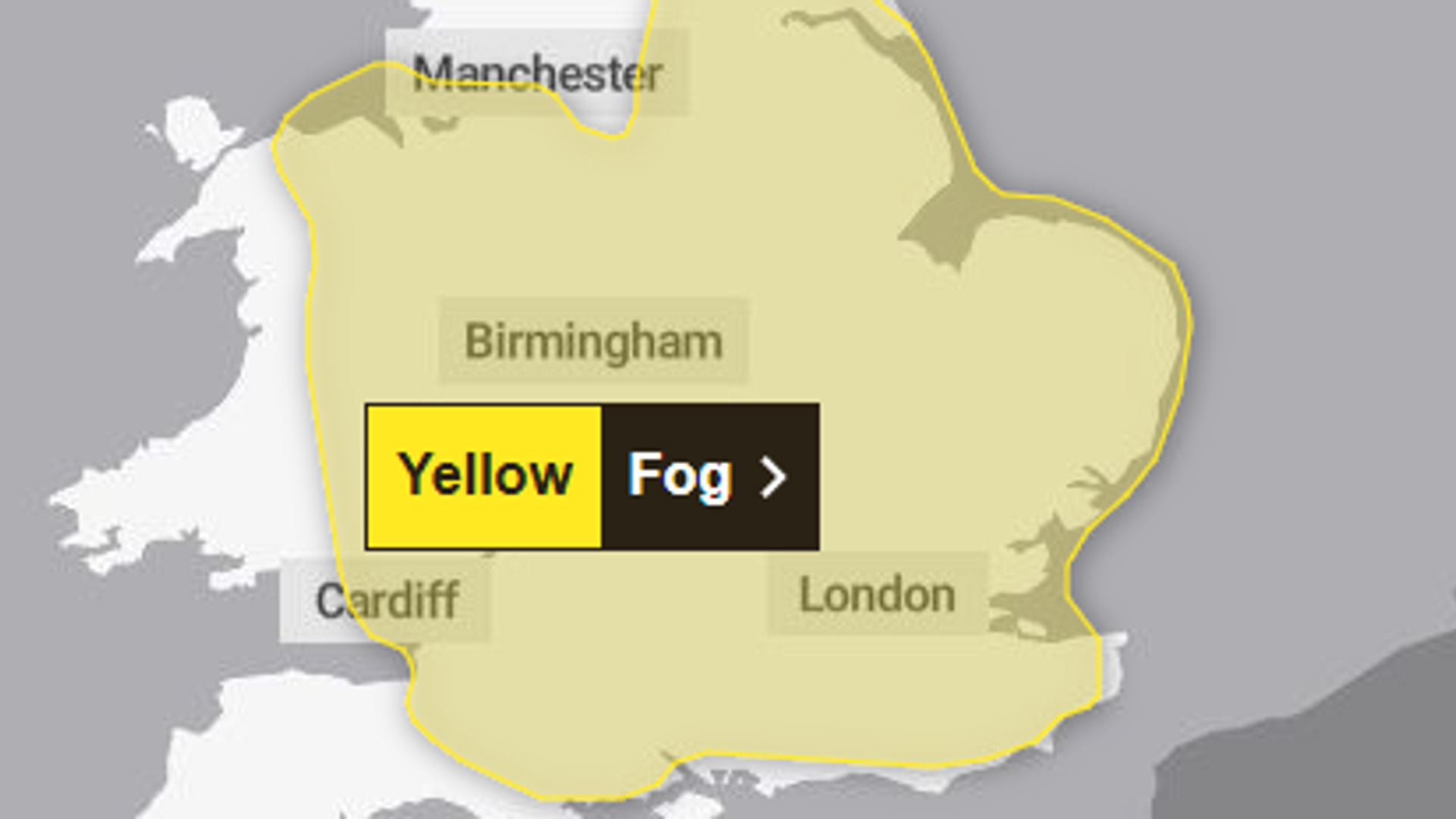
We treat fog like a minor inconvenience. When the Met Office issues a yellow weather warning across parts of the United Kingdom—stretching from the rolling valleys of Wales across the Midlands and down into the southern counties—most of us glance at our phones over morning toast, mutter something about leaving ten minutes earlier for the school run, and forget about it. After all, it is not a howling Atlantic gale tearing slates off roofs. It is not torrential rain flooding high streets or black ice turning roundabouts into skating rinks.
It is just cloud sitting on the ground.
Yet meteorologists have a chilling phrase for what happens when high pressure settles over Britain after a bout of wet weather: the perfect recipe. And if you understand what those three ingredients actually do to human perception, airport timetables, and the fragile ballet of morning rush hour, you stop viewing a fog warning as background noise and start seeing it for what it truly is.
The Architecture of an Invisible Trap
To understand why the skies over Britain occasionally decide to collapse onto the pavement, you have to picture the atmosphere as a giant, invisible lid. Consider a hypothetical commuter—let us call her Sarah—living in a brick terrace outside Swindon. On Tuesday afternoon, a band of rain sweeps across Wiltshire, soaking the fields, saturating the hedgerows, and leaving puddles gleaming on the asphalt. By dusk, the rain clears. A ridge of high pressure slides over the country, pushing away the clouds and calming the wind to a dead still.
Sarah looks out her bedroom window before turning in and admires the crisp, star-studded sky. She thinks tomorrow will be a lovely morning. She has walked straight into a meteorological trap.
Without a blanket of overhead cloud to trap the daytime warmth, the earth radiates its heat straight back into space like an uncovered saucepan cooling on a stove. The ground temperature plummets. Meanwhile, all that moisture left behind by Tuesday's rain begins to evaporate into the lowest layer of air. Because there is no breeze to stir the atmosphere—what forecasters call calm winds—that damp, chilling air stays pinned to the valley floors and river basins.
Think of the air around Sarah's house like a cold glass of water pulled from the fridge on a humid afternoon. Cool air simply cannot hold as much invisible water vapour as warm air. Once the overnight temperature drops to the "dew point," the air reaches saturation. It gives up. Millions of microscopic water droplets condense out of nowhere, hanging suspended just inches above the grass, thickening in the dips of country lanes, and pooling over low-lying motorways.
Radiation fog. That is the technical name for it, though the word "radiation" sounds far too dramatic for something that creeps across a cricket pitch without making a sound. By the time Sarah's alarm goes off at six in the morning, visibility outside her front door has dropped below one hundred metres—the exact threshold that forces forecasters to trigger official yellow alerts across central and southern England, parts of eastern Wales, and the lowlands of Scotland.
Why Our Brains Are Wired to Fail in the Mist
Here is the uncomfortable truth that nobody likes to admit when they slide into the driver's seat on a foggy morning: human biology is terribly equipped for low visibility.
When we drive in clear daylight, our brains rely on a constant stream of peripheral cues—hedgerows blurring past, lamp posts ticking off the seconds, the texture of the asphalt rushing beneath the bonnet—to calibrate our speed. Strip those cues away, and an eerie neurological illusion takes over. Without visual references rushing past the side windows, your brain convinces itself that you are crawling along at thirty miles an hour when the speedometer needle is quietly hovering near sixty.
Worse still is a phenomenon transport psychologists call "moth-to-flame" fixation. In dense fog, where visibility shrinks to fifty metres or less, a driver's eyes naturally lock onto the faint red glow of the tail lights ahead. Rather than keeping a safe distance, drivers subconsciously creep closer and closer just to keep that anchor in sight, tethering themselves to a stranger's bumper like blindfolded walkers holding onto a rope.
If that lead driver taps their brakes for a badger on the A34, or slows down for a queue near a junction on the M6, the chain reaction happens in fractions of a second. Department for Transport figures consistently show that while fog-related collisions make up a small fraction of annual road incidents, they carry a disproportionately high rate of multi-vehicle pile-ups and severe injuries. You do not get a gentle fender-bender in thick mist; you get thirty cars telescoping into one another because nobody saw the brake lights until they were ten feet away.
I learned this the hard way during that morning on the M4. When the white wall closed in around my bonnet, my first instinct—pure, unfiltered panic—was to slam on the brakes. My second instinct was to flick on my full beams, thinking more light would punch a hole through the gloom. Both instincts were completely wrong. Full beams hit millions of suspended water droplets and bounce straight back into your retinas, blinding you completely. And slamming on the brakes on a live motorway simply turns your own car into an invisible brick wall for the van rushing up behind you.
The Ripple Effect From Tarmac to Tarmac
Even if you never turn a key in an ignition, a widespread fog event reaches straight into your living room, your workplace, and your holiday plans.
Take a trip in your mind to Heathrow or Gatwick on a morning when dense mist blankets the Thames Valley. Under normal conditions, air traffic controllers space landing aircraft roughly ninety seconds apart, orchestrating a relentless aerial conveyor belt that brings hundreds of thousands of passengers into Britain every single day. The moment visibility drops below five hundred metres, the entire choreography changes.
Low Visibility Procedures kick in. Ground radar sweeps replace visual checks from the control tower. Aircraft cannot taxi as quickly across the apron because pilots cannot see the painted yellow guide lines clearly enough to avoid clipping a wingtip on a catering truck. Spacing between incoming flights doubles, then triples, to give runway crews extra time to clear the tarmac before the next jet touches down through the murk.
Suddenly, a domestic hop from Edinburgh is sitting on the tarmac for two hours. A family in Manchester misses their connecting flight to New York. Freight planes carrying fresh produce and urgent medical supplies get diverted to Birmingham or Stansted, jamming up regional terminals that were never built to handle wide-body traffic.
And on the ground, the disruption bleeds outward in quiet, frustrating ways. Rural bus routes crawl behind schedule. Ambulances and fire engines, bound by strict safety protocols even with blue lights flashing, have to shave twenty miles an hour off their response speeds because a strobe light bouncing off dense fog creates a disorienting, psychedelic wall of glare that blinds both the paramedic and oncoming traffic.
Mastering the Whiteout
So what do we actually do when the weather map turns yellow and the streetlamps outside vanish into a blurry halo? Panic does not clear the air, and rushing only narrows your margin for survival. Navigating a severe British fog event comes down to overriding your instincts and respecting the physics of light and stopping distances.
First, master your lighting before you even pull off the driveway. Automatic headlights are notoriously unreliable in daytime fog because the ambient light scattered through the mist often tricks the car's sensors into thinking it is a bright, sunny morning. Reach down and manually switch on your dipped headlights. If—and only if—visibility drops below one hundred metres, roughly the length of a football pitch, switch on your front and rear fog lights. Just remember the golden rule that saves everyone else's retinas: the second the mist lifts and you can clearly see the car ahead, switch those rear fog lights off. Leaving a blazing red laser beam shining into the face of the driver behind you in clear air masks your actual brake lights and triggers rear-end collisions.
Second, drop your speed and listen to the road. When you cannot see far enough ahead to stop within the distance you can clearly observe, you are driving too fast—even if you are twenty miles an hour below the posted speed limit. Wind your driver's window down an inch or two at junctions and roundabouts. Fog deadens sound in strange ways, yet with the radio turned off and the heater fan lowered, you will often hear the rumble of an approaching lorry or the hum of a hybrid engine long before its headlights pierce the gloom.
Third, use the painted lines, not the car in front, to guide your path. Keep your eyes scanning the white markings along the near-side edge of the lane rather than staring blindly into the grey void ahead. If a journey across rural valleys or exposed moorland is not strictly urgent, delay it by ninety minutes. Radiation fog is stubborn at dawn, yet once the morning sun climbs high enough to warm the tarmac by even a degree or two, the convection currents stir, the invisible lid lifts, and the whole ghostly blanket evaporates almost as quickly as it formed.
When the Curtain Finally Lifts
Back on that freezing morning outside Reading, I somehow managed to ease my foot off the accelerator, tap my hazard lights to warn whoever was behind me, and steer by the faint white dashes along the hard shoulder until the silhouette of a motorway service station sign emerged like a lighthouse through the grey. I pulled into the car park, switched off the engine, and sat in the cab for twenty minutes with my hands trembling slightly around a paper cup of terrible machine coffee.
Outside my windscreen, the M4 remained an invisible river of muffled engine noise and ghostly red glows. People were still out there, rushing toward meetings, airport gates, and school bells, convinced that five extra minutes in bed were worth gambling against a cloud lying flat on the asphalt.
Eventually, the sun broke over the Berkshire hills, burning the mist away into wisps of silver steam rising off the fields. Within half an hour, the motorway looked completely ordinary again—grey tarmac, green verges, clear blue sky—leaving behind nothing at all to prove how close any of us had come to disappearing into thin air.