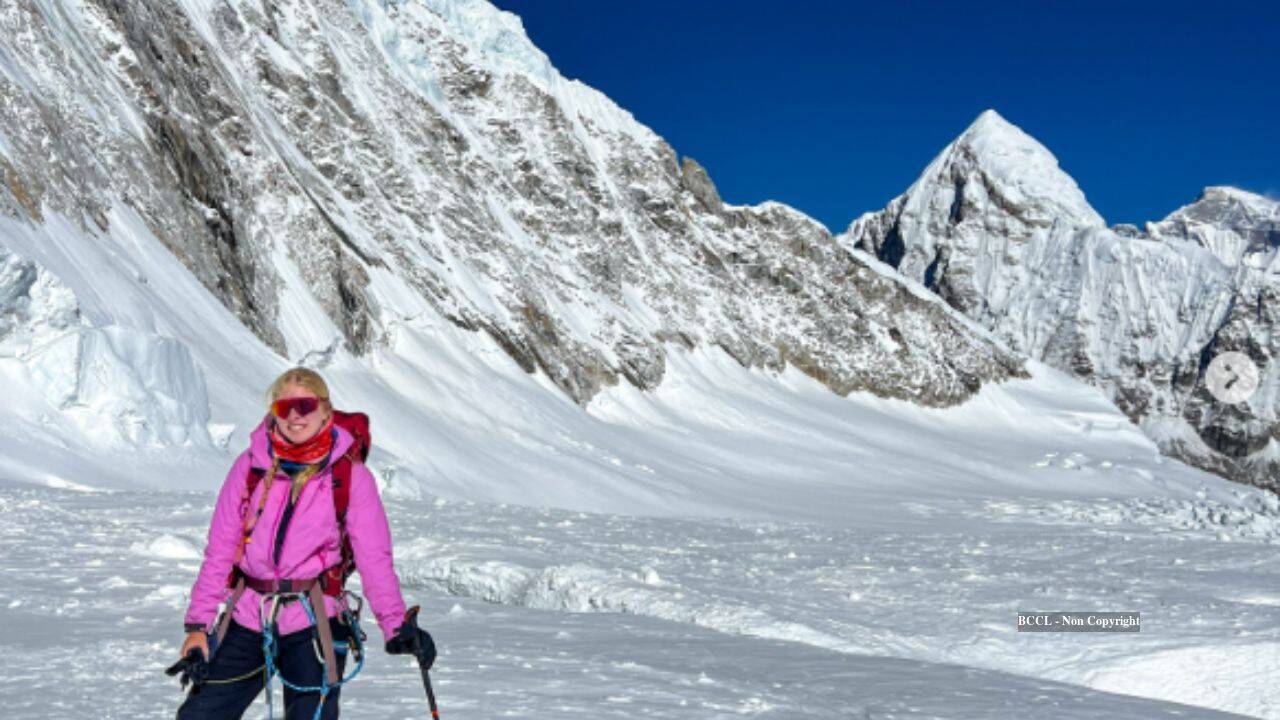
At 8,450 meters, oxygen molecules lose their density, human blood thickens like sludge, and the brain begins to swell against the confines of the skull. This is the death zone. In May 2025, Melbourne teenager Bianca Adler stood mere vertical steps away from this threshold on the ridge of Mount Everest. Then, her fingers went numb, white winds tore at her visibility, and she made a choice that most seasoned alpinists fail to execute: she turned around. Just four hundred meters short of the highest point on Earth, the expedition ended. Twelve months later, she returned. By conquering the peak at eighteen years old, she became the youngest Australian to summit the world's tallest mountain, rewriting the record books not through raw youthful invincibility, but through calculated, cold-blooded restraint.
The Anatomy of a Turned-Back Dream
Popular mountaineering narratives love a simple story of relentless grit. Push harder, ignore the pain, touch the top. Reality at 8,000 meters operates under far less forgiving parameters. During her initial 2025 push alongside her father Paul, Adler encountered conditions that transform a climb into a survival lottery. Hurricane-force gusts, plummeting temperatures, and creeping frostbite threatened permanent tissue damage. Worse still, high-altitude pulmonary edema—a fatal accumulation of fluid in the lungs—was quietly setting in for both father and daughter.
Most climbers who get that close suffer from summit fever. The psychological pull of the final ridge overrides basic biological warnings. Turning back requires a terrifying inversion of ego. Adler chose life over a line on a map, retreating to safety while her body was failing. That retreat was not a failure of will. It was the precise tactical pivot that preserved her life for a second campaign.
Beyond the Instagram Filters: The Grind of High-Altitude Preparation
Public fascination often frames these achievements as overnight anomalies. Look closer at the architecture of the comeback. Becoming the youngest person to clear such a hurdle demands an industrial-grade physical foundation. Before ever setting foot back in Nepal for the 2026 season, Adler’s routine resembled an elite military selection course rather than a teenager's extracurricular schedule.
Training spanned five to six days a week across a two-year window. It fused relentless indoor conditioning—stair climbers and spin bikes—with brutal multi-day wilderness traverses through the Australian Alps covering massive distances with heavy packs. This included grueling endurance blocks like a 100-kilometer continuous training march completed in a matter of days.
Genetics and upbringing also played an undeniable role. Growing up partly in Annecy within the French Alps, she was immersed in technical alpine terrain from early childhood. Her parents, Paul and Fiona Adler, had both summitted Everest decades prior, providing a household acutely aware of the mountain's lethal financial, logistical, and physical tolls. By the time she re-entered the Khumbu Icefall in 2026, Everest was already her third major Himalayan peak above 8,000 meters, following a record-breaking ascent of Manaslu and a technical climb of Ama Dablam.
The Logistics of the Final Push
Climbing Everest today is as much a chess match against human traffic as it is a battle against the elements. Commercialization has turned the upper slopes into logistical bottlenecks where bottlenecks can prove fatal.
To bypass the dangerous queues that trap exhausted climbers in the death zone, execution must be flawless. In May 2026, Adler and her team—including experienced Nepali guides Pemba Chhiring Sherpa and Ngudu Sherpa—timed their movements with surgical precision. Leaving Camp 4 at 8,000 meters under the cover of a freezing pre-dawn darkness, she marched upward for roughly eight hours in temperatures sinking below minus twenty degrees Celsius.
At 2:20 AM, she stood on the summit. There were no long celebrations, no luxury of lingering views. The wind was harsh, the air was dangerously thin, and the biological clock was ticking. After a brief satellite radio call to her father waiting below at Camp 2, she immediately initiated the descent. Coming down safely remains the statistical half of the journey where most fatalities occur, requiring absolute concentration when physical reserves are entirely depleted.
The Reality Check of Extreme Records
The media cycle adores attaching age milestones to dangerous feats. Youngest Australian, youngest female, historic breakthrough. Yet veteran mountaineers view adolescent participation in extreme high-altitude tourism with guarded concern. The commercial Everest industry continues to face heavy scrutiny over environmental degradation, overcrowded routes, and an over-reliance on underpaid indigenous labor.
When teenagers enter this sphere, ethical questions sharpen. Is the pursuit of youth records encouraging unearned risk among inexperienced amateurs, or does it highlight exceptional physical conditioning executed by disciplined athletes? In Adler's case, her prior technical resume on peaks like Ama Dablam—widely regarded as a far more technical and unforgiving climb than Everest's standard route—separated her from casual thrill-seekers buying their way up a tourist track.
Even so, the contrast between the mountain and mundane reality remains jarring. Having etched her name into mountaineering history, the newly minted record-holder faces an entirely different kind of test back home. Her immediate priority is not planning another expedition, but returning to standard high school classrooms to finish her final year of secondary education. The peak of the world was conquered in the dark, but the textbook waits on the desk


