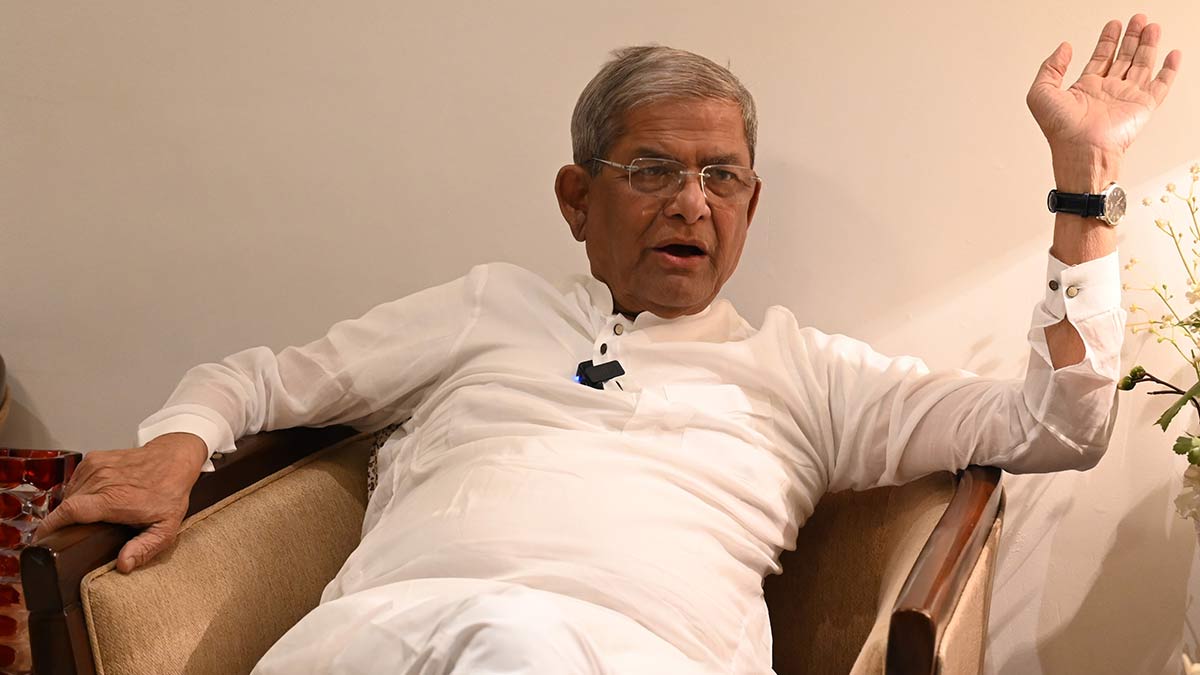
Every conventional political analyst in Dhaka is currently popping champagne over the nomination of Mirza Fakhrul Islam Alamgir for the presidency. The lazy consensus is simple: elevate the long-serving party loyalist, hand him the ceremonial keys to Bangabhaban, and pat yourselves on the back for a transition well-managed.
It is a catastrophic misreading of political power dynamics.
Stripping a party of its institutional memory and operational anchor during a fragile democratic rebuild is not an upgrade. It is self-sabotage wrapped in pomp. Let us dissect why kicking your most effective administrative workhorse upstairs into a ceremonial office is a massive unforced error for the Bangladesh Nationalist Party.
The Myth of the Graceful Golden Parachute
In parliamentary democracies, treating the presidency as a retirement home for aging veterans is an old, broken habit. Commentators look at a resume spanning decades, see a veteran leader who weathered the storm through years of intense opposition, and assume that ascending to head of state is a natural reward.
This view ignores the brutal reality of organizational mechanics.
When you remove the central coordinating node of a massive political machinery—the individual who kept disparate factions aligned while the top leadership was jailed or exiled—you do not create stability. You create a power vacuum.
Imagine a corporate enterprise promoting its chief operating officer to a non-executive, ceremonial board chairman role just as the company enters its most volatile market expansion. On paper, it looks prestigious. On the ground, the operational grid stalls because the person who actually knew how to route the plumbing is sitting in a glass box signing ceremonial documents.
Stripping the Engine to Paint the Hood
The presidency in Bangladesh is structurally constrained. Under the constitutional framework, the office is largely ornamental, tethered to the advice of the executive branch. While political theorists argue that a moral heavyweight in the presidential palace provides essential checks and balances during constitutional stress, this theory fails under practical examination.
Real power flows where the administrative infrastructure resides. By shifting a core strategist out of the active legislative and party hierarchy, the political apparatus loses its primary internal mediator.
Let us look at the structural trade-offs clearly:
- Operational Continuity: A secretary general coordinates daily friction points across grassroots units. A president cuts ribbons and receives diplomatic credentials.
- Factions and Friction: Parties with supermajorities inherently breed internal friction. Removing the veteran arbiter who held the coalition together during the dark years invites unchecked internal elbowing.
- Constitutional Weight vs. Party Depth: Trading an irreplaceable party architect for a rubber-stamp occupant of Bangabhaban weakens the party's institutional resilience just when structural discipline is vital.
The Danger of Rewriting the Succession Too Fast
The timing compounds the error. Following the massive shifts in the political landscape, the ruling dispensation needs ruthless operational clarity. Shuffling high-profile pieces off the operational board to fill an unexpected vacancy signals a defensive posture rather than forward-looking governance.
Critics pointing to the comfortable two-thirds parliamentary majority as proof that "failure is impossible" misunderstand how political regimes collapse from the inside. Comfort breeds complacency. Complacency invites internal fracture.
If the ruling party wanted to fortify the republic against future institutional decay, the correct play was not to neuter its top administrative mind into a ceremonial role, but to keep him embedded where the friction of actual governance happens. Moving your best crisis manager away from the engine room because it looks good in a press release is amateur hour.
The presidency does not need another veteran ornament. The party needed its operator. By choosing optics over operational survival, the leadership has traded structural integrity for a temporary headline.