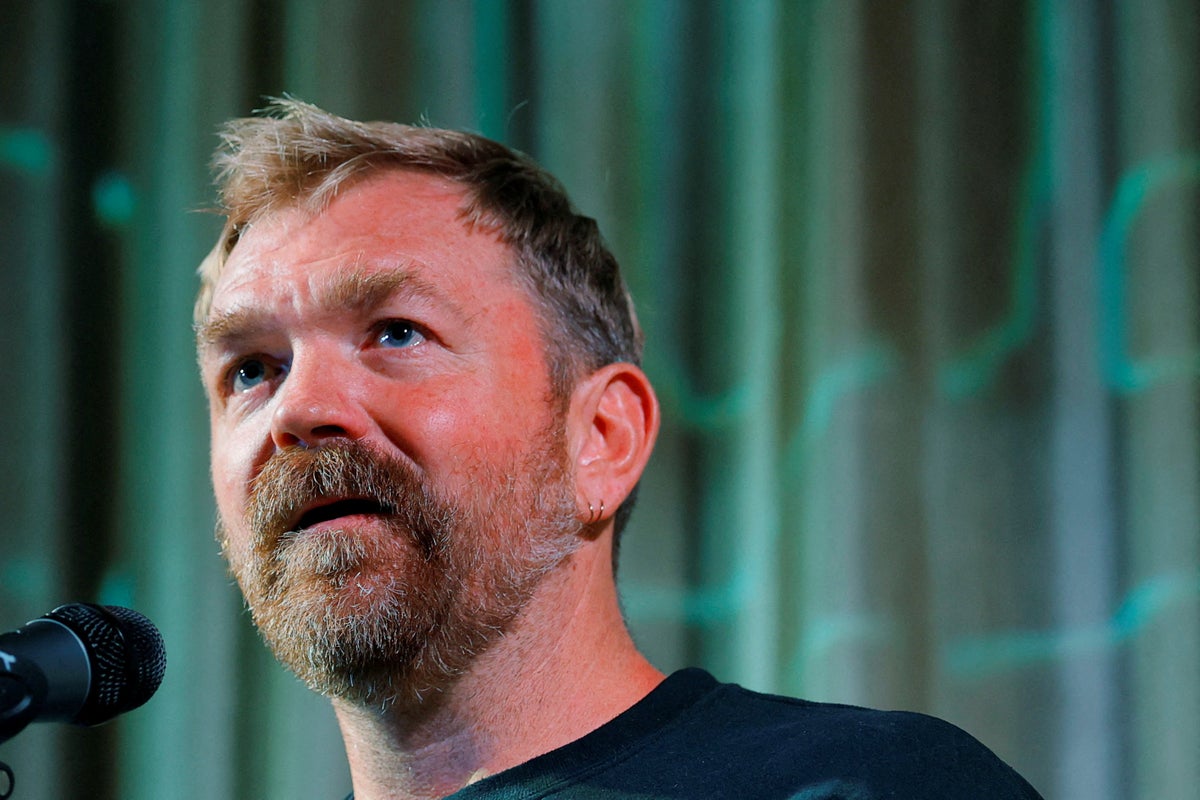
The air inside an emergency political meeting does not smell like democracy. It smells like stale coffee and panic.
On a sticky Wednesday night, more than a hundred Maine Democratic committee members stared into their screens, watching a ghost derail their future. The ghost was an 11-minute video posted to social media by Graham Platner. He was a man who, just one month earlier, had shattered state records by securing more primary votes than any Democratic Senate candidate in Maine’s history.
He was an oyster farmer. A combat veteran with three tours in Iraq and one in Afghanistan. A populist powerhouse who promised to take a sledgehammer to the Washington donor class.
Now, he was done.
Platner’s campaign did not just stop. It imploded. A former girlfriend went public with a harrowing account, alleging he entered her home uninvited and intoxicated in 2021 and sexually assaulted her. Within twenty-four hours, a second woman came forward. The political dominoes fell with a terrifying, rhythmic velocity. Representative Ro Khanna rescinded his endorsement. Senate leaders threatened to freeze all national funding. Finally, Senator Bernie Sanders—the ultimate validator for Platner’s working-class movement—publicly told him it was time to step aside.
In his exit video, Platner remained defiant. He denied the allegations, calling them a coordinated hit by an entrenched political establishment built to crush normal people. "We believe for the movement to continue, it can't be me," he said, staring into the lens.
Crash.
That is the sound of a national political strategy shattering into a thousand pieces.
To understand why a local disaster in a state with barely 1.3 million people matters to someone sitting thousands of miles away, you have to look at the math of power. The United States Senate is balanced on a knife’s edge. Control of the entire upper chamber—the body that decides Supreme Court justices, federal laws, and the national budget—runs directly through the pine forests and rocky coastlines of Maine.
For nearly thirty years, Republican Senator Susan Collins has held that ground. She is a political institution, a moderate survivor who has outlasted waves of national partisan fury. The Democratic establishment thought they had the perfect foil in Governor Janet Mills. But Mills’ center-left, polished campaign never caught fire. Platner’s did.
Platner spoke the language of the forgotten. He talked about housing affordability, universal healthcare, and the humiliation of working multiple jobs just to pay for groceries. He carried the dirt of the oyster mud on his boots. Voters who hadn’t cast a ballot in a decade showed up for him because he didn’t look or sound like a lawyer from Portland or a lobbyist from Washington.
Now, those voters are left holding an empty bag, and the party establishment is frantically looking at the calendar.
The clock is a brutal adversary in politics. Under Maine law, Platner must officially withdraw his name from the ballot by July 13 at 5:00 p.m. Once that paperwork is filed, the state party has a razor-thin window until July 27 to find a replacement. Failure means handing Susan Collins a free pass and potentially handing control of the Senate to the Republican party before a single autumn leaf falls.
Consider what happens next: a mad, closed-door sprint to find a savior who can bridge a massive ideological chasm.
The primary voters did not want a moderate. They rejected the establishment. If the party handpicks a corporate-friendly insider in a backroom, the progressive base that gave Platner his historic turnout will likely stay home in November. If they pick an firebrand, they risk alienating the independent swing voters who decide Maine elections.
The names are already flying into the arena like desperation passes.
Troy Jackson, a rugged former state senate president and logger who won Bernie Sanders' backing in a previous gubernatorial run, jumped into the race almost immediately. He has the union credentials and the working-class aesthetic, but can he raise twenty million dollars in a matter of weeks?
Nirav Shah, the former director of Maine’s Center for Disease Control, threw his hat in the ring. He became a beloved, reassuring household face during the darkest days of the pandemic, but translating public health trust into raw political combat against a five-term incumbent is a massive gamble.
Then there is State Representative Valli Geiger, an early Platner loyalist. She claims Platner privately called her, asking her to carry the torch of his movement. It is a messy, complicated inheritance. To accept his blessing is to court his passionate base, but it also means anchoring your campaign to a man who left the stage under a cloud of alleged violence.
This is the vulnerability of modern politics. We look for saviors in outsiders because the system feels broken, professionalized, and cold. We want people who have lived real lives, who have fought in wars or worked the land. But human beings are complicated, flawed, and sometimes carrying baggage that can sink a movement overnight.
The tragedy of the situation does not belong to the political consultants in Washington who are currently pulling their hair out over spreadsheets and ad buys. The tragedy belongs to the volunteers who knocked on doors in the rain, believing they were finally fighting for one of their own. It belongs to the voters who thought, just for a moment, that someone who understood the struggle of paying a heating bill in January was going to have a seat at the table.
Now, those volunteers are watching an emergency committee vote to hold a snap convention. The decisions will be made quickly, by a few hundred people under immense pressure, in rooms that smell of stale coffee.
The outsiders are out. The machinery is back in control. And the mud on the boots has been wiped clean from the carpet.