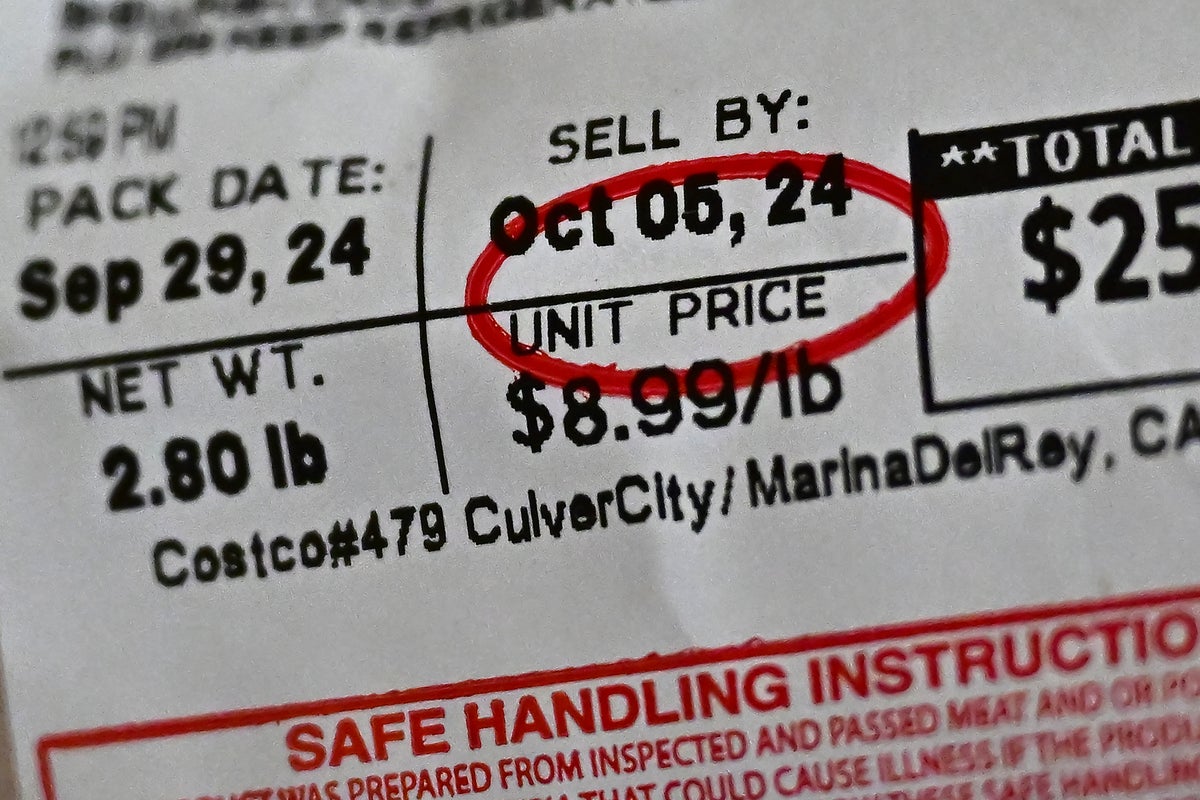
Starting July 1, 2026, California is executing a massive overhaul of grocery store aisles by outlawing consumer-facing "Sell By" labels and standardizing all food date markers. The state passed Assembly Bill 660 to stop a major cause of food waste: consumers misinterpreting logistical inventory notes as food safety warnings. By replacing more than fifty different arbitrary phrases with just two strictly defined terms, California intends to keep billions of pounds of perfectly edible food out of landfills, saving households money and curbing greenhouse gas emissions from decomposing organic waste.
The Fraud of the Inventory Tool
For decades, the dates stamped onto the plastic seals of milk jugs and the tops of aluminum cans have operated under a Wild West system of corporate discretion. There has never been a unified federal standard for food date labeling, except for infant formula. Instead, manufacturers invented an array of phrases: "Freshest Before," "Expires On," "Display Until," and the most problematic of all, "Sell By."
Shoppers routinely look at a "Sell By" date, assume the food turns into a biological hazard at midnight, and toss it into the trash.
The underlying reality is entirely different. A "Sell By" date was never designed for the public. It was created as an internal logistical tool for grocery store stock boys to manage shelf rotation. It signaled when a retailer should move older inventory to the front or markdown an item to clear space for a new shipment. The food itself is usually perfectly safe and nutritious for days or even weeks after that arbitrary stamp. Yet, because the industry relied on obscure industry shorthand, billions of dollars of groceries have been discarded prematurely.
The True Toll of a Misunderstanding
This systemic lack of clarity does not just cause minor domestic annoyance. It carries heavy economic and environmental consequences.
According to data compiled by anti-waste advocacy groups, American households throw away an estimated one-third of their food. Much of this waste occurs because buyers simply do not trust their senses over the ink on the package. Consider a hypothetical scenario where a family discards three unopened cartons of yogurt and a gallon of milk every month based entirely on an outdated date stamp. Over a year, that single household throws hundreds of dollars directly into the garbage. Multiply that by millions of residents, and the financial hemorrhage becomes staggering.
The damage continues when that food hits the waste stream. Landfills are not inert holding pens. When organic matter decomposes beneath mountains of trash without access to oxygen, it produces methane, a potent driver of atmospheric warming. Food waste accounts for a massive portion of municipal solid waste, meaning consumer confusion at the kitchen counter translates directly into environmental degradation.
The Two Word Solution
The new California mandate strips away corporate jargon and enforces a binary system. Manufacturers must choose between two distinct categories: peak flavor or biological safety.
Quality Dates
For shelf-stable items, frozen goods, and products where aging merely alters taste or texture without posing a health hazard, companies must use the phrase "BEST if Used by" or "BEST if Used or Frozen by." This tells the buyer exactly what the manufacturer means. The food will taste optimal before this date, but eating it afterward will not make anyone sick. If a cracker loses a fraction of its crispness, it remains entirely edible.
Safety Dates
For highly perishable items where pathogenic growth is a legitimate concern over time, the law mandates the phrase "USE by" or "USE by or Freeze by." This is the hard line. This label is reserved for public health warnings, indicating that the item should not be consumed past the stated window.
For packaging too small to fit the full text, the law permits simple abbreviations: "BB" for quality and "UB" for safety. Any consumer-facing mention of a "Sell By" date is entirely illegal for products manufactured after the July deadline. Retailers can still use hidden, coded back-of-house tracking numbers for inventory tracking, but these must be unreadable to the average consumer so they do not cause confusion on the sales floor.
Supply Chain Friction and the Enforcement Void
While the policy addresses a clear consumer blind spot, it introduces immediate friction for the broader commercial supply chain. Food production is rarely localized to a single state. Megacorporations package cereal, canned goods, and dairy in centralized Midwestern facilities before shipping them across the continent.
Because Washington has failed to pass a national date-labeling standard, manufacturers are caught in a regulatory trap. They must either create separate, specialized packaging lines exclusively for the California market or alter their entire national printing operations to comply with Sacramento's rules. Most large brands will likely choose the latter to avoid the logistical nightmare of dual inventories, effectively forcing California’s standards onto grocery shelves nationwide.
A larger question mark hangs over compliance. The text of Assembly Bill 660 establishes the legal framework, but it delegates actual monitoring to local public health departments and weights-and-measures inspectors. These agencies are already underfunded and short-staffed. It is highly unlikely that inspectors will be combing through individual supermarket aisles to fine a grocer over a mislabeled box of pasta. The true mechanism of enforcement will likely come through civil litigation and class-action lawsuits targeting major brands that fail to update their labels in time.
The success of this legislative shift ultimately rests on public education. Stripping the words "Sell By" from a carton of eggs is meaningless if buyers continue to treat the "BEST if Used by" date as a strict expiration deadline. Shoppers must relearn how to evaluate the food in their refrigerators, using their eyes, nose, and common sense instead of blindly relying on an arbitrary stamp.