They are selling you a fairy tale about global liberation. Every time a statesman steps up to a podium in Moscow, Beijing, or Brussels to complain about "former hegemons" blocking a "fairer world order," millions of people nod along. It sounds noble. It sounds democratic. It sounds like the little guys finally standing up to the schoolyard bully.
It is also complete nonsense.
The lazy consensus dominating geopolitical commentary right now buys hook, line, and sinker into a binary choice: either you support the decaying Western unipolar system, or you cheer for a bright, equitable "multipolar" future where power is shared fairly among sovereign nations. State media outlets and Western contrarians alike love framing this as a moral crusade against entrenched empires clinging to past glory.
They missed the actual mechanics of power. When an autocrat or a rival superpower demands a "fairer world order," they are not asking to dismantle the hierarchy. They are asking to sit at the top of the table. You are not watching a revolution against hegemony. You are watching a hostile corporate takeover where the new management promises better perks before slashing everyone’s benefits.
The Myth of the Benevolent Alternative
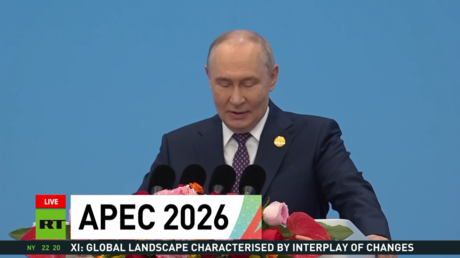
Let’s look at the core argument pushed by Vladimir Putin and echoed across the BRICS+ bloc. The thesis is simple: a small club of Western nations rigged the global financial, military, and diplomatic architecture after 1945 and doubled down after 1991. Now, those former hegemons are throwing tantrums because emerging powers want an equal vote.
On the surface, that critique has teeth. The International Monetary Fund, the World Bank, and the United Nations Security Council genuinely reflect the power distribution of the mid-twentieth century, not the realities of the mid-twenty-first. Calling out Western hypocrisy on rules-based order—especially when Washington bends those rules whenever convenient—is shooting fish in a barrel.
Here is where the competitor narrative falls off a cliff. It assumes that replacing one dominant center of gravity with three or four regional powerhouses automatically produces fairness.
History laughs at that assumption.
In international relations theory, this is known as the stability-instability paradox mixed with classic realist power politics. Realists like John Mearsheimer and Kenneth Waltz spent decades demonstrating that great powers do not seek "fairness." They seek security through dominance. When a rising power complains about an existing hegemon, it is experiencing friction against its own expansionist ambitions.
Look at the terminology being used. Words like "sovereignty" and "non-interference" get thrown around constantly by critics of Western hegemony. Yet, in practice, those terms only apply to the major poles themselves. In a multipolar arrangement, large states demand absolute sovereignty for themselves while treating smaller neighboring states as buffer zones, vassals, or "spheres of privileged interest."
If you live in a mid-sized nation—say, in Eastern Europe, Southeast Asia, or Central Asia—a multipolar world does not give you more freedom. It gives you fewer choices. Instead of navigating one global set of rules, flawed as they are, you are forced to submit to the local strongman who happens to share your border.
Why Geopolitical Pundits Ask the Wrong Questions
If you search online for debates about the shifting global order, you will run into the same tired questions over and over:
- Is the US losing its status as a global superpower?
- Will BRICS replace the US dollar?
- How can former hegemons accept a multipolar world peacefully?
Every single one of these questions starts from a broken premise. They treat geopolitics like a zero-sum board game where prestige is the only currency that matters.
I have spent years advising multinational supply chain directors and cross-border risk analysts on how to survive political shocks. When companies blow millions of dollars misreading geopolitical headlines, it is almost always because their executives listened to ideological speeches instead of watching capital flows and clearinghouses. They ask who is winning the narrative war instead of asking who controls the plumbing.
Let’s dismantle the "People Also Ask" delusions one by one.
Does "Multipolarity" Actually Mean Equality Among Nations?
No. Multipolarity simply means there are multiple centers of hard power capable of projecting force and economic coercion. During the nineteenth century, Europe operated under a multipolar "Concert of Europe." It was not a golden age of fairness for smaller nations; it was an era where five empires carved up the rest of the planet like a birthday cake and eventually stumbled into World War I when their alliance networks tripped over each other.
Is the US Dollar Actually Being Dethroned?
People love predicting the imminent death of the dollar every time two countries sign a bilateral trade agreement in yuan or rupees. They ignore basic monetary plumbing. A global reserve currency requires three things: deep, liquid capital markets, open capital accounts, and the rule of law protecting foreign asset holders.
Right now, the challengers want the geopolitical prestige of a reserve currency without giving up domestic capital controls. You cannot run a global reserve currency if foreign companies cannot freely move their profits out of your country without party approval. Until Beijing or Moscow opens its capital accounts—which would threaten their domestic political control—the dollar remains the cleanest dirty shirt in the laundry hamper.
Are Former Hegemons Really "Resisting" Change?
Resistance implies a coordinated, conscious effort to freeze time. What we are actually seeing is institutional inertia colliding with demographic and economic reality. Western institutions are slow to reform because consensus-driven bureaucracies are terrible at giving up voting shares. Meanwhile, emerging powers are not offering a unified alternative blueprint; they are offering a grievance coalition. They agree on what they dislike about Washington, and they agree on almost nothing else.
The Structural Flaws Nobody Wants to Admit
To be completely candid, betting on the survival of the old Western-led order is a losing hand. The unipolar moment that existed between the collapse of the Soviet Union in 1991 and the global financial crisis of 2008 was a historical fluke. It will never return. Trying to recreate it is a waste of blood and treasure.
At the same time, pretending that the incoming multipolar reality will be "fairer" is dangerous delusion. If you want to understand where global power is actually moving, strip away the diplomatic speeches and look at the cold mechanics of fragmentation.
1. The Death of Frictionless Trade
For thirty years, businesses operated on just-in-time efficiency. You built a component in Germany, assembled it in China, and sold it in Texas. That model depended on a single hegemon guaranteeing freedom of the seas and enforcing baseline trade dispute mechanisms through the World Trade Organization.
In a contested multipolar world, efficiency dies and redundancy takes over. Trade routes become weaponized. Tariffs, sanctions, export controls, and secondary boycotts become standard tools of statecraft. For the average consumer and business owner, a "fairer" multipolar world means higher inflation, fractured supply chains, and paying double for basic hardware because nations no longer trust each other to manufacture critical inputs.
2. The Weaponization of Interdependence
Political scientists Henry Farrell and Abraham Newman coined the term "weaponized interdependence" to describe how states exploit asymmetric network structures. Historically, the United States used its control over financial messaging networks like SWIFT and dollar-clearing banks to isolate adversaries.
Challengers point to this as proof of hegemonic abuse. They are right—it is coercive. However, their solution is not to depoliticize global networks. Their solution is to build parallel, closed networks that they control. Instead of one global internet, we get a splinternet. Instead of one financial clearing system, we get regional walled gardens where access depends entirely on political obedience to the regional patron.
3. The Return of Spheres of Influence
Imagine a scenario where three major powers agree to stop meddling in each other's backyards in the name of global harmony. Sounds peaceful, right?
Now ask yourself what happens to the twenty smaller countries caught inside those backyards. Without an external counterweight to appeal to, a small nation bordering a regional titan has zero leverage. Trade terms become diktats. Security guarantees become extortion rackets. Domestic elections become exercises in picking whichever candidate the neighboring capital prefers. That is the hidden price tag of "anti-hegemonic" multipolarity: it trades one distant superpower for several intrusive local ones.
How to Navigate a Fractured World Without Getting Crushed
If you are running a business, managing investments, or simply trying to make sense of the news without getting manipulated by state propaganda from either side, stop picking teams. Both camps are lying about their motives.
Western leaders claim they are defending universal human rights while selectively ignoring abuses by strategic allies. Revisionist leaders claim they are championing global fairness while crushing dissent at home and bullying smaller neighbors abroad.
Here is the operational playbook for dealing with geopolitical reality as it actually exists, rather than how pundits wish it worked:
- Audit Your Single Points of Failure. Whether you manage a corporate supply chain or your own career skills, map out where you depend on a single geopolitical bloc. If your software stack, manufacturing base, or revenue stream relies entirely on frictionless cooperation between rival poles, you are sitting on a ticking time bomb. Build regional redundancy before a sanction regime forces you to do it at fire-sale prices.
- Follow Infrastructure, Ignore Speeches. When a summit concludes with grand declarations about a new world order, look at the hard infrastructure contracts signed in the back rooms. Who is financing the ports? Who is laying the subsea fiber-optic cables? Who is underwriting the sovereign debt? Concrete, steel, and debt covenants tell you the truth about power shifts years before diplomatic communiqués catch up.
- Price in Political Risk Permanently. The post-Cold War peace dividend is gone. Geopolitical stability is no longer the default background condition of the global economy; it is an expensive variable. Treat regulatory divergence, currency volatility, and sudden export bans as permanent costs of doing business rather than temporary anomalies.
- Read Primary Sources From All Sides. Never rely on a single media ecosystem to interpret global events. Read the actual transcripts of speeches from Washington, Beijing, New Delhi, and Moscow. Notice the gap between what leaders tell domestic audiences and what they tell foreign investors. The truth usually lives right inside that contradiction.
The Hard Truth About Global Power
There is a legitimate downside to stripping away idealistic narratives and viewing geopolitics through pure, cold realism: it leaves no heroes to root for. You lose the comforting illusion that history is bending toward justice or that the next international system will be more humane than the last one.
Accepting that reality is uncomfortable, yet it is the only way to avoid being blindsided.
Great powers do not build world orders out of charity. The British built the nineteenth-century maritime order to protect their trade routes and empire. The Americans built the post-1945 order to lock in economic dominance and contain the Soviet Union. Today, the challengers seeking to tear down that architecture are doing so to carve out their own empires and insulate themselves from accountability.
When a ruler tells you they are fighting to create a fairer world order, check your wallet and look at the map. They are not tearing down the throne. They are just measuring it for their own backs.