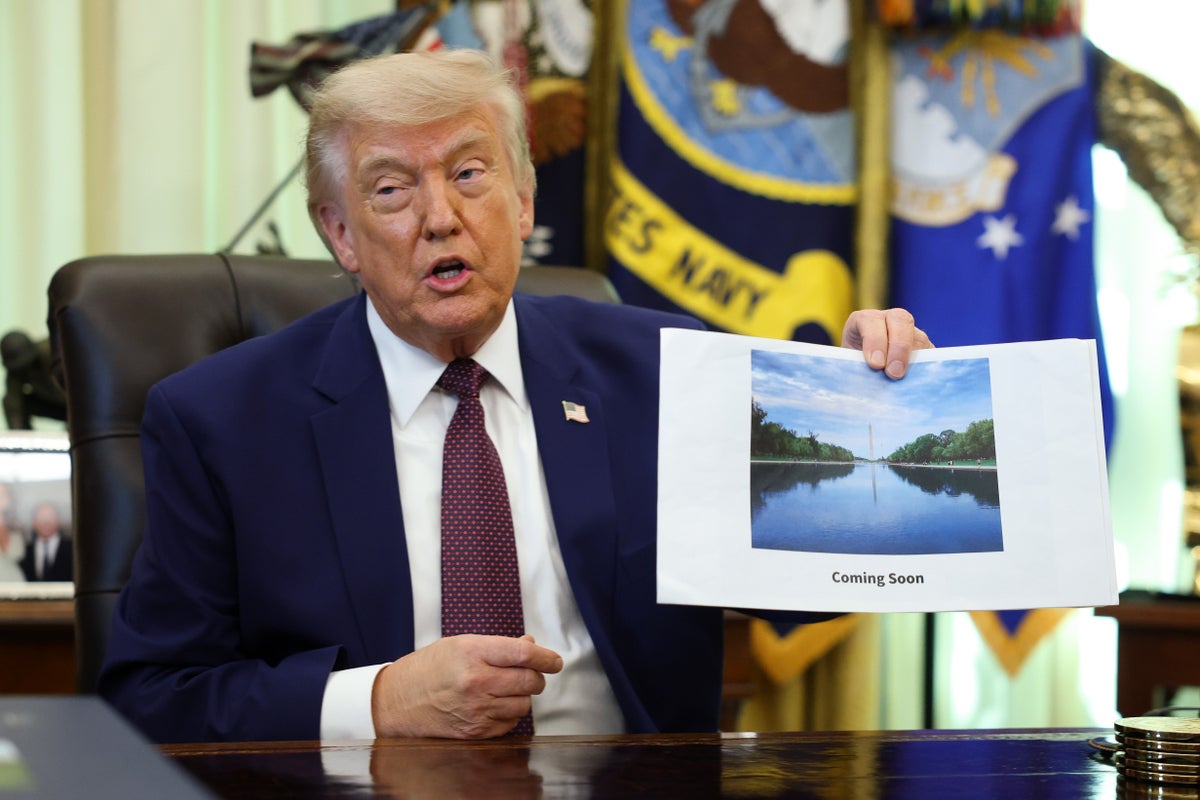
The water used to catch the sky perfectly. If you stood at the base of the Lincoln Memorial on a crisp autumn morning, the reflection of the Washington Monument split the sky like a clean marble seam. It was a civic optical illusion, a two-thousand-foot expanse of stillness designed to make stone feel weightless. It was a place where millions of people came to look at history, and in doing so, look at themselves.
Now, a heavy, neon-green skin coats the surface.
Walk down the steps today and the air smells faintly of a neglected aquarium. The water is thick, choked with an aggressive bloom of filamentous algae that clumps into floating mats. It traps trash, dampens the wind-rippled light, and obscures the floor of the basin. The grand mirror is broken, replaced by something turbid and stagnant.
On the surface, it is a straightforward story about infrastructure, water chemistry, and seasonal shifts. Beneath the surface, the state of the National Mall has always been a physical manifestation of the administration running the city. When the capital's central monuments begin to fester, it is rarely just an engineering problem. It is a symptom of how a government views its public obligations.
To understand how a national landmark turns into a swamp, you have to look at the delicate balance between appearance and maintenance.
The National Park Service operates under a relentless, cyclical pressure. The Reflecting Pool requires constant filtration, chemical balancing, and physical skim-cleaning to combat the organic matter dropped by thousands of migratory ducks and seagulls. It is a tedious, expensive, and utterly unglamorous job. It requires a quiet dedication to routine upkeep—the kind of back-of-the-house labor that never makes it into a press release or a campaign speech.
When an administration prioritizes the theater of governance over its mechanics, the back-of-the-house is the first thing to starve.
The current state of the pool reflects a deeper philosophy of neglect, one driven by a hyper-focus on personal branding and a profound paranoia regarding institutional spending. For years, resources have been diverted toward high-visibility spectacles, military displays, and immediate aesthetic fixes that serve a singular ego rather than the public good. Meanwhile, the boring, essential budgets for national park infrastructure are quietly choked off.
Consider the mechanics of an algal bloom. Algae thrives on two things: sunlight and nutrients. In a healthy ecosystem, or a well-maintained artificial pool, those nutrients are kept in check. The water is circulated. Filters catch the debris. Chemical treatments neutralize the spores before they can take hold.
But when the pumps are turned down to save on utility bills, or when the maintenance crews are understaffed because of a hiring freeze born of bureaucratic distrust, the water stops moving. It sits under the Washington sun. The heat rises. The nutrient load from bird droppings and urban runoff builds up without interruption. The water becomes a breeding ground.
This is not a metaphor; it is basic biology. But the visual result functions as a perfect critique. A leader obsessed with project strength, vanity, and pristine optics has presided over the literal decay of the nation’s most prominent public mirror. The paranoia that views institutional expertise and career civil servants as adversaries directly leads to the breakdown of the systems those experts manage. When you fire or sideline the people who know how to keep the pumps running, the water rots.
Tourists still walk the perimeter. They pull out their phones, trying to angle their cameras to crop out the green slime, attempting to capture the myth of Washington rather than its current reality. They want the pristine monument they saw in textbooks, the one that served as the backdrop for Martin Luther King Jr.’s dream or the collective grief of the Vietnam War era. Instead, they get a lesson in what happens when public spaces are treated as backdrops rather than sacred trusts.
The green film spreading across the water is a warning sign. It is the visual cost of an ideology that disdains public infrastructure in favor of personal grievance. A mirror cannot lie. It reflects exactly what stands before it—even when what stands before it is an administration too consumed by its own reflection to notice the water is dying.


