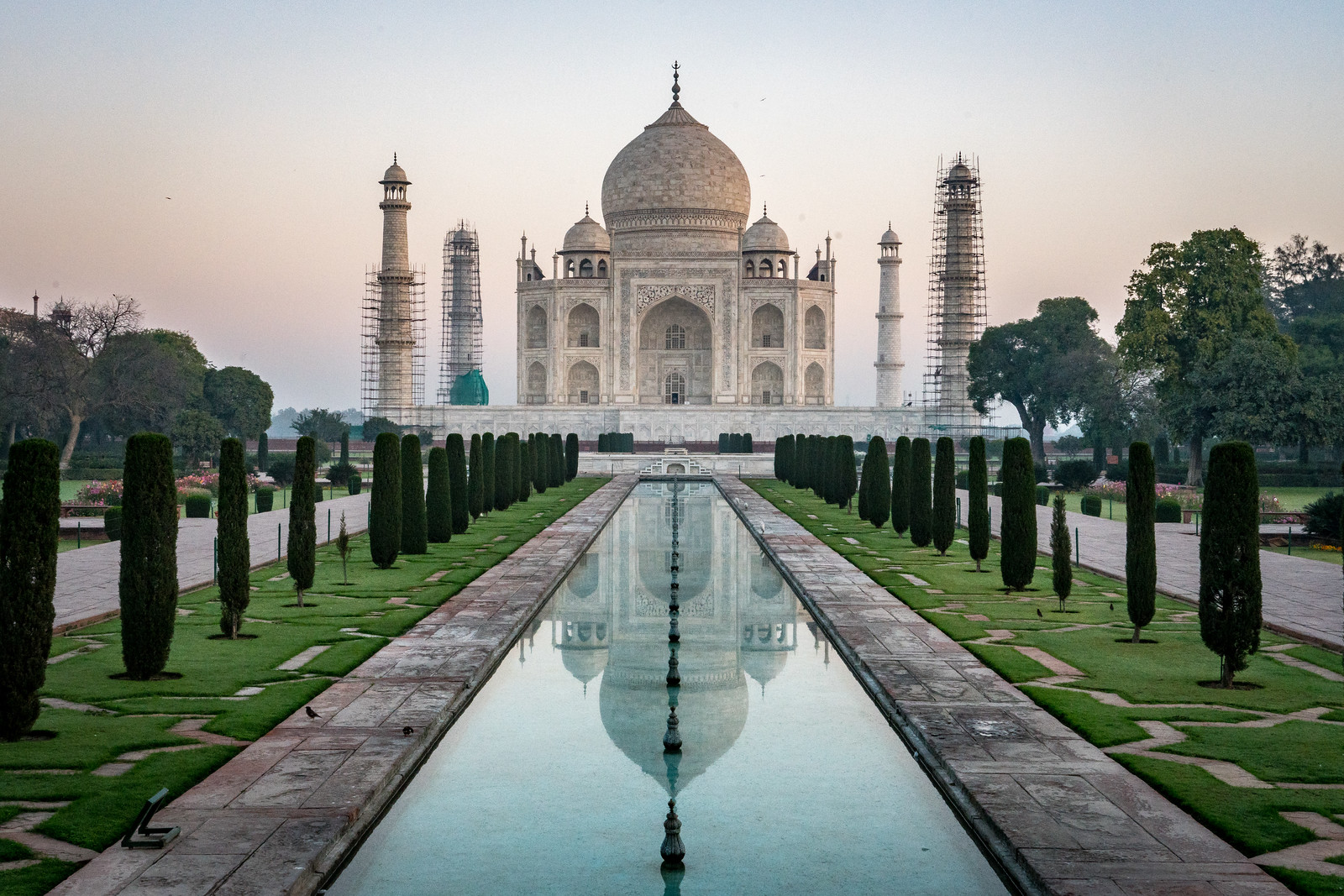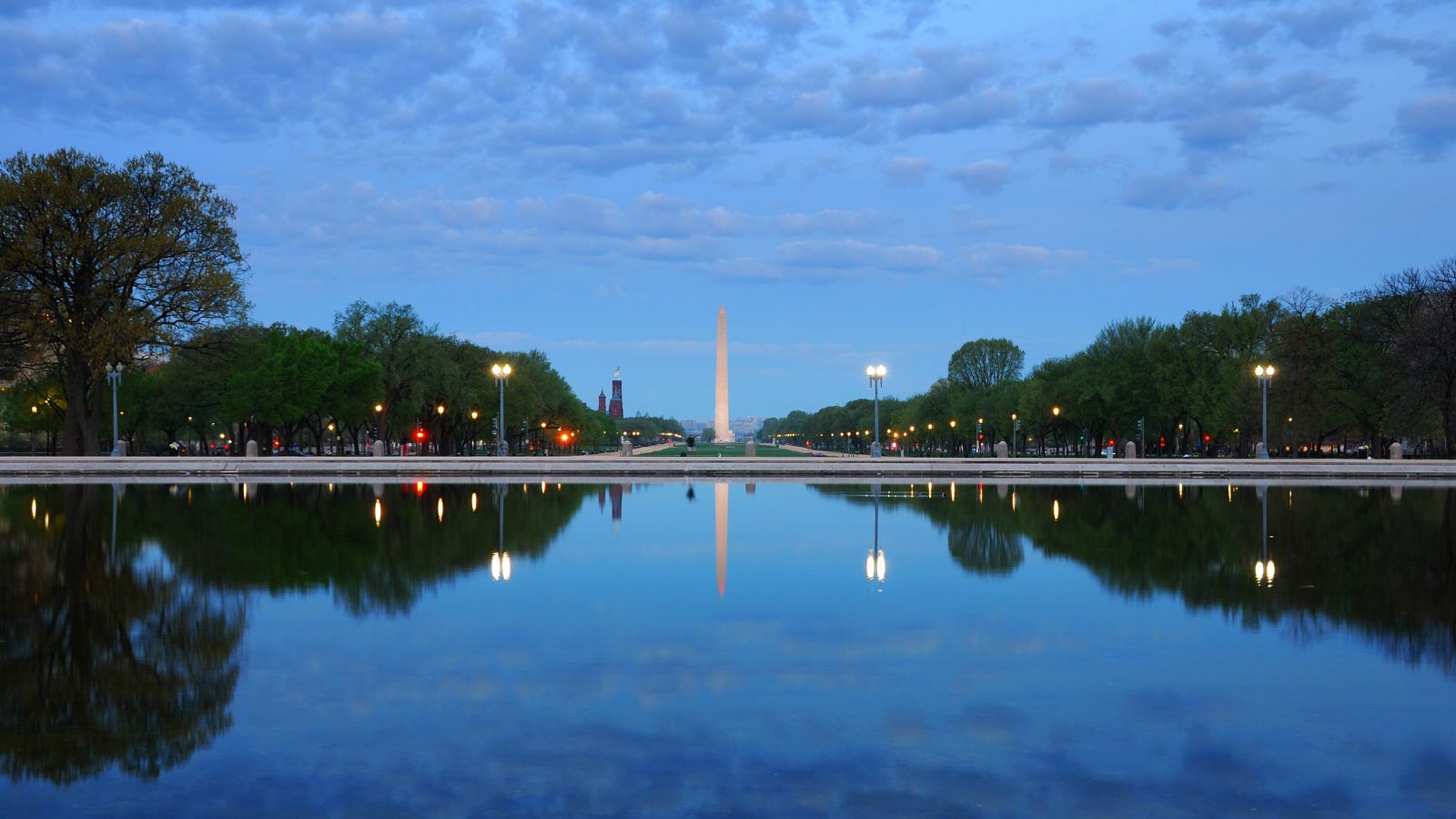
On a humid Tuesday morning in Washington, a family from Ohio stands at the edge of the Lincoln Memorial, looking east. The kids want to see the view they have witnessed a thousand times on television—the long, flawless ribbon of water that stretches toward the Washington Monument, perfectly reflecting the sky and the stone. It is a monument to national self-reflection.
Instead, they squint at a thick, soup-like soup of neon green. A foul, swampy odor lifts off the surface, carried by a faint midsummer breeze. Clotted mats of algae drift across the water like miniature, toxic continents. Near the steps, a discarded spray-paint can bobs lazily against a concrete lip marred by fresh, jagged graffiti. The illusion is broken.
Water tells us the truth about how we care for our shared spaces. Right now, the National Mall is whispering a story of neglect.
The state of the Lincoln Memorial Reflecting Pool has reached a tipping point, drawing the direct attention of the White House. President Trump issued an executive order mandating an immediate, comprehensive inspection of the site. The directive targets two distinct but interconnected crises: a massive, suffocating algae bloom and a recent surge in vandalism that has defaced the historic perimeter.
This is not a simple cleaning job. It is a logistical nightmare happening at the literal center of American civic life.
The Chemistry of a Dying Mirror
To understand why the water turned into a lime-green carpet, you have to look beneath the surface at a process called eutrophication.
Think of the Reflecting Pool not as a natural pond, but as a massive, shallow concrete bowl. It holds approximately 6.75 million gallons of stagnant water. When summer temperatures spike, that concrete acts like a giant skillet. The sun beats down, heating the water until it reaches the perfect temperature for cyanobacteria—commonly known as blue-green algae—to explode in population.
The algae needs food to grow. It finds that food in unexpected ways. Every time a storm rolls through Washington, it carries urban runoff into the basin. This runoff is packed with phosphates and nitrates—the chemical equivalent of premium fertilizer.
Consider what happens next.
The microscopic organisms feast. They multiply exponentially, doubling their mass in mere hours. As they blanket the surface, they block out the sunlight. The subsurface ecosystem chokes. When the algae eventually dies, the decomposition process sucks the remaining dissolved oxygen out of the water. What remains is a stagnant, hypoxic dead zone that smells of rot and looks like a chemical spill.
The National Park Service faces a brutal math problem every summer. Treating 6.75 million gallons of water requires a delicate balance of mechanical filtration and chemical intervention. Copper sulfate is often deployed to kill the blooms, but if applied too aggressively, it can damage the pool's historic infrastructure and create toxic runoff issues downstream in the Potomac River.
The Scars on the Stone
If the algae bloom is a slow, environmental chokehold, the vandalism is a sudden, violent strike.
Over the past fortnight, the granite walkways and the neoclassical steps surrounding the pool have become targets for late-night vandals. This is not artistic expression; it is destruction. Tagged slogans in permanent aerosol paint cut through the weathered patina of the stone.
Cleaning historic granite is not as simple as blasting it with a pressure washer.
Granite appears indestructible, but centuries-old stone is surprisingly porous. High-pressure water can strip away the protective outer layer of the rock, pitting the surface and leaving it vulnerable to moisture infiltration. When winter arrives, that trapped water freezes, expands, and cracks the monument from the inside out.
Instead, restoration experts must use specialized chemical poultices. These pastes are applied to the graffiti by hand, left to sit under plastic wrap to draw the pigment out of the stone's pores, and then meticulously scraped away. It is slow, expensive, and deeply frustrating work funded entirely by taxpayers.
The White House inspection order demands accountability for these security lapses. The National Mall is ostensibly one of the most heavily monitored patches of land on Earth, yet dark corners and blind spots in the surveillance grid have allowed bad actors to slip through undetected. The upcoming assessment will likely result in a dramatic overhaul of the area’s security architecture, including low-profile night-vision cameras and increased park police patrols.
The Human Cost of a Blighted Landmark
We build monuments because human memory is fragile. We need physical anchors to remind us who we are, where we have been, and what we aspire to achieve. The Reflecting Pool is not just an engineering feat; it is a stage where history happens. It is where Martin Luther King Jr. spoke of his dream to a crowd of a quarter-million people. It is where static stone meets fluid life.
When a landmark like this is allowed to degrade, the impact filters down to the individual human experience.
Consider the park ranger who has spent twenty years answering questions for wide-eyed tourists. Now, instead of directing people toward the spot where history was made, they spend their shifts apologizing for the smell, explaining why the water is fenced off, and watching contractors scrub obscenities off the walls. The sense of pride in stewardship erodes, replaced by a weary, defensive cynicism.
Then there are the visitors. For millions of Americans, a trip to the nation's capital is a once-in-a-lifetime pilgrimage. Families save for years to make the journey. They arrive seeking inspiration, a sense of shared identity, or perhaps a quiet moment of patriotism.
Instead, they are confronted by a literal and metaphorical rot. The green slime and the jagged graffiti tell them that the center cannot hold, that the things we claim to revere are actually disposable. The psychological cost of a defaced monument is impossible to quantify, but it settles in the chest of every person who walks away disappointed.
The forthcoming inspection will yield blueprints, cost estimates, and technical reports. Engineers will debate filtration cycles, and security experts will map out camera angles. But the true measure of the project's success will not be found in a government ledger.
It will be found on a future summer morning, when the air is clear, the stone is clean, and the water is so perfectly still that you cannot tell where the earth ends and the sky begins.