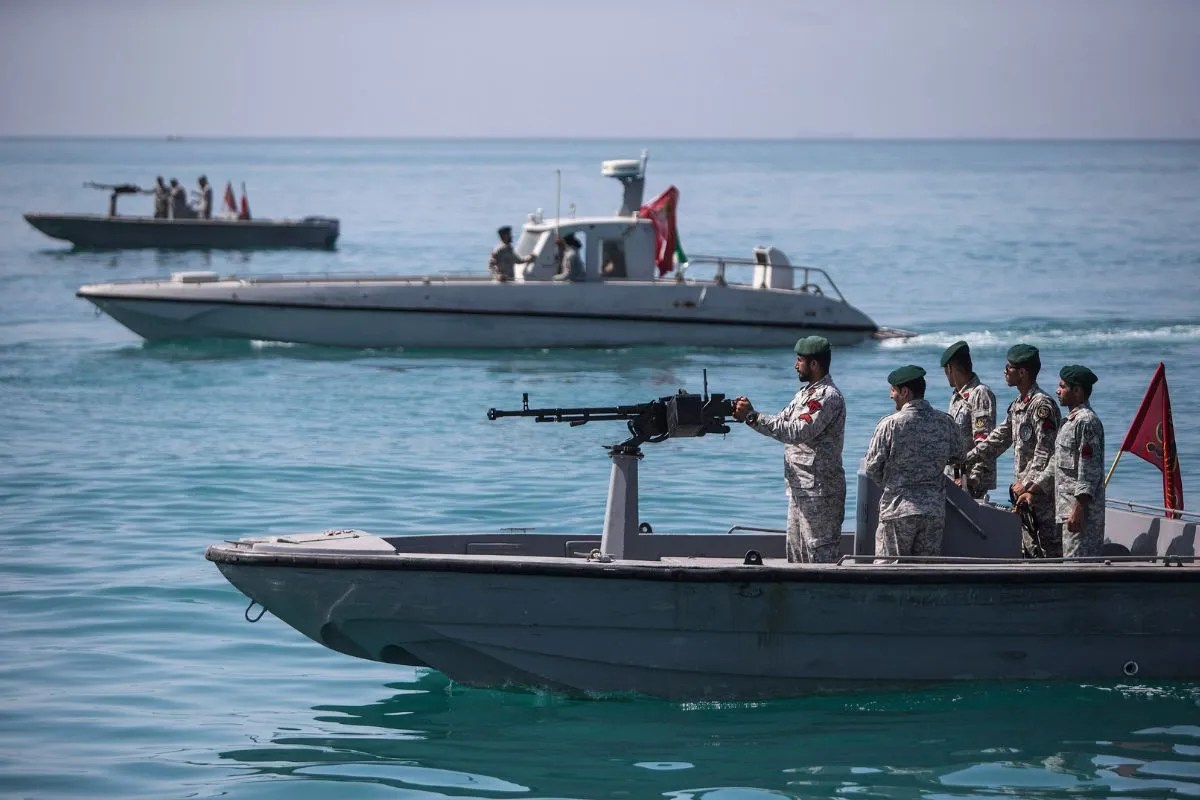
The mainstream media loves a narrative of Western decline. When headlines blared that European nations were "forced to bow" before Tehran to beg for safe passage through the Strait of Hormuz, the commentariat swallowed the bait whole. They painted a picture of absolute capitulation. They claimed that Europe’s maritime dependence had left it defenseless, turning the world’s most vital energy chokepoint into a unilateral Iranian toll booth.
It is a comforting story for geopolitically naive analysts. It is also completely wrong.
What the breathless commentary misinterprets as submission is, in reality, a calculated, cold-blooded exercise in strategic decoupling. Europe isn't bowing to Iran. It is quietly exposing the limitations of American naval hegemony while safeguarding its own supply chains through transactional diplomacy. The narrative of "begging for permission" misses the entire structural reality of modern maritime security.
The Flawed Premise of Absolute Sovereignty
Mainstream analysis operates on a childish definition of power. It assumes that because a state possesses formidable naval assets, it must use them to bully every regional adversary into submission. When a country chooses negotiation over gunboat diplomacy, amateur strategists call it weakness.
Let us dismantle the core mechanic of the Strait of Hormuz. Roughly one-fifth of the world’s liquid petroleum passes through this narrow stretch of water between Oman and Iran. The physical reality of the strait means that any kinetic conflict instantly closes the shipping lanes. It does not matter if the United States Navy or a coalition of European warships wins the battle in forty-eight hours; the mere ignition of conflict sends insurance premiums to astronomical heights, effectively halting commercial traffic.
[Kinetic Escalation] -> [Insurance Rates Skyrocket] -> [Commercial Shipping Halts] -> [Global Supply Shock]
For European capitals, avoiding this chain reaction is not about ideology. It is about cold, hard math. Sending a multi-billion-dollar frigate to play chicken with Islamic Revolutionary Guard Corps (IRGC) fast attack craft achieves nothing for a commercial fleet. Securing quiet, back-channel guarantees of non-aggression does. The European approach is not a surrender of sovereignty; it is the optimization of risk management.
Why Gunboat Diplomacy is a Financial Disasters
For decades, the global shipping industry relied on the assumption that the US Fifth Fleet would guarantee freedom of navigation. I have watched corporate boards and maritime logistics firms burn millions of dollars acting on this outdated assumption. They truly believed that military presence equated to commercial safety.
It doesn’t. Consider the economics of modern asymmetrical maritime warfare. An adversary can deploy a swarm of low-cost loitering munitions, sea mines, and anti-ship cruise missiles. To counter a single drone costing less than a used sedan, a Western destroyer must fire an air-defense missile that costs upwards of two million dollars.
| Asset Type | Estimated Cost | Operational Vulnerability |
|---|---|---|
| Western Destroyer | $1.5 Billion+ | High target profile, finite ammunition depth |
| Asymmetrical Swarm Drone | $20,000 | Mass-producible, high saturation capability |
This asymmetry means that a purely military solution in a confined chokepoint is an economic failure before the first shot is even fired. European nations, lacking the bottomless defense budgets of Washington, recognized this reality early. Their diplomatic engagement with regional powers is a recognition of structural vulnerability, not a moral failure. They are refusing to fund an unsustainable war of attrition.
Dismantling the People Also Ask Misconceptions
The public discourse surrounding Middle Eastern maritime security is choked with flawed premises. If you look at the questions driving public anxiety, the misunderstandings become glaringly obvious.
Can Iran actually close the Strait of Hormuz permanently?
No. But they don't need to. The question itself reveals a total lack of understanding regarding global shipping mechanics. Iran does not need to chain off the strait or sink a hundred tankers to achieve its geopolitical goals. It only needs to create enough calculated instability to make the waters uninsurable for specific flags. By selectively targeting or threatening vessels, Tehran alters the risk calculations of international underwriters. When insurance companies refuse to cover hulls, the strait is effectively closed to those nations, without Iran ever having to fire a major salvo. European diplomacy directly targets this insurance mechanism by removing their ships from the crosshairs.
Why doesn't NATO just escort every commercial vessel?
Because the math is impossible. There are tens of thousands of commercial transits through the region annually. NATO nations do not possess the hull count, the logistics chain, or the political will to provide continuous, close-in escort protocols for every container ship and VLCC (Very Large Crude Carrier). Even if they tried, an escort does not immunize a civilian vessel from a stray missile or a targeted minefield. De-escalation through diplomatic channels achieves the exact same security outcome as a massive naval armada, at a fraction of the cost.
The Invisible Winners of Transactional Diplomacy
The true alternative to this diplomatic maneuvering isn't a glorious Western military victory; it is total supply chain chaos.
When European nations negotiate independent parameters for their shipping, they are intentionally breaking away from the monolithic Western alignment that Tehran targets. By decoupling their maritime identity from US foreign policy objectives, European states remove the target from their own backs.
This strategy does have a dark side. It fragments Western solidarity. It proves that when the economic chips are down, regional energy security trumps global ideological alliances. It leaves smaller, less diplomatically connected nations exposed to higher risks and surging freight costs.
But pretending this is a humiliation for Europe is a fundamental misreading of the chess board. It is a calculated pivot toward a multipolar reality where security is bought with diplomatic agility, not just naval tonnage.
The era of relying on a single superpower to keep the world's shipping lanes open by brute force is dead. The nations that survive and thrive in this new environment are not the ones pretending they can still dominate every chokepoint through sheer hubris. They are the ones pragmatic enough to negotiate the terms of their passage, ignoring the noise of commentators who confuse the theater of war with the reality of global commerce. Stop looking for a victory flag in the Strait of Hormuz. The only metric that matters is whether the cargo moves. Every everything else is just propaganda.