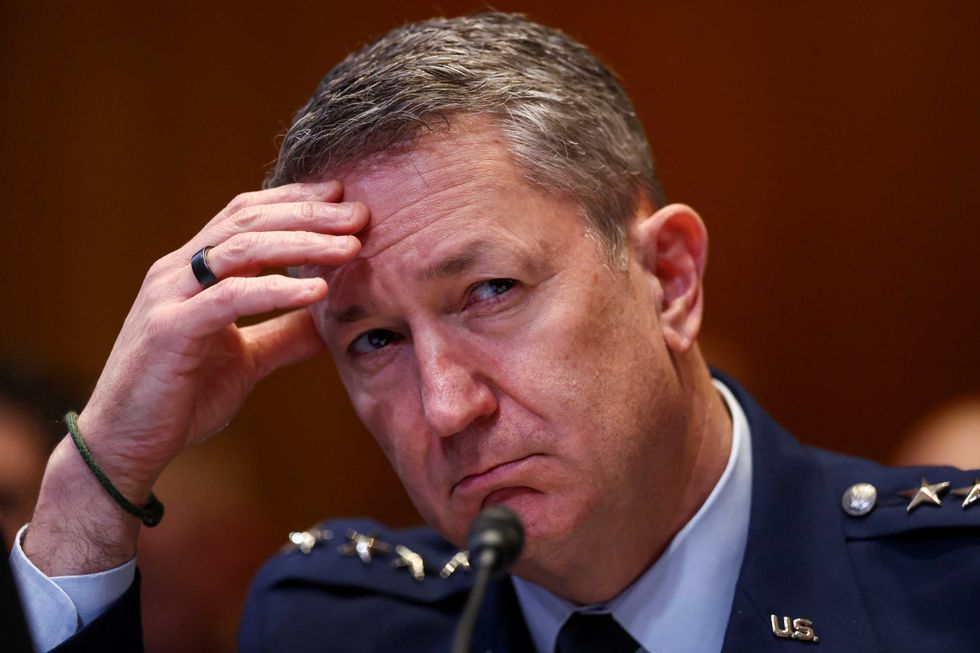
The hand-wringing over a general "ceding" strategy to a commander-in-chief isn't just misguided. It is historically illiterate.
We are currently witnessing a masterclass in pearl-clutching by the "permanent establishment"—that vague collective of think-tank lifers and retired brass who believe the Pentagon should operate as a fourth branch of government. They argue that military strategy is a sacred, dark art that must be shielded from the "interference" of an elected leader. They are wrong.
In the United States, the military does not own strategy. They own the execution of tactical objectives derived from a civilian-led grand strategy. When experts complain that a general is "giving in" to a president, what they are actually complaining about is the democratic process functioning correctly.
The Professionalism Trap
The "lazy consensus" suggests that a "good" general is one who stands as a bulwark against the whims of the White House. This view posits that the military knows best and the politician is a dangerous amateur.
I have sat in rooms where "best military advice" was used as a cudgel to box in a president. It’s a classic bureaucratic maneuver: present three options, two of which are intentionally ridiculous, to force the civilian leader toward the Pentagon’s preferred path. When a general refuses to play this game and instead aligns with the president’s stated policy goals, the establishment calls it a "failure of leadership."
It is actually the highest form of professional discipline.
The Constitution does not appoint the Chairman of the Joint Chiefs of Staff as the final arbiter of national security. That role belongs to a civilian. To suggest that a general should "resist" a president’s strategic direction—provided it is legal—is to flirt with a soft junta. If you want the military to run the show, move to a country where the uniforms choose the president, not the other way around.
Strategy is Not a Science
One of the most persistent lies in Washington is that strategy is a clinical, objective field. It isn’t. Strategy is a value judgment.
- Should we prioritize the Pacific over the Middle East?
- Should we prioritize economic stability over kinetic intervention?
- Should we bring troops home or maintain an empire of outposts?
These are not math problems. There is no "correct" answer that a computer or a career officer can calculate. These are political questions. Therefore, the answers must be political.
When a general "cedes" strategy, they are acknowledging that the civilian leader has a mandate from the voters to change the country’s direction. The military’s job is to figure out the $x$ and $y$ of how to move the tanks, not whether the tanks should be there in the first place.
The critics are terrified because they see their influence evaporating. They have spent decades building a "rules-based order" that essentially functions as a self-licking ice cream cone—a perpetual motion machine of deployment and procurement. A president who disrupts that machine is a threat to their relevance. A general who helps that president is a traitor to their class.
The Clausewitzian Reality
We need to talk about Carl von Clausewitz, the Prussian general whose work is often cited but rarely understood by the talking heads on cable news. His most famous dictum is that war is the continuation of policy by other means.
"The political object is the goal, war is the means of reaching it, and means can never be considered in isolation from their purpose."
If the policy changes—because a new president is elected—the "other means" must change accordingly. A general who attempts to maintain an old strategy in the face of a new policy is violating the fundamental logic of warfare.
Imagine a scenario where a CEO tells their Head of Logistics that the company is moving from physical retail to e-commerce. If that Head of Logistics continues to lease warehouse space for malls because "that's how we've always done it," they aren't being an expert. They are being an anchor.
The False Idol of Non-Partisanship
The cry for a "non-partisan" military is often used as a shield for a "pro-status-quo" military.
By claiming that certain strategic decisions are "non-partisan," the establishment removes them from the realm of public debate. They want to keep the big questions—like whether we should be in a specific conflict for twenty years—in a black box labeled "Expertise: Do Not Touch."
When a general aligns with a president like Trump, or any disruptive leader, they are accused of "politicizing" the military. But the military was already politicized; it was just aligned with a politics the establishment liked. Maintaining the status quo is a political act. Sending troops to a new conflict is a political act. Keeping them there is a political act.
The idea that there is a "neutral" military position is a fiction. Every deployment, every budget request, and every strategic pivot serves a political end. The only question is: whose political end? The voters', through their elected representative, or the bureaucracy's?
The Risk of Genuine Compliance
Let’s be honest about the downsides. Yes, a general who follows a president’s unconventional strategy might be leading the military into a sub-optimal outcome. The president might be wrong. The strategy might fail.
But that is the risk inherent in a democracy.
The alternative—a military that chooses which orders to follow based on its own internal "expertise"—is far more dangerous. If we allow the brass to veto the strategy of the commander-in-chief, we have lost our republic.
I’ve seen the results of "independent" military thinking. It gave us the "surge" in Afghanistan that achieved nothing but a higher body count. It gave us decades of "nation-building" that collapsed in weeks. The "experts" have a track record of failure that should make them humbler than they are.
Stopping the Wrong Questions
People often ask: "How can we protect the military from political influence?"
This is the wrong question. The military is an instrument of political influence. You should be asking: "How do we ensure the military effectively executes the will of the people’s elected leader?"
The current hysteria isn't about protecting the troops or the nation. It’s about protecting a specific, interventionist worldview that has dominated Washington for half a century. The generals who are "ceding" strategy are simply doing their jobs. They are providing the president with the tools to implement the platform he was elected on.
If you don't like the strategy, don't blame the general. Blame the person who gave the order, or the people who put them there.
Stop asking for "warrior-monks" who will save us from our own elections. We don't need generals who think they are smarter than the Constitution. We need professionals who understand that their stars don't give them a vote on policy.
The "top general" isn't ceding strategy. He’s finally remembering who the boss is.