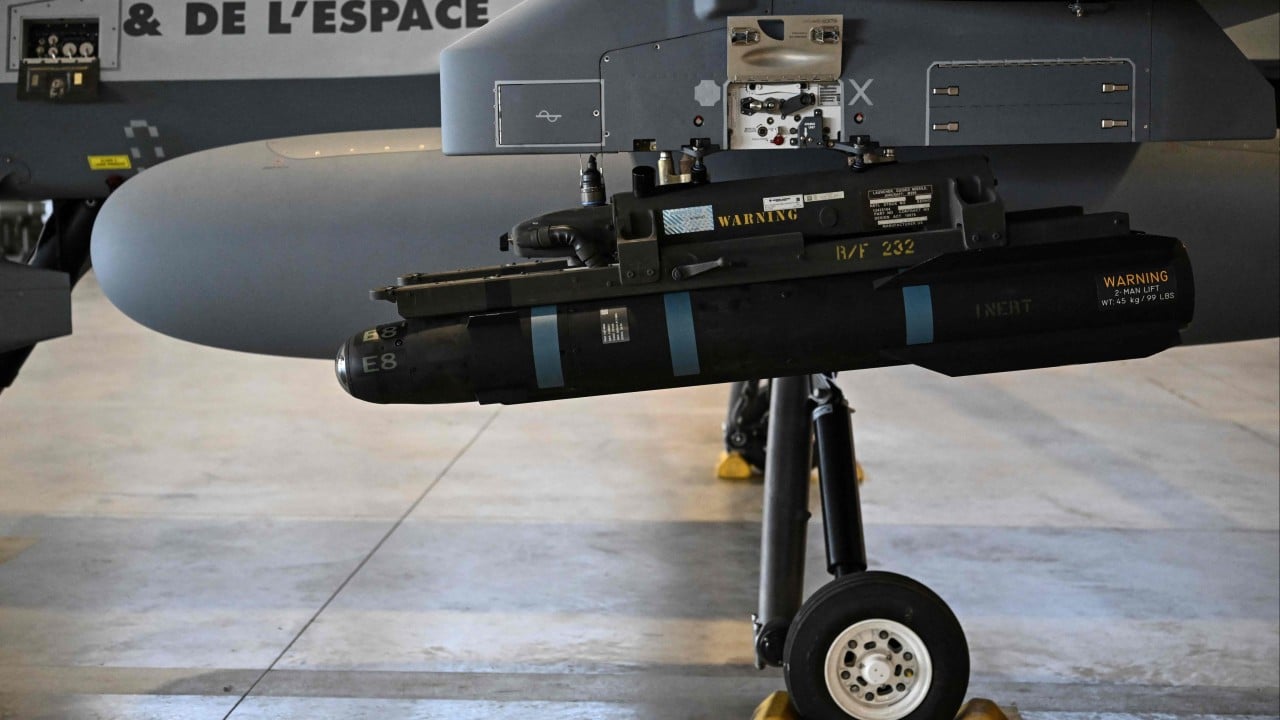
The United States State Department cleared a twenty-two million dollar sale of AGM-114R Hellfire precision-guided missiles to Singapore, attaching its standard, boilerplate guarantee that the transaction will not alter the basic military balance in the region. This bureaucratic phrase is routinely stamped onto major defense exports to pacify neighboring nations. Yet the assertion is a geopolitical fiction. By steadily injecting sophisticated munitions, rocket artillery upgrades, and advanced maritime patrol aircraft into Southeast Asia's smallest state, Washington is actively tipping the local balance of power to construct an island fortress capable of deterring larger regional actors.
The late June approval for sixty-seven Hellfire missiles destined for the Republic of Singapore Air Force's Apache fleet follows a massive two-billion-dollar deal for Boeing P-8A Poseidon maritime patrol aircraft earlier this year. Taken in isolation, a handful of anti-armor missiles looks like routine logistics. Viewed together, these acquisitions trace the outlines of an aggressive, long-term military buildup that challenges the very definition of regional stability. Meanwhile, you can explore related events here: Stop Hunting for Miracles in Venezuela.
The Standard Bureaucratic Lie
Every weapon system cleared by the Defense Security Cooperation Agency arrives wrapped in the same linguistic paper. The phrase about maintaining a regional equilibrium has become a diplomatic ritual. It is designed to soothe sensibilities in Jakarta and Kuala Lumpur while signaling to Beijing that Washington is not establishing an offensive beachhead.
The strategy is hollow. Singapore already possesses the most advanced, highly integrated military apparatus in Southeast Asia. Its defense budget regularly eclipses those of its geographically massive neighbors. To claim that adding deeper stockpiles of precision-guided munitions does not alter the strategic equation ignores the mathematics of modern warfare. Weapons do not exist in a vacuum. They plug into an ecosystem of sensors, data links, and Western-trained personnel that no other state in the Association of Southeast Asian Nations can match. To see the complete picture, check out the recent analysis by The Guardian.
By continuing to feed this machine, the United States is pursuing a specific policy under the guise of maintenance. It wants a highly capable, completely interoperable proxy guarding the southern gate of the South China Sea. This is not about preserving a status quo. It is about locking in a permanent technological edge for a key Western partner.
The Reality of the Silicon Fortress
Singapore operates on a doctrine of total deterrence. It is a poison shrimp. The island is too small to survive an invasion, so its military must be capable of striking swiftly, deeply, and with devastating precision to break an adversary before they reach the shore.
The Hellfire purchase targets tactical operations, providing the Apache attack helicopters with a refined capacity to neutralize maritime swarms or coastal landing craft. Meanwhile, the multi-billion-dollar acquisition of P-8A Poseidon aircraft handles the strategic layer. These aircraft are submarine hunters. They monitor the critical choke points of the Malacca Strait and the Sunda Strait, tracking Chinese naval movements with terrifying accuracy.
Singapore Defense Procurement Profiles (2026)
+------------------------+--------------------------+-----------------------+
| Weapon System          | Primary Role             | Estimated Cost        |
+------------------------+--------------------------+-----------------------+
| AGM-114R Hellfire      | Precision Strike/Apache  | $22.3 Million         |
| P-8A Poseidon          | Maritime Patrol/ASW      | $2.31 Billion         |
| Guided Rocket Upgrades | Long-Range Artillery     | $73.0 Million         |
+------------------------+--------------------------+-----------------------+
This concentration of firepower creates a massive anti-access bubble around the city-state. Neighboring nations watch this accumulation with quiet anxiety. While official diplomatic channels in Malaysia and Indonesia remain silent to preserve economic ties, defense planners in Kuala Lumpur and Jakarta understand that the military gap is widening into a canyon.
How Washington Exploits the Lower Threshold
The mechanics of the Hellfire deal expose how defense diplomacy operates beneath the public radar. The transaction began as a twelve-million-dollar purchase, a figure carefully kept below the fourteen-million-dollar threshold that requires formal notification to the United States Congress. Only when Singapore tacked on an additional request for twenty-four missiles did the total value trigger public disclosure.
This piecemeal acquisition strategy allows small states to upgrade their arsenals incrementally without sparking regional political firestorms. It is stealth militarization. By utilizing these lower-threshold Foreign Military Sales, Washington can quietly bolster a partner's capabilities over several years, avoiding the intense media scrutiny that accompanies a single multi-billion-dollar arms package.
The consequence is a steady, quiet accumulation of lethal tech. Launcher upgrades, software verification, and reprogramming support are quietly bundled into these smaller contracts. These are the hidden nervous systems of modern weapons. Without them, a missile is just a heavy tube of explosives. With them, it becomes a node in a broader American-led surveillance and strike network.
The Chinese Counter-Calculus
Beijing views these developments with transparent hostility. While American diplomats frame the sales as benign assistance for an economic partner, Chinese state media regularly warns against the militarization of the Indo-Pacific by outside powers.
Singapore attempts a delicate diplomatic dance. It refuses to join formal Western military alliances like ANZUS or NATO, and it welcomes Chinese naval vessels for joint exercises. Yet its hardware tells a completely different story. The data links running through Singapore's command centers are American. The fighter jets are built by Lockheed Martin. The maritime patrol aircraft are manufactured by Boeing. In a hot conflict, these systems are designed to plug directly into United States Pacific Command infrastructure.
This technological alignment makes neutrality an illusion. If tensions over Taiwan or the South China Sea boil over into open hostilities, the Pentagon will look to its silicon fortress in Southeast Asia to anchor its southern flank. Beijing knows this. The more advanced gear Singapore buys, the higher it climbs on the target list for China's rocket forces.
The Fragility of Technical Interoperability
The illusion of regional balance is further shattered by the concept of technical interoperability. When a nation buys American weapons, it is not just buying hardware. It is buying a long-term contract for American technicians, software engineers, and logistical loops.
This creates a deep dependency. Singapore's armed forces become tethered to Washington's technological updates and security architecture. This reality makes it incredibly difficult for the city-state to ever fully decouple its foreign policy from American interests in Asia. Neighboring states recognize this dynamic, viewing Singapore not as an independent regional actor, but as a heavily armed extension of American geopolitical will stationed at their doorsteps.
The danger of this arrangement is the friction it generates with nearby capitals. Indonesia and Malaysia cannot afford to match Singapore's defense spending dollar for dollar. Instead, they are forced to look for asymmetric alternatives, sometimes turning to Russian, Chinese, or European defense contractors to fill the void. This fragments the security environment of Southeast Asia, destroying any hope for a unified regional defense strategy.
The State Department will continue to issue its comfortable press releases, assuring the world that nothing has changed. The reality on the ground contradicts every word. Each missile, aircraft, and software patch shipped to the island moves the region closer to a dangerous tipping point, transforming a crowded maritime crossroads into an armed camp waiting for a spark.


