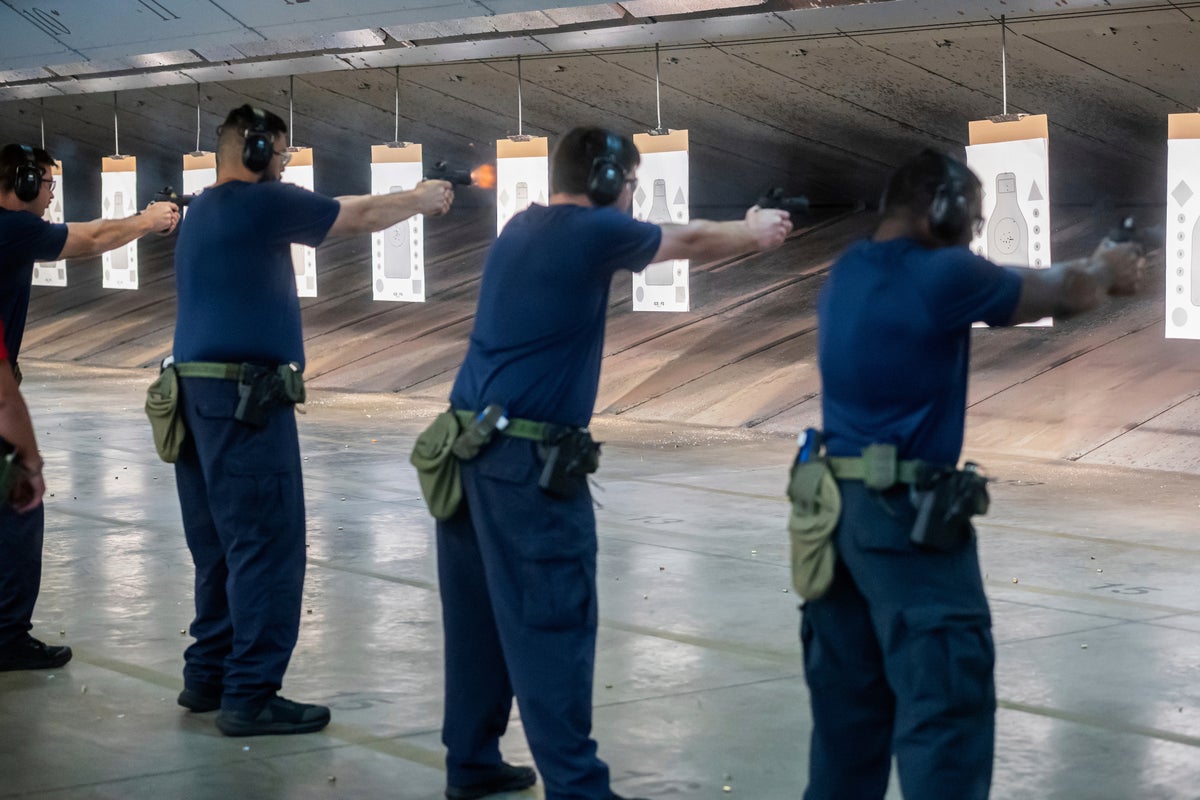
The lazy consensus of mainstream media has found its new favorite punching bag: the length of federal law enforcement academies. When an internal U.S. Immigration and Customs Enforcement (ICE) memo revealed the agency is abandoning its fast-track 42-day academy and forcing thousands of Trump-era hires into remedial "Advanced Field Officer Training," the commentariat nodded in predictable, synchronized agreement. The narrative was instant and clean: short training bad, long training good, and a 71-day academy will magically produce flawless enforcement.
This view is aggressively wrong. It completely misses the structural reality of federal immigration enforcement.
The belief that expanding a training program from 42 days to 71 days will solve operational errors, prevent tragic field mishaps, or fix systemic bureaucratic friction is a fantasy. For decades, legacy federal agencies have used extended academy timelines as a shield to hide an uncomfortable truth: institutional incompetence cannot be trained away in a classroom. The recent institutional panic, triggered by whistleblower complaints and a botched operation in Minneapolis, is a classic performance of beltway theater.
I have watched public sector institutions throw hundreds of millions of dollars at restructuring training pipelines under the guise of "professionalization," only to see the exact same cultural and tactical failures repeat on the ground.
The False Equation of Academy Days and Field Capability
The foundational flaw of the media's critique is the assumption that a longer academy directly correlates with a more precise, restrained, and effective agent. This is a metric chosen by bureaucrats because it is easy to track, not because it works.
Consider the mechanics of the 42-day curriculum developed under the Federal Law Enforcement Training Center (FLETC) framework. The legacy media lamented the removal of five weeks of formal Spanish-language instruction, mocking the agency’s reliance on translation software. But anyone who has actually managed large-scale field operations knows that five weeks of classroom conjugation never made anyone fluent. It created a dangerous illusion of competence. Replacing low-tier, academic language drills with immediate translation technology and hyper-focused tactical training was one of the few pragmatic decisions made during the hiring surge.
When the training duration is extended to 71 days, what actually fills the missing three weeks? It isn’t a sudden masterclass in constitutional nuances. It is administrative padding, death-by-PowerPoint compliance modules, and institutional filler designed to appease congressional committees.
The length of a law enforcement academy is an index of bureaucratic risk aversion, not field readiness.
Training Duration vs. Operational Outcomes
| Academy Model | Duration | Primary Focus | Structural Vulnerability |
|---|---|---|---|
| The Fast-Track Model (2025 Surge) | 42 Days | Tactical drills, high-risk stops, immediate deployment | High initial stress, dependency on field tech |
| The Expanded Model (July 2026 Mandate) | 71 Days | Crowd control, administrative compliance, expanded lectures | Bureaucratic drag, diminished field exposure |
Dismantling the "Under-Trained Agent" Fallacy
To understand why the mainstream panic is misdirected, we have to look at the "People Also Ask" queries dominating public discourse right now. The public is constantly asking: Are new ICE agents qualified to conduct mass deportations?
The premise of the question is completely broken. It assumes that the failures occurring during high-stakes urban operations are caused by a lack of classroom hours in Georgia. They aren't.
When the agency faced severe backlash over the tragic shooting of two U.S. citizens during an operation in Minneapolis, critics immediately pointed to the shortened 42-day academy as the culprit. Yet, look at the actual data from the field: the primary agent involved in that specific, disastrous operation was a veteran deportation officer with a decade of experience under his belt. He had completed the traditional, months-long legacy training pipeline years ago.
Classroom length did not save him from a catastrophic error in judgment.
The institutional elite scream for more training because it shifts the blame away from structural policy decisions and onto the backs of raw recruits. If an operation goes sideways, leadership can simply say, "The process failed, we need more funding for FLETC." It is a self-perpetuating loop of capital allocation. With the signing of the recent $70 billion immigration funding package, the agency has plenty of money to burn on this exact brand of administrative theater.
The Real Crisis: Recruitment Demographics, Not Academy Timelines
If you want to critique the expansion of the immigration enforcement apparatus, stop looking at the length of the syllabus. Look at who is sitting in the desks.
During the frantic hiring push that saw the agency rapidly onboard over 12,000 new agents, the true compromise was made in the baseline recruitment standards. The agency waived the traditional 37-year-old maximum hiring cap and dropped the minimum age requirement down to 18.
Think about the operational reality of that shift. You are taking 18-year-old recruits—individuals who cannot legally purchase a handgun in many civilian contexts—and handing them federal badges, firearms, and the authority to execute high-stress operations in dense urban environments. No amount of extension to a basic training academy can inject ten years of life experience, emotional maturity, or situational awareness into an 18-year-old mind.
The agency swapped out seasoned professionals and mature career-changers for a massive, young workforce incentivized by $50,000 signing bonuses. That is where the operational risk lives. Forcing an 18-year-old recruit to sit through an additional 29 days of lectures on crowd control at FLETC does not mitigate the inherent volatility of youth and inexperience in the field.
The Dangerous Illusion of "Remedial" Training
The internal mandate requiring fast-track agents to complete the new Advanced Field Officer Training Program is being hailed as a vital course correction. In reality, it introduces a massive layer of operational friction.
Imagine a scenario where an organization doubles its staff overnight, deploys them into active, hostile environments, and then suddenly announces that half of the workforce is technically deficient and must undergo mandatory, tracked online and field remediation.
What does this do to field dynamics?
- It creates a two-tiered class system within the agency: the "certified" elite and the "fast-track" liabilities.
- It completely guts field morale at a time when the Department of Homeland Security reports a 1,300% spike in assaults against its personnel.
- It pulls active agents away from their core duties to log into online portals and check compliance boxes, fracturing the operational focus required for high-risk field work.
The counter-intuitive truth is that pulling thousands of deployed agents into mandatory remedial programs mid-stream actually increases field risk. It introduces distraction, self-doubt, and administrative fatigue into an environment that demands absolute clarity and split-second decisiveness.
The Actionable Pivot for Enforcement Operations
The current strategy of cycling agents back through extended academies is a broken fix. If an agency genuinely wants to reduce field errors and maximize operational efficiency under a massive mandate, it must abandon the classroom obsession and pivot toward a hard, metric-driven field apprenticeship model.
True competency is built through strict, high-ratio field supervision, not a longer stay in a Georgia dormitory.
Instead of burning millions on lengthened academic timelines, resources should be aggressively funneled into expanding the Special Response Teams (SRT) and creating mandatory embedded veteran supervisor roles for every single field team containing a post-2025 hire. If an agent is shaky on high-risk vehicle stops, an extra week of lectures won't save them. A veteran supervisor overriding their positioning in real-time will.
But the federal apparatus will rarely choose this path because it requires accountability, clear field metrics, and an admission that the academy is just an expensive vetting mechanism, not a magic factory for perfect law enforcement officers. They will choose the 71-day timeline every single time, pocket the congressional funding, and look shocked when the next field disaster happens exactly the same way.