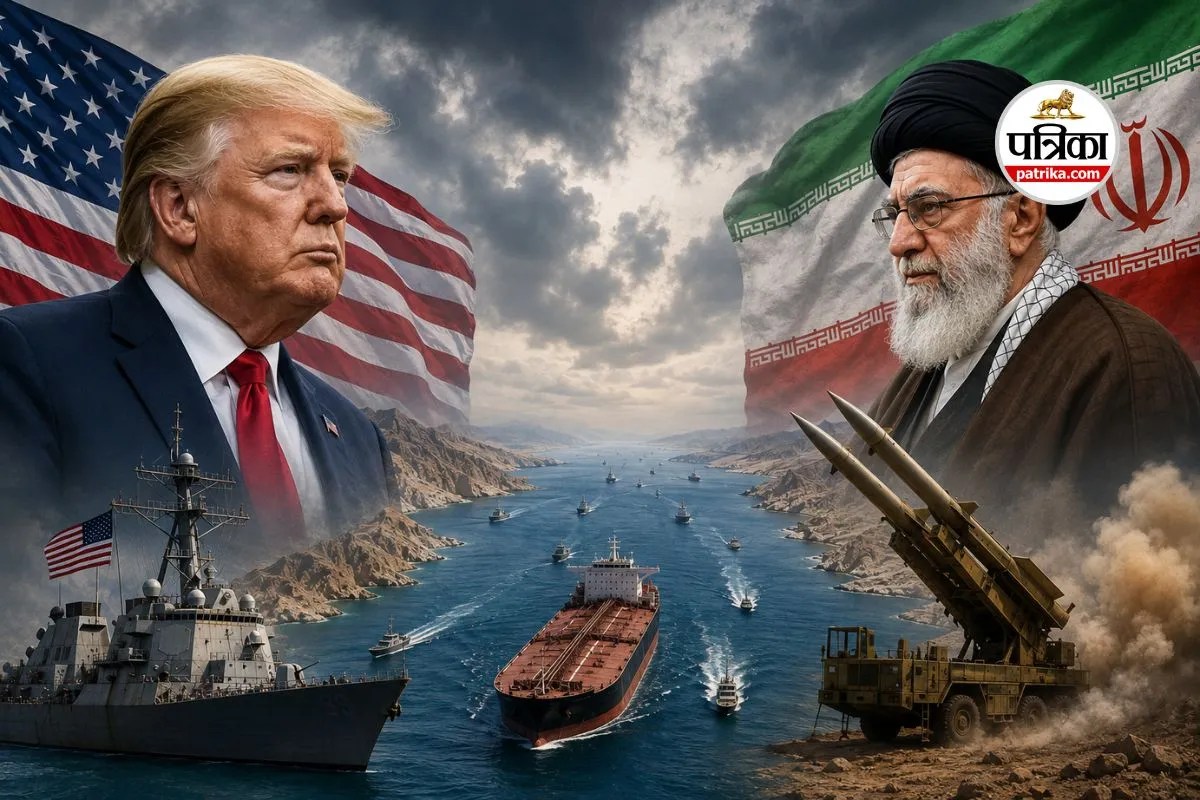
The air in Bandar Abbas smells of salt, sun-baked asphalt, and the sharp, metallic tang of diesel exhaust. If you stand down by the harbor wall at dawn, before the heat of the Gulf flattens the city into a shimmering mirage, you can see them. Gray shapes etched against the horizon. Tankers. Floating behemoths stretching longer than three football fields, riding low in the water because their bellies are heavy with the black blood of modern civilization.
They look permanent. Unstoppable.
They are not.
Twenty-one miles. That is all the space the earth allows for movement here at the Strait of Hormuz. At its narrowest point, the shipping lanes are split into two precarious two-mile-wide corridors—one for incoming traffic, one for outgoing, separated by a two-mile buffer zone designed to keep nations from colliding. Two miles. You can almost wave across it. On the northern shore sits Iran, its Revolutionary Guard speedboats idling in hidden coves, watching through binoculars. On the southern shore lie the United Arab Emirates and Oman.
And right through that narrow slit passes roughly a fifth of the petroleum consumed on this planet.
Think about that the next time you turn your ignition key, or watch your electricity meter tick upward, or walk down an aisle at the grocery store where every single plastic-wrapped item exists only because cheap energy dragged it across an ocean. We live our lives anchored to a valve twenty-one miles wide, operated by invisible hands, guarded by warships, and threatened by whispers of war.
To understand why a confrontation here makes stock markets plunge in Tokyo, New York, and London, you have to understand the geography of claustrophobia.
A few years ago, I spoke with a man named Captain Al-Mansoori. He had spent thirty years guiding supertankers through these exact waters. He laughed when I asked him if computers made the job easier.
"Computers tell you where the rocks are," he had told me, pouring thick, cardamom-spiced tea into a tiny glass cup. "They do not tell you what is happening in the minds of the men on the patrol boats. When you are sitting in a glass wheelhouse eighty feet above the water, carrying two million barrels of crude, you feel like a fat duck swimming in a narrow drainage ditch. One wrong move by someone five hundred miles away in an office, and you are the match that lights the room."
That is the reality of the Iran-US conflict in this specific theater. It is not an abstract chess match played on a glowing monitor in a Pentagon briefing room. It is a game of chicken played by eighteen-year-old conscripts on fiberglass gunboats and weary mariners who just want to make port without getting intercepted, detained, or mined.
The tension has a physical weight. When Washington tightens sanctions, choking off Tehran's oil exports with the methodical cruelty of a financial vise, the response does not come in boardrooms. It comes in the water. Iran knows its ultimate leverage. It is not nuclear enrichment or cyber warfare. It is the geography of the Gulf.
Hormuz.
The name itself sounds like a medieval gatekeeper. And it is. If Tehran decides to close that gate—whether by laying naval mines in the dead of night, staging swarm attacks with missile-armed speedboats, or simply seizing a passing vessel in retaliation—the global supply chain does not experience a hiccup. It fractures.
Let us look at the mechanics of panic.
Suppose tomorrow morning, a tanker is struck near the Musandam Peninsula. A plume of black smoke billows into the cloudless blue sky, captured instantly by commercial satellites and broadcast onto phones in every capital on earth.
Insurance rates for Gulf transit triple within four hours. Lloyd's of London designates the entire region a high-risk war zone. Overnight, shipowners look at the cost of fuel, the risk to their crews, and the price of their coverage, and they simply stop sailing. They anchor their vessels in the open waters of the Gulf of Oman or turn them around entirely.
Within forty-eight hours, the mathematics of scarcity take over.
Refineries in Asia, which rely on Gulf crude to keep their furnaces burning, find their pipelines running dry. Storage tanks empty. Prices at the pump do not crawl upward; they leap. A barrel of Brent crude jumps from standard operating levels to uncharted heights. And because energy is the invisible tax on every human activity—because it costs diesel to plow a field, kerosene to fly a cargo jet, and electricity to chill a vaccine—the shockwave ripples outward with terrifying speed.
Fertilizer prices spike. Food delivery costs double. Inflation, which central banks spend years trying to tame, roars back to life like a starved beast.
This is the invisible stake of the standoff. The US Navy maintains a constant presence here—the Fifth Fleet headquartered in nearby Bahrain—not because they want to pick a fight, but because keeping that twenty-one-mile ditch open is the single most important guarantor of global economic stability since the end of the Second World War.
Yet, military power has a paradox. The more warships you send to deter a conflict, the more targets you introduce into a crowded room. Every destroyer patrolling the Gulf is a floating cathedral of technology, but it is also a lightning rod. A stray radar signature, a misidentified fishing skiff, a miscalculated radio call—and the spark is struck.
Why does this cycle persist? Why do two nations separated by an ocean remain locked in this perpetual dance of mutual provocation?
Because both sides are trapped by their own logic. For Washington, allowing any regional power to dictate the terms of international maritime transit is an existential threat to the rules-based order. If the Strait of Hormuz can be closed by political blackmail, what stops the South China Sea from being shut next? What protects the Suez? If you yield an inch of the global commons, the map begins to unravel.
For Tehran, the logic is rooted in survival and defiance. Facing crippling economic isolation, Iranian leadership calculates that maintaining a constant, credible threat to the world's energy supply is their only effective deterrent against broader military action. It is the weapon of the cornered. If we cannot sell our oil to the world, the calculus goes, then we will make sure the world cannot easily buy anyone else's.
It is a terrible, elegant symmetry.
And in the middle of it all are the people who live along the littoral. Fishermen in Qeshm who watch gray hulls slide past their wooden dhows. Office workers in Dubai who check oil futures the way other people check the weather. Families in Ohio or Mumbai who will never see the Strait of Hormuz on a map, yet will feel the temperature of their lives rise because of a standoff in a strait they cannot pronounce.
We pretend that the global economy is a vast, sophisticated machine built of algorithms, fiber-optic cables, and decentralized networks. We talk about the cloud, about digital currencies, about supply chains optimized down to the nanosecond by artificial intelligence.
We forget that it all still rests on a few miles of salt water.
We forget that civilization is anchored to ships.
When you trace the line from a drop of crude oil trapped a mile beneath the desert sands to the plastic casing of the phone in your hand, every single step is miraculous. But the choke point—the place where human ambition meets human friction—is always the same.
A narrow channel. Two flags staring each other down across a strip of blue water.
The ships keep moving for now. The tankers glide through the bottleneck at twenty knots, their crews watching the horizon, waiting to see what tomorrow's diplomatic cable brings. But the margin for error is shrinking. And as the sun goes down over Bandar Abbas, turning the Gulf the color of molten copper, the silence on the water is not peace. It is just the sound of the world holding its breath.