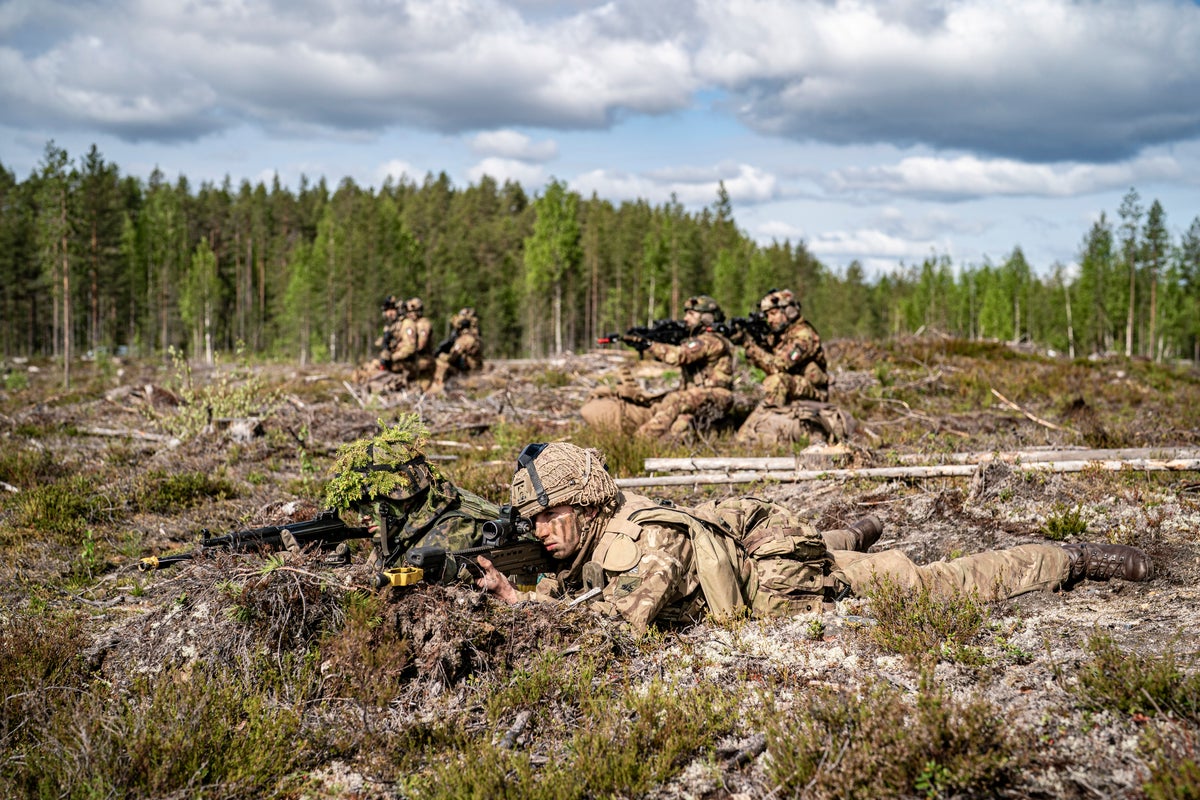
Vladimir Putin thought he could scare the West into backing down. He was wrong. Instead of fracturing the alliance, the latest round of Kremlin threats triggered the exact opposite reaction. NATO is currently executing its most significant military transformation since the Cold War, pouring thousands of combat-ready troops, advanced air defense systems, and massive logistical networks directly into eastern Europe.
If you've been watching the headlines, you know the rhetoric out of Moscow has turned increasingly sharp. But looking past the political theater reveals what is actually happening on the ground. This isn't just about sending a message anymore. It is about preparing for a high-intensity conflict that military planners realize could happen much sooner than anyone wants to admit.
NATO is shifting from a strategy of deterrence by retaliation to deterrence by denial. That sounds like military jargon, but the difference is simple. Old plans meant letting an enemy take territory and then fighting to win it back later. New plans mean stopping them at the border on day one.
The Reality of the New Eastern Flank
For years, the alliance kept a light footprint in the east. They used a tripwire strategy. Small, multinational battle groups were stationed in Poland and the Baltic states, designed to ensure that any aggression would automatically trigger a response from all member states.
That approach is officially dead.
The alliance is upgrading these existing battle groups into full, combat-ready brigades. We are talking about moving from roughly 1,000 troops per location to upwards of 5,000 soldiers in specific forward areas. The focus centers heavily on nations directly sharing borders with Russia, Belarus, and Ukraine.
- Lithuania: Germany is taking the lead here, committing a full permanent brigade to the country. This marks a massive historical shift in German defense policy.
- Estonia: The United Kingdom is reinforcing its presence, linking a UK-based brigade directly to Estonian defense plans for rapid deployment.
- Poland: The United States continues to anchor operations here, building out permanent infrastructure like the forward headquarters for the US Army V Corps.
- Romania and Bulgaria: France and other southern allies are beefing up defenses near the Black Sea, an area that has become a hotbed for naval tensions and stray drone debris.
This deployment isn't just a collection of infantry units. It includes heavy armor, long-range artillery, and sophisticated electronic warfare units. You can't defend territory with light troops alone. You need tanks, and you need a lot of them.
The Secret Weapon Is Logistics
Amateurs talk about strategy. Professionals talk about logistics. That old military adage has never been truer than it is today along the Suwalki Gap, the narrow strip of land connecting Poland and Lithuania.
Moving thousands of troops to the border means nothing if you can't feed them, fuel their vehicles, or supply them with ammunition. The real work of bolstering the eastern flank is happening in the boring details of infrastructure.
Rail networks across Europe are getting a massive upgrade. Historically, Soviet-era rail tracks in the Baltics used a different gauge than Western Europe. It was a logistical nightmare. Huge efforts are underway to fix these bottlenecks so trains loaded with heavy armor can move from bases in Germany or France directly to the eastern border without stopping to reload.
Pre-positioned equipment stocks are also growing. NATO is quietly filling warehouses across Poland and Germany with years' worth of ammunition, spare parts, and fuel. If a crisis hits, soldiers won't wait for heavy gear to ship across the Atlantic or across the continent. They will fly in, grab the keys to pre-staged tanks, and move straight to the front lines.
The Air Defense Umbrella
You can't protect troops on the ground without controlling the skies. Russia’s heavy reliance on missile strikes and kamikaze drones in Ukraine forced Western planners to re-evaluate their glaring vulnerabilities in air defense.
The eastern flank is getting a massive injection of surface-to-air missile systems. Patriot batteries, NASAMS, and German IRIS-T systems are being deployed to critical hubs. The alliance is also implementing a rotating model for air defenses, ensuring that frontline states aren't left exposed while new systems are manufactured.
Integration is the real challenge here. Buying the systems is one thing, but making sure a Spanish radar can talk to an American missile battery protecting a Polish town is another. Joint exercises have shifted focus entirely to this kind of interoperability. They are testing the limits of their digital command systems under simulated cyberattacks and heavy jamming.
What This Means For You
It is easy to look at these movements and think we are spiraling toward an inevitable war. But the logic behind this massive buildup is actually designed to prevent one.
When the alliance looks weak, temptation grows for adversarial miscalculation. By making the eastern flank an impenetrable wall of conventional military power, the cost of any potential incursions becomes devastatingly high.
Expect to see more massive military convoys on European highways over the coming months. Air space restrictions will likely increase during major exercises. The financial cost will be felt by taxpayers across all member nations as defense spending pushes well past the traditional 2% GDP target. Security is expensive, and the bill is coming due.
Keep an eye on the deployment timelines out of Berlin and London. The speed at which these brigades achieve full operational capability will tell you exactly how worried military intelligence analysts really are. Watch the infrastructure projects in Poland and Romania. That is where the real power is being built. Convoys and press releases make the evening news, but concrete, rail lines, and ammunition bunkers are what actually win wars.