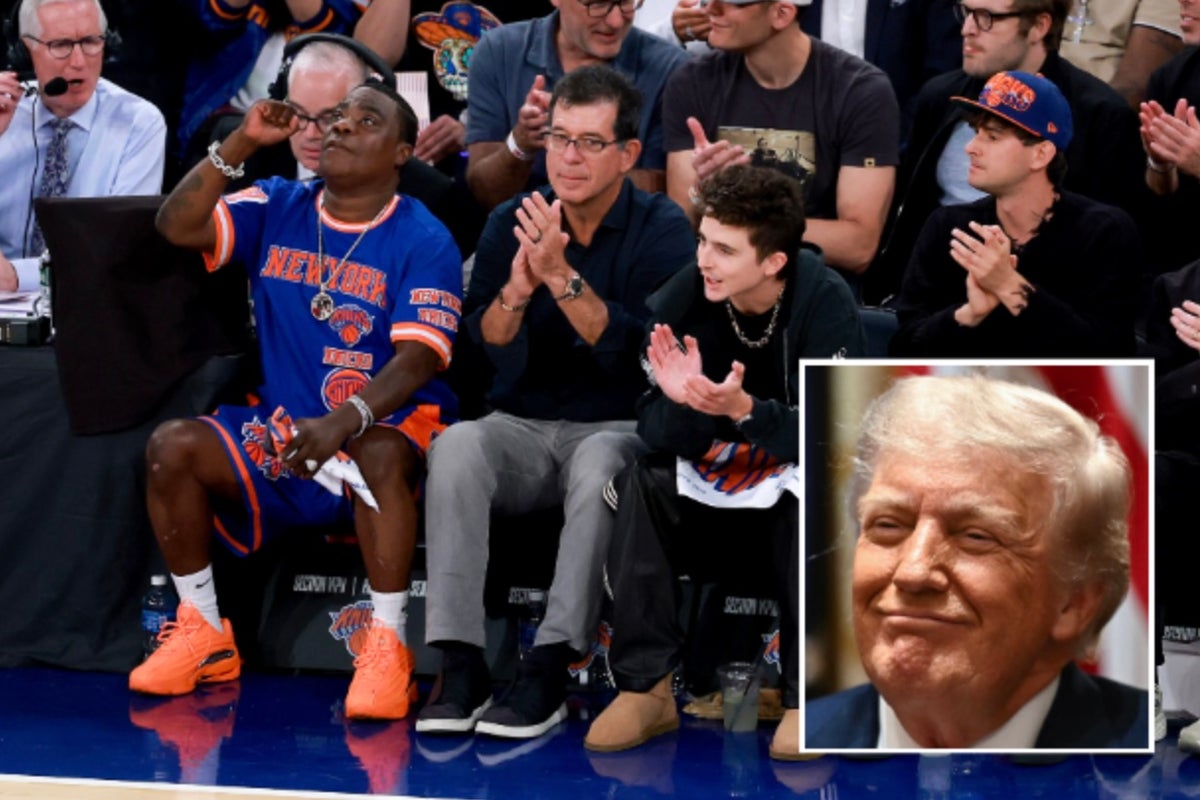
The collective gasp from the basketball world when a juvenile fan rushed the court to snag a selfie with Victor Wembanyama followed a predictable script. The mainstream sports media rushed to pump out the standard corporate line: the league must maintain a sacred boundary, player safety is under existential threat, and a lifetime ban is the ultimate, necessary deterrent.
It is a comforting narrative. It is also entirely wrong. You might also find this connected coverage insightful: The Spectacle and the Siege Behind the Return of the NBA Finals to New York.
By permanently banning a kid for an incredibly stupid, clout-chasing stunt, the NBA did not secure its arenas. It merely engaged in a high-profile exercise of security theater designed to mask a fundamental truth: modern stadium architecture and the league’s own business model make court-storming inevitable. Dropping the hammer on a teenager treats a systemic symptom while ignoring the disease.
The Illusion of the Hard Border
Let's look at the actual physics of a modern NBA arena. Unlike European football stadiums, which frequently employ moat-like trenches, plexiglass barriers, or lines of riot police to separate the crowd from the pitch, American basketball arenas pride themselves on intimacy. As highlighted in recent articles by ESPN, the results are significant.
The league sells proximity.
Courtside seats—the ultimate status symbol in American sports—place billionaires, celebrities, and influencers literally inches away from the hardwood. There is no physical barrier. There is only a painted baseline and a row of folding chairs.
When you base a multi-billion-dollar luxury product on the premise that fans can feel the sweat of a 7-foot-4 superstar, you forfeit the right to act shocked when that barrier dissolves. The NBA spends decades telling fans they are part of the action, then reacts with feigned disbelief when a hyper-fixated, digitally native teenager takes that marketing literally.
The lifetime ban is a lazy deterrent because it assumes rational risk calculation from an demographic incapable of it. A juvenile risking it all for a TikTok video or an Instagram story is operating on a totally different currency than a 45-year-old season ticket holder. To a kid, the immediate social capital of a viral selfie with Wembanyama vastly outweighs the abstract, poorly enforced threat of never being allowed back into an arena they probably couldn't afford a ticket to anyway.
Why the Deterrent is a Paper Tiger
Ask anyone who has worked operational security for a major entertainment venue, and they will tell you the dirty secret of lifetime bans: they are almost impossible to enforce at scale.
Unless the NBA plans to implement mandatory biometric facial recognition scans at every single turnstile for every ticket holder—a move that would trigger massive privacy lawsuits and logistical nightmares at entry gates—a banned individual can easily walk back into an arena a few years later. They buy a ticket on a secondary marketplace like StubHub or SeatGeek under a friend's name, wear a hat, and pass right through.
By announcing a "lifetime ban" for a minor, the league gets a quick PR win. It looks tough. It appeases the players' union. But practically, it does nothing to stop the next kid in the upper deck from slipping past a distracted, underpaid event-staff usher making slightly above minimum wage.
Consider the economics of stadium security. The frontline defense against court-storming is not a highly trained tactical unit; it is usually a temp worker wearing a neon vest who is explicitly instructed not to engage or physically tackle spectators due to liability laws. When a teenager decides to sprint, the system is engineered to fail.
The Real Danger of the Status Quo
The current consensus argues that harsh penalties protect the players. The reality is that relying on retroactive punishment creates a false sense of security that actually increases player vulnerability.
If the league genuinely believed that court-storming posed an imminent, existential threat to player safety, the solution would be structural, not punitive. They would eliminate courtside seating entirely, pushing the front row back ten feet and installing a raised ledger or a drop-down barrier.
But they won’t do that. Why? Because those courtside seats generate tens of millions of dollars per arena annually. The league is unwilling to sacrifice its premium revenue streams to solve a security flaw, preferring instead to scapegoat individual fans when the flaw gets exposed.
Imagine a scenario where a bank leaves its vault door wide open, posts a single sign saying "Please Don't Steal," and then acts outraged when a teenager walks in and grabs a stack of bills. The bank wouldn't just look foolish; its shareholders would demand a change in infrastructure. Yet, the NBA continues to operate a multi-billion-dollar enterprise on a gentleman's agreement, using lifetime bans as a band-aid for a structural deficit.
Dismantling the PAA Fallacies
The conversation surrounding this incident has birthed a series of deeply flawed assumptions that need to be dismantled directly.
Does a lifetime ban actually stop future court-stormers?
No. Empirical data from sports sociology suggests that high-profile, punitive punishments often have a counter-intuitive effect on subcultures seeking notoriety. By turning a court-stormer into a banned martyr, the league increases the "clout" value of the action. The act becomes legendary precisely because the penalty is so severe.
Should parents be held financially liable for a minor’s stadium trespass?
This is a favorite talking point for talk radio hosts, but it ignores the legal reality of tort law and premises liability. Venues assume a baseline of risk when hosting mass gatherings. Attempting to sue a family into bankruptcy over a disrupted basketball game is a public relations nightmare that no sensible corporate entity will ever pursue. It’s empty rhetoric.
Can technology solve the arena security problem without barriers?
Only if the public is willing to accept an authoritarian level of surveillance. Implementing real-time, AI-driven behavioral analytics that predict when a fan is about to jump from the stands requires a massive invasion of privacy. It would turn a sporting event into a panopticon, destroying the very fan experience the NBA relies on to survive.
Shift the Liability to the Venues
If the NBA wants to stop court-storming, it needs to stop punishing the symptom and start punishing the enablers. The current model privatizes the profits of proximity while socializing the risk onto the players and the fans.
The league should stop issuing lifetime bans to kids and start issuing massive, unappealable fines to the franchise and the venue management company every single time a fan breaches the perimeter.
Make it cost $500,000 for a first offense, doubling every time after.
Suddenly, the financial math changes. Teams will no longer rely on underpaid event staff to stand around looking pretty. They will invest in rapid-deployable physical barriers, redesign the transition zones between the stands and the floor, and properly train dedicated security personnel who are actually positioned to intercept trespassers.
When the team's bottom line is directly tied to the integrity of the perimeter, the perimeter will be secured. Until then, the league is just putting on a show.
Stop pretending a lifetime ban on a teenager does anything to protect Victor Wembanyama. It protects the NBA's bottom line by creating a cheap illusion of safety while keeping the cash register ringing.