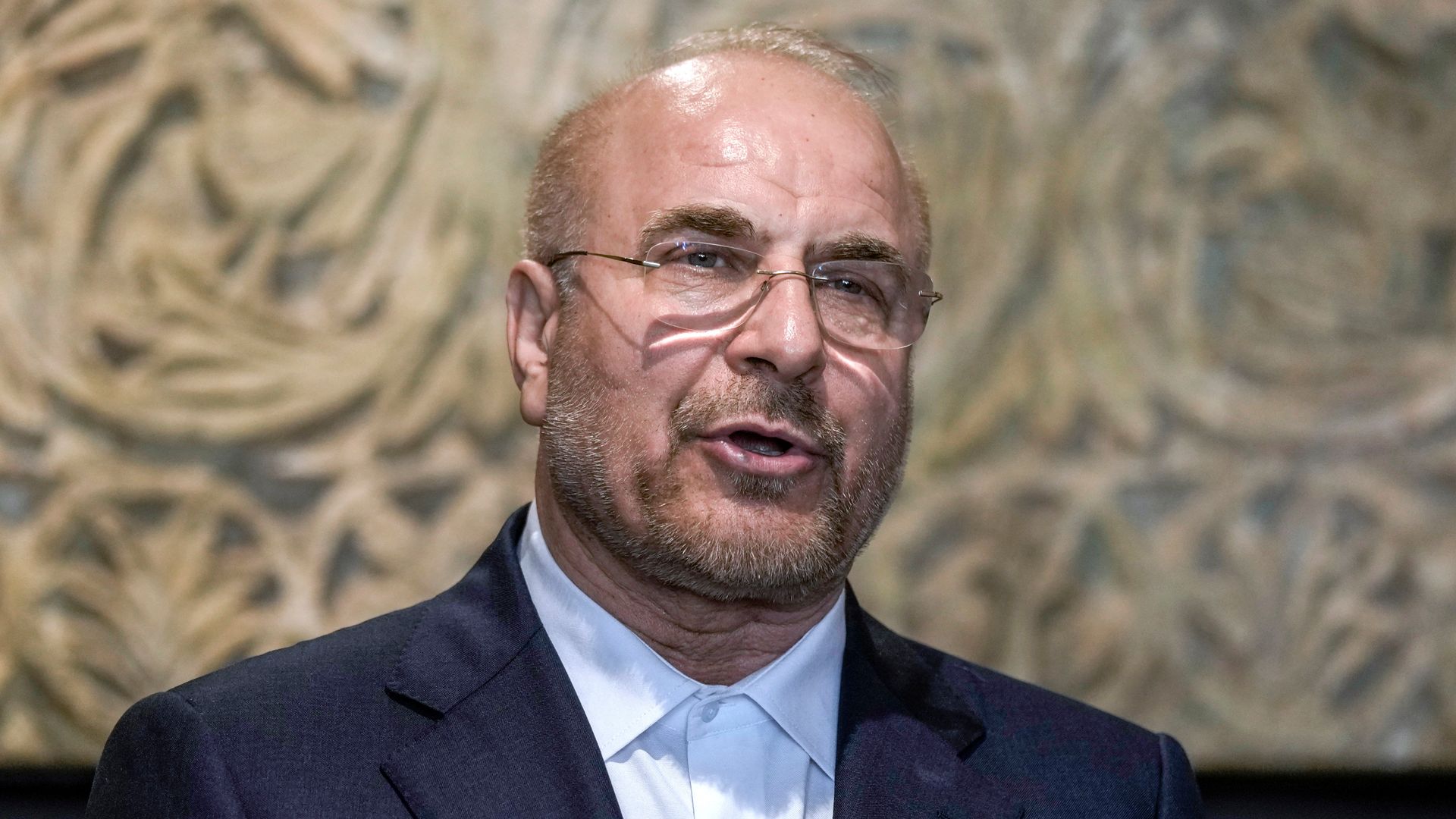
The foreign policy establishment is salivating over the "pragmatic" potential of an Iranian general. They see a mirror. They see a man with a chest full of medals, a history of tactical maneuver, and a supposedly "moderate" streak that makes him the perfect dance partner for a second Trump term.
They are dead wrong.
The obsession with finding a "strongman bridge" to Tehran is the peak of Western mirror-imaging. We are obsessed with the idea that if we just find the right person—the right back-channel, the right former IRGC commander with a penchant for Western-style realpolitik—the entire house of cards will transform into a stable regional partner. It’s a fantasy. It treats a theological-military complex like a corporate merger.
The Myth of the Rational Iranian General
The current buzz centers on the idea that former commanders within the Iranian structure are "rational actors" who are tired of sanctions and ready to pivot. This narrative suggests that because these men understand the language of power, they are the only ones capable of cutting a deal that sticks.
Let’s look at the "battle scars" of the last forty years. I have watched successive administrations try to "cultivate" moderates in Tehran like they were growing prize orchids in a desert. Every single time, the "moderate" is either a front for the hardliners to gain breathing room, or they are purged the moment they actually try to move the needle.
In the Iranian system, "former" commanders don't hold independent power. They hold proximity. To believe that a retired general can deliver a grand bargain is to fundamentally misunderstand the Velayat-e Faqih. Power in Iran is not distributed; it is emanated. If you are talking to a "pragmatist," you are talking to someone who has been given permission to lie to you.
The Sanctions Trap and the Art of the Fake Deal
The standard argument is that Trump’s "Maximum Pressure" campaign created a vacuum that only a military-man-turned-negotiator can fill. The theory goes: the economy is screaming, the IRGC is feeling the heat, and therefore, they will send a "rational" messenger to trade nuclear concessions for economic survival.
This ignores the fundamental business model of the IRGC. The Revolutionary Guard doesn't just run the military; they run the black market. Sanctions didn't weaken the IRGC's grip on the economy; it solidified it. When formal trade dies, the guys with the boats and the tunnels become the only game in town.
By looking for a commander to negotiate with, Trump isn't finding a way to bypass the regime—he is offering to legitimize the very people who profit from the status quo. You don't "negotiate" with a cartel leader to stop the flow of drugs by offering him a seat at the legal table. He already owns the table.
The Fallacy of the Grand Bargain
Everyone asks: "What is the price for Iran to stop being Iran?"
That is the wrong question. It assumes there is a dollar amount or a security guarantee that can override a foundational identity built on the export of revolution.
If Trump picks a former commander to sit across the table, he is falling into the "High-Stakes Persona" trap. It’s the same mistake made with Kim Jong Un. A flashy summit and a few "beautiful letters" don't change the structural necessity of a nuclear program for a pariah state. For the Iranian leadership, the nuclear program isn't a bargaining chip; it is life insurance.
Imagine a scenario where a former commander agrees to a deal that limits regional proxies and freezes enrichment. What happens the next day? The domestic security apparatus in Tehran, which justifies its existence through "resistance," loses its raison d'être. The regime would be negotiating its own suicide. They know this. We, apparently, do not.
Why "Deals" Fail: A Precise Breakdown
- Structural Duality: Iran has a "government" (the suits) and a "power structure" (the turbans and uniforms). Negotiating with one does not bind the other.
- The Martyrdom Clause: Unlike Western politicians who fear a dip in the S&P 500, the Iranian core leadership views economic suffering as a spiritual test. You cannot out-leverage someone who thinks God wants them to be poor.
- The Proxy Problem: No general can "call off" Hezbollah or the Houthis without shattering the only external leverage Iran has. A deal that doesn't include proxies is worthless; a deal that does include them is impossible.
The Counter-Intuitive Reality: Ignore the Generals
If the goal is actual stability, the last person you talk to is a former commander.
The industry consensus says: "We need a strongman to talk to a strongman."
The reality is: "We need to stop treating the Iranian regime as a monolith that can be fixed with a signature."
The real move isn't a new deal. It’s the total delegitimization of the intermediary class. By chasing "picks" and "negotiators," the U.S. signals that the regime is a permanent fixture we are willing to accommodate if they just lower the volume.
The "nuance" the competitor missed is that any commander willing to talk to Trump is, by definition, unauthorized to change anything. If they had the power to change the regime's direction, they wouldn't be "former" commanders; they would be the ones ordering the drones.
The Business of Resistance
We have to stop treating Iran like a rogue state and start treating it like a conglomerate. The IRGC is a holding company with a private army. When you talk about "lifting sanctions" as a carrot, you are talking about increasing the ROI for the Guard’s shadow companies.
A former commander isn't a diplomat. He’s a CEO looking for a better regulatory environment. If Trump approaches this as a "deal" between two great men, he will get played by a system that has been practicing "strategic patience" since the 7th century.
Stop Looking for a "Persian Nixon"
The media loves the "Nixon to China" trope. They want a hardliner who can finally bring peace because he has the "cred" to do it. But Iran in 2026 isn't China in 1972. China had a clear, centralized pivot point and a desperate need to counter the Soviets. Iran’s "Soviets" are the very Western values that a "deal" would supposedly invite in.
The status quo is a trap. The "pragmatic general" is a lure.
If you want to disrupt the cycle, you don't find a better person to negotiate with. You stop believing that a negotiation is the solution to a civilizational conflict.
The U.S. keeps trying to buy a "fix" for a problem that requires a "contain and outlast" strategy. Every minute spent vetting which former Iranian commander is the "least worst" is a minute spent validating a regime that is fundamentally un-negotiable.
Trump doesn't need a pick. He needs a reality check.
The regime doesn't want a deal that works for America. They want a deal that saves them from their own people. By providing that lifeline through a "pragmatic" intermediary, the U.S. isn't being "bold"—it’s being a sucker.
Stop looking for the man. Look at the math. The math says the regime is brittle, its ideology is dead, and its commanders are just looking for a way to keep the lights on while they finish the bomb.
Don't give them the match.
Would you like me to analyze the specific economic holdings of the IRGC that would be most affected by a "commander-led" negotiation?