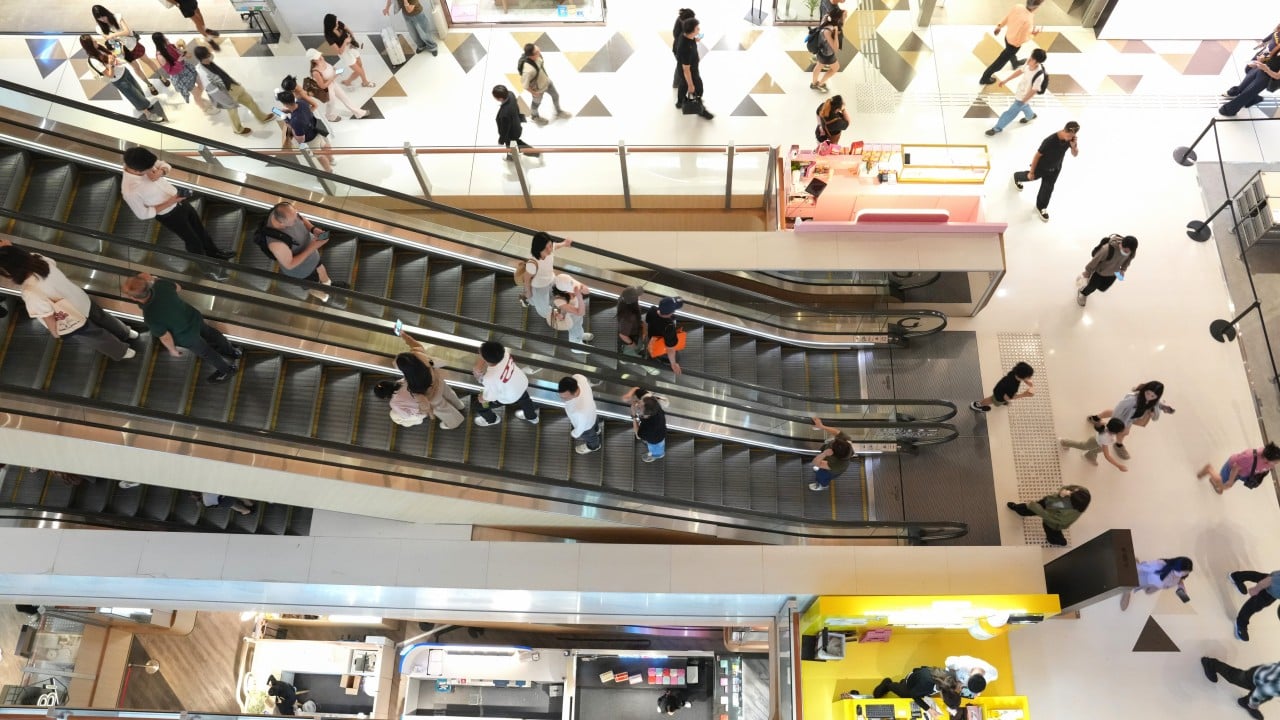
The metal shutter of a jewelry shop on Hennessy Road doesn’t just open; it groans. It is a heavy, industrial sound that echoed through the hollow canyons of Causeway Bay for three years of silence. But this morning, the sound is different. It is punctuated by the rhythmic click-clack of rolling suitcases and the frantic, melodic chirping of smartphone notifications.
Hong Kong is waking up. It isn’t the groggy awakening of a sleeper hitting the snooze button. It is a jolt. Building on this idea, you can also read: The Childcare Safety Myth and the Bureaucratic Death Spiral.
In the first two months of this year, the city’s retail sales didn't just tick upward—they surged by nearly 12%. To a data analyst in a glass tower, that is a green bar on a Bloomberg terminal. To Mrs. Leung, who has sold silk scarves in a boutique near Times Square since the handover, it is the difference between a dignified retirement and a quiet disappearance.
She watches the crowds. They are back. Experts at Bloomberg have provided expertise on this trend.
The Mathematics of Hope
For a long time, the narrative surrounding Hong Kong was one of terminal decline. Critics pointed to the empty storefronts of Tsim Sha Tsui as if they were headstones. They weren't entirely wrong. The city’s retail sector had been hollowed out by a perfect storm of border closures, shifting consumer habits, and a global malaise that made the "Pearl of the Orient" feel like a museum of its former self.
Then, the numbers started to fight back.
Total retail sales value hit approximately $67.7 billion HKD across January and February. When you strip away the noise of inflation, the volume of these sales jumped 15.5%. These aren't marginal gains. They are a reclamation of territory.
Consider the "Wealth Effect." It’s a term economists use to describe how people spend more when they feel their assets are secure. In Hong Kong, this isn't just about stocks or property. It’s about the psychological return of the tourist. When the borders fully exhaled, the lungs of the city filled with oxygen again. Visitor arrivals didn't just increase; they multiplied.
But who is buying? And what are they carrying in those heavy paper bags?
The Sparkle and the Standard
If you want to find the heartbeat of this recovery, look at the things that glitter. Sales of jewelry, watches, and valuable gifts—the traditional pillars of Hong Kong’s luxury status—skyrocketed by more than 60%.
Hypothetically, let’s look at a traveler we will call Chen. Chen is from Hangzhou. Three years ago, a trip to Hong Kong was a bureaucratic impossibility. Today, he is standing in a flagship store under the glow of halogen lights, comparing two chronographs. His purchase represents more than a transaction; it is a release of "revenge spending."
This isn't just vanity. The luxury sector acts as a lead scout for the rest of the economy. When the high-end boutiques are full, the momentum bleeds into the surrounding streets. The "cha chaan teng" next door sells more pineapple buns. The taxi driver takes fewer breaks. The tailor in the basement of a nondescript building finally orders a new bolt of cashmere.
However, the recovery is uneven. It is a jagged line, not a smooth curve.
While luxury soared, the everyday essentials told a more tempered story. Supermarket sales actually dipped by about 14%. This isn't a contradiction; it’s a correction. During the height of the pandemic, we hoarded. We bought canned goods and frozen meats like we were preparing for a siege. Now that the city is dining out again, the pantry is no longer a fortress.
The decline in supermarket sales is, ironically, a sign of health. It means people are leaving their apartments.
The Invisible Stakes
Why does a 12% jump matter to someone who doesn't live in a penthouse?
Retail is the largest employer of low-to-middle-income earners in the territory. It is the connective tissue of the social fabric. When sales figures stagnate, the pressure doesn't just hit the CEOs; it crushes the floor managers, the delivery drivers, and the window washers.
The stakes are invisible until they are gone.
The government’s decision to distribute another round of consumption vouchers acted as a starter motor. It provided the initial spark, but the engine is now running on its own fuel. The private sector is beginning to trust the horizon again. You can see it in the way the lights are staying on later in Mong Kok. You can smell it in the fresh paint of new pop-up shops.
There is a specific kind of electricity in a city that realizes it isn't dying after all.
The Shifting Ground
We must be careful not to mistake a surge for a permanent plateau. The world has changed since 2019. The Hong Kong dollar is pegged to the US greenback, making it an expensive destination for some. Meanwhile, across the bridge, Shenzhen has grown into a formidable rival for the weekend shopper’s wallet.
The modern Hong Kong retailer can no longer rely on being the only gatekeeper to the West. They have to be better. They have to be faster. They have to offer something that a digital screen cannot replicate.
They are pivoting toward "experiential retail." It’s a fancy way of saying they are making shopping feel like an event rather than a chore. Art installations in malls, personalized styling, and exclusive "members-only" lounges are becoming the new standard.
The data confirms this shift. Apparel and footwear sales rose by nearly 40%. People aren't just buying clothes to stay warm; they are buying outfits to be seen in. They are dressing up for a world that finally invited them back outside.
The Human Echo
Back on Hennessy Road, Mrs. Leung isn't thinking about the HKD $67.7 billion figure. She is thinking about the woman from Singapore who just bought three scarves—one for herself and two for friends.
"She told me she missed the smell of the city," Mrs. Leung says, smoothing a piece of silk.
The smell of Hong Kong is a mix of dim sum steam, sea salt, and bus exhaust. For three years, that scent was trapped behind masks. Now, as the retail sector climbs its way back to its former heights, the masks are gone, and the city is breathing deeply.
The numbers are just the score. The music is the sound of those rolling suitcases hitting the pavement, a thousand percussive heartbeats per minute.
The lights of the city don't just illuminate the streets; they reflect off the eyes of people who are finally looking up instead of down at their feet. The neon is humming again. If you stand still long enough in the middle of the Causeway Bay rush, you can feel the vibration through the soles of your shoes.
The pulse hasn't just returned. It is accelerating.