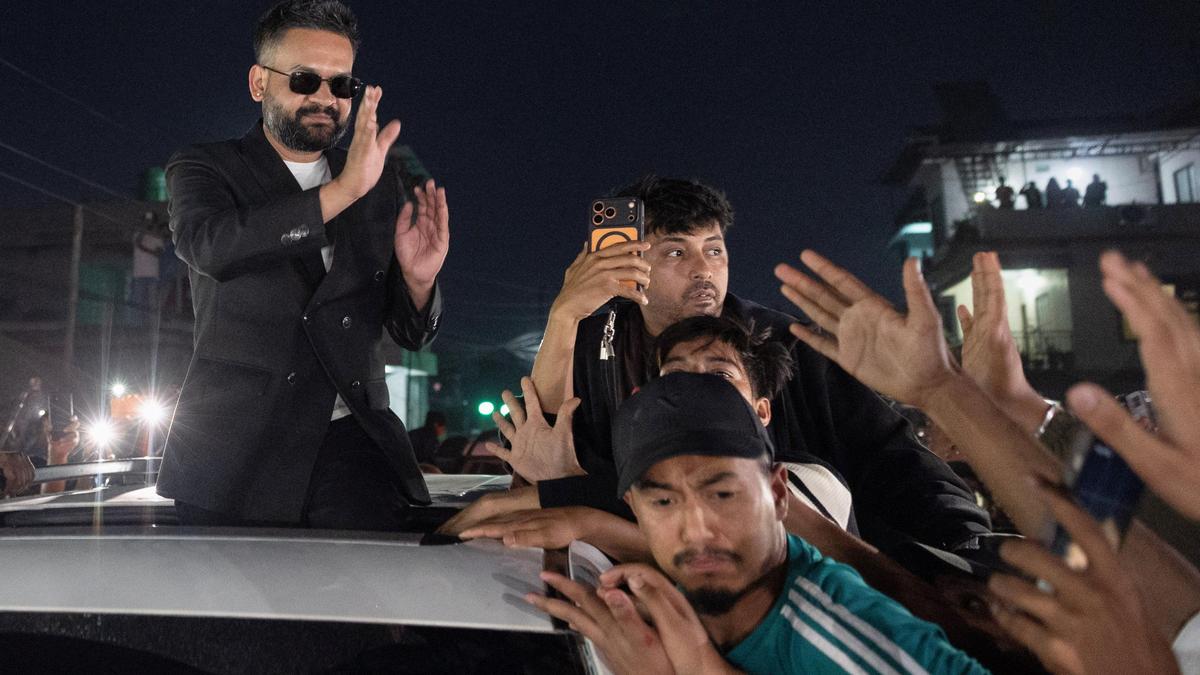
The long-standing geopolitical equilibrium in the Himalayas has just been shattered. On March 5, 2026, Nepal’s electorate did something the old guard thought impossible: they handed a landslide victory to the Rastriya Swatantra Party (RSP), effectively ending the decades-long game of musical chairs played by the traditional communist and democratic elites. With former Kathmandu Mayor Balendra "Balen" Shah poised to take the premiership, the era of Nepal acting as a passive "buffer" between India and China is over. This is not just a change in leadership; it is a structural revolt by a generation that views the old ideological battles between New Delhi and Beijing as an expensive distraction from their own economic survival.
For India, this shift presents a narrow, high-stakes opening. For years, New Delhi’s neighborhood policy was reactive, often stumbling over the shifting loyalties of legacy politicians who used "the China card" to extract concessions. But the new leadership in Kathmandu is fundamentally pragmatic. They are engineers and technocrats, not ideologues. They aren't interested in being a pawn; they want to be a "vibrant bridge." If India can pivot from its history of heavy-handed political micromanagement to a partnership based on Digital Public Infrastructure (DPI) and energy security, it can secure its northern flank for a generation.
The Death of the Old Guard
The collapse of the traditional parties was both sudden and bloody. The September 2025 "Gen Z protests" were a visceral response to a political class that had become a closed loop of nepotism and stagnation. When the government of K.P. Sharma Oli attempted to suppress these youth-led movements, it didn't just lose the argument; it lost the mandate to rule. The resulting election saw the Nepali Congress and the various communist factions suffer their worst defeats in history.
Balen Shah’s rise is the centerpiece of this transformation. A rapper and structural engineer who governed Kathmandu with a mix of digital transparency and uncompromising enforcement, Shah represents a clean break. His "monastic silence" during the campaign—refusing interviews and avoiding traditional rallies—spoke volumes to an electorate tired of empty rhetoric. The message was clear: the era of the "big brother" relationship is dead, replaced by a demand for measurable results.
High Stakes Hydropower and the Energy Trap
At the heart of the new Indo-Nepal relationship is a massive, untapped battery: the Himalayas. Nepal’s hydroelectric potential is estimated at over 42,000 MW, yet the country has struggled for years to monetize this asset due to political instability and gridlock.
India has recently granted "Navratna" status to its hydro-giants, NHPC and SJVN, signaling a massive push to integrate Nepal’s water power into the Indian national grid. Projects like the 2,000 MW Subansiri Lower Hydropower Project and various cross-border transmission lines are moving forward, but they face a new kind of scrutiny. The RSP has made it clear that they will no longer accept "pride projects" that take 40 years to finish.
The World Bank recently warned that 17 of Nepal's major infrastructure projects are so bogged down in red tape that they could take half a century to complete. The new administration in Kathmandu is likely to demand a "concentrated resource" model. They want India to stop announcing dozens of small projects and instead finish the critical ones—like the Pancheshwar Multipurpose Project—that can actually generate revenue and jobs.
The Digital Infrastructure Pivot
While China has traditionally focused on "hard" infrastructure—airports, highways, and the ambitious trans-Himalayan railway—India is finding success with "soft" infrastructure. The export of India’s Unified Payments Interface (UPI) and other digital public goods has created a level of daily integration that a Chinese-funded airport in Pokhara cannot match.
The RSP manifesto specifically mentions adopting the "blueprint of India’s economic transformation." This includes:
- Digital Public Infrastructure: Seamless cross-border payments for the millions of Nepalis working in India.
- Energy Connectivity: Expanding the petroleum pipelines, such as the 62-kilometer Amlekhgunj-Chitwan line, to reduce Nepal’s reliance on expensive and unreliable tanker trucks.
- Logistics: Using Indian grants to build massive fuel storage hubs that provide a buffer against global price shocks.
The China Factor and the BRI Stagnation
Beijing is not exiting the stage, but its influence is hitting a ceiling. The Belt and Road Initiative (BRI) projects in Nepal have been plagued by questions over debt sustainability and slow implementation. While China provided financial aid for the 2026 elections, the new government is wary of "conditional" support.
The Chinese ambassador in Kathmandu has expressed concerns about "Western influence" and the role of pro-Tibet activists during the 2025 protests. This tension suggests that Beijing views the new, youth-led government as unpredictable. Unlike the old communist leaders who shared an ideological shorthand with the CCP, the RSP is focused on sovereign equality. They will take Chinese investment, but they will not trade their strategic autonomy for it.
The Open Border Dilemma
The most sensitive nerve in the relationship remains the 1950 Treaty of Peace and Friendship, which allows for an open border and grants Nepalis the right to work in India. To the old guard, this was a vestige of Indian "hegemony." To the new generation, it is an economic lifeline.
However, the 2025 unrest, which saw thousands of prisoners escape and police armories looted, highlighted the security risks of this arrangement. New Delhi is quietly pushing for better border management without closing the gates. The challenge for the Shah administration will be to modernize this relationship—turning a "security buffer" into a "trade corridor"—without triggering the nationalist anxieties that have defined Nepali politics for seventy years.
The New Rules of Engagement
The window of opportunity for India is open, but it is not guaranteed. To succeed, New Delhi must treat the new Kathmandu administration as a corporate partner rather than a junior client. This means:
- Transparency over Tunnels: Every project must have a clear, digital-first tracking system to prove to the Nepali public that the "big brother" is actually delivering.
- Trilateral Realism: Acknowledging that Nepal will continue to trade with China. India should focus on areas where it has a natural advantage—culture, geography, and digital integration—rather than trying to block every Chinese road project.
- Youth Engagement: The leadership in Nepal is now younger than the leadership in India. The diplomatic language needs to move away from historical "roti-beti" (bread and daughter) ties toward "tech and trade."
The success of this "strategic window" depends on whether India can outpace China not just in spending, but in execution. The Nepali people have proven they are willing to burn down the old system to get results. If the new hydropower dams don't turn the lights on and the new pipelines don't lower the price of gas, the RSP will find itself facing the same fire that consumed its predecessors.
Would you like me to analyze the specific debt-to-GDP implications for Nepal if they move forward with the proposed $1.5 billion trans-Himalayan railway project?