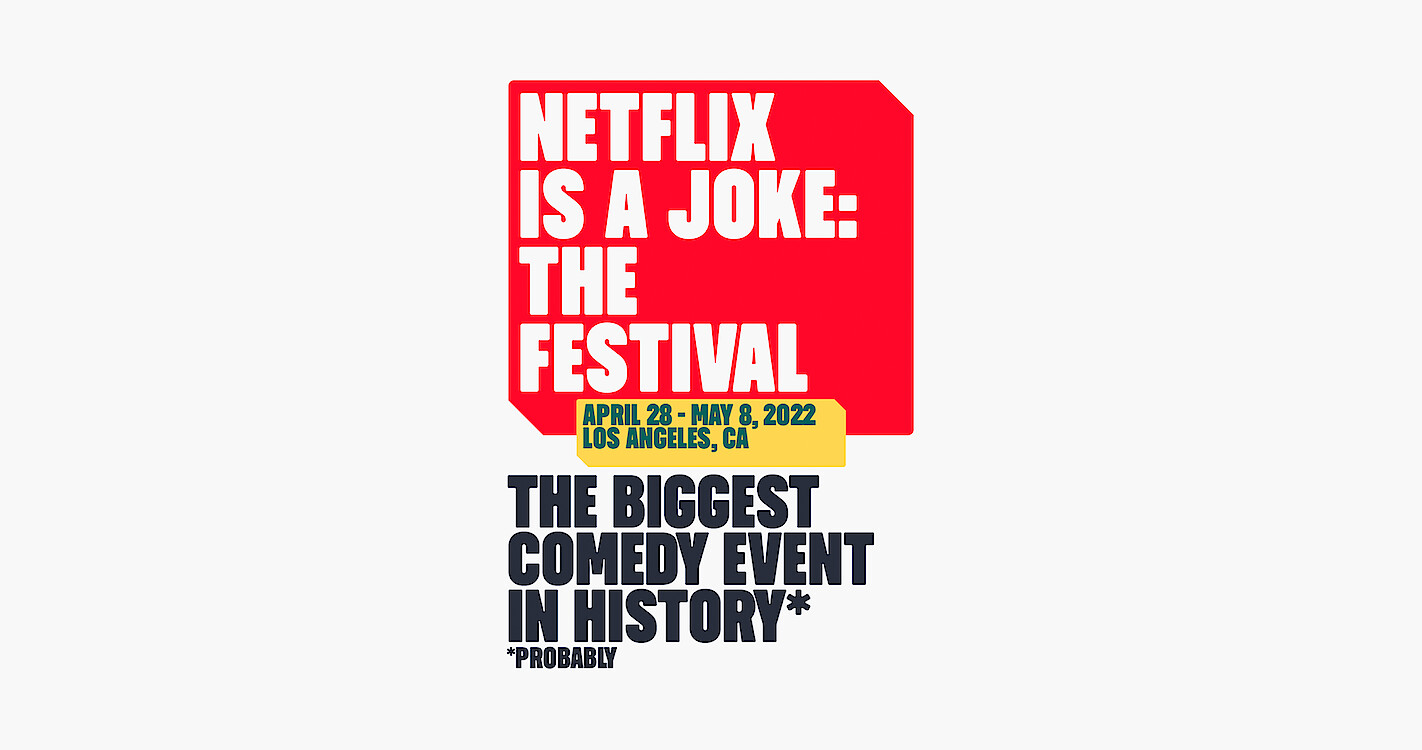
The industry lapdogs are howling about a "golden era." They see a city-wide festival branded by a global streamer, thousands of folding chairs filled at the Hollywood Bowl, and a lineup of every face you’ve ever seen on a Netflix tile, and they call it a peak.
They are wrong. In related developments, take a look at: The Booker Prize Heavyweights Return and Why the Longlist Actually Matters.
What we are witnessing isn't a golden age. It’s a corporate consolidation. It’s the strip-mining of a local subculture to fuel a quarterly earnings report. When the "scene" becomes synonymous with a single tech company’s marketing budget, the scene is no longer a scene. It’s a showroom.
The Mirage of the Mega-Festival
The prevailing narrative suggests that because Netflix can park a dozen buses with comedians’ faces on them in West Hollywood, comedy has "arrived." This is the logic of a real estate developer looking at a gentrified neighborhood and claiming the culture is thriving because there’s now a $9 oat milk latte on the corner. Variety has also covered this fascinating subject in extensive detail.
Festivals of this scale are designed for the casual consumer who watches three specials a year. They aren't for the comedy nerd, the underground seeker, or the artist. By inflating the scale, you deflate the stakes.
Comedy thrives on intimacy, friction, and the looming possibility of total failure. When you move that energy into a stadium or a heavily curated "activation," you kill the very thing that made it valuable. You’re not watching a comedian; you’re watching a brand representative perform a victory lap.
The Algorithmic Flattening of Funny
The "Netflix Is a Joke" era has created a feedback loop that rewards the middle.
To get the special, you have to play the game. To play the game, you have to appeal to the widest possible denominator. I’ve sat in rooms with agents who talk about "viewership segments" and "international reach" before they talk about whether a set is actually funny.
The result? A homogenization of the craft. We are seeing a generation of performers who are writing for the algorithm rather than the audience in front of them. They know that a specific type of observational venting or a calculated "controversial" take will trigger engagement.
- The Myth: More content equals a healthier scene.
- The Reality: Content is the enemy of art. Content is filler. Art is essential.
When you flood the market with 40-minute sets that were clearly polished by a committee to ensure no one cancels their subscription, you dilute the brand of "L.A. Comedy." You turn a gritty, experimental laboratory into a factory floor.
The Economics of Displacement
Let’s talk about the money, because no one else will.
A massive festival like this sucks the oxygen out of the room for the independent clubs that keep the lights on 365 days a year. While the big names are playing the Forum, the small rooms—the ones where the next generation is supposed to be failing and learning—are ghost towns.
I have seen legendary rooms struggle to fill seats during these "golden era" weeks because the casual fan has already dropped $400 on a ticket to see a guy they’ve seen ten times on their TV.
Furthermore, the "Netflix bump" is a lie for 90% of the roster. Unless you are in the top 1% of the lineup, you are a line item. You are there to provide "depth" to the festival's marketing materials. You aren't getting a career-changing deal; you’re getting a social media tag and a handshake.
The Disappearing Middle Class of Comedy
In any healthy ecosystem, you need a middle class. In the old L.A. scene, you had the legends, the working-class pros, and the up-and-comers.
The current corporate-dominated structure is hollowed out. You have the "Streamer Elite" and you have the "TikTok Chasers." The working-class pro—the comedian who can sell out a weekend at a club through word of mouth and sheer talent—is being squeezed out by "influencers" who get booked because their follower count is higher than their laugh-per-minute ratio.
Imagine a scenario where the quality of a surgeon was determined by their Instagram engagement. That is exactly what is happening to the L.A. stage.
The Gatekeepers Just Changed Outfits
We used to rail against the network executives and the late-night bookers. We thought the internet and the streamers would democratize the process.
Instead, we just traded a room of suits in Burbank for a room of data scientists in Los Gatos. The gatekeeping is more rigid than ever because it’s invisible. It’s hard to argue with a data set that says "audiences drop off after 12 minutes of political humor."
The "Golden Era" advocates point to the sheer volume of specials as proof of health. But volume is not value. If I give you 10,000 gallons of salt water, you still can’t drink it. We are drowning in "good enough" comedy while the truly dangerous, transformative work is being pushed further into the margins because it doesn't fit the "Joke" branding.
The Counter-Intuitive Truth
If you want to see the real L.A. comedy scene, stay away from the branded festivals.
Avoid the venues with "Official Partner" stickers on the door. Go to the back of a Thai restaurant in a strip mall. Go to the warehouse in the Arts District where people are performing for thirty people and a broken air conditioner.
That is where the stakes are. That is where the language is being reinvented.
The "Netflix Is a Joke" festival is a funeral with a high production budget. It’s the industry celebrating its own ability to package and sell a once-rebellious art form. They’ve turned the riot into a parade, and they’re charging you for the privilege of watching from the sidewalk.
True comedy is a threat to the status quo. When the status quo is the one cutting the checks for the festival, the comedy is already dead.
Stop celebrating the takeover. Start looking for the resistance.