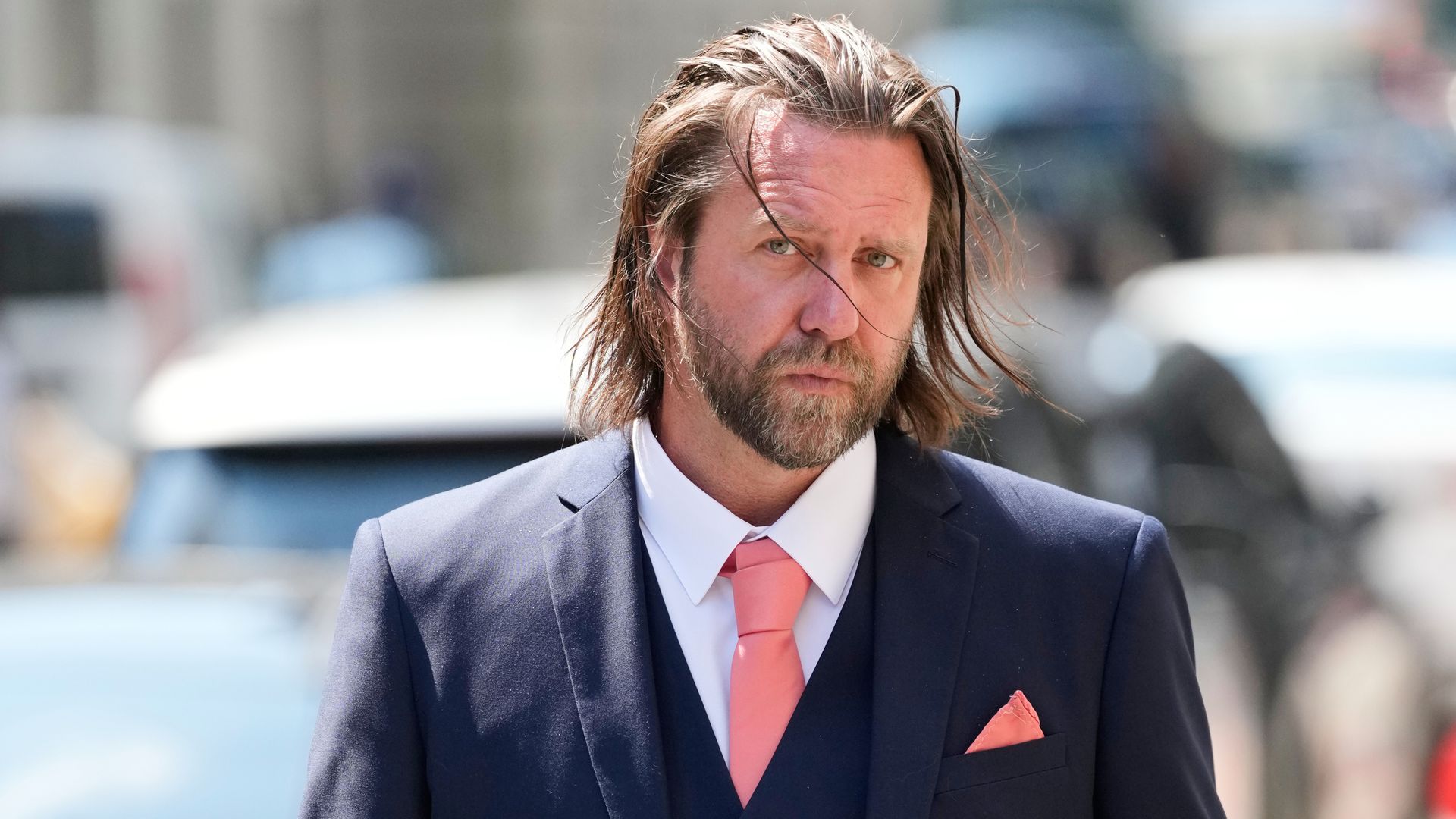
Hollywood production budgets have swollen to the point where nine-figure sums are handed out based on little more than a pitch and a prayer. This ecosystem of loose oversight and desperate streaming competition set the stage for Carl Erik Rinsch, a director who managed to divert $11 million of Netflix's money into his own personal stock market and cryptocurrency trading accounts. While the streaming giant chased prestige sci-fi content to fuel its subscriber growth, it completely failed to monitor where its production advances were actually going. Rinsch did not deliver the sci-fi series he promised. Instead, he used the corporate war chest to live like a billionaire, gambling millions on speculative assets and buying a fleet of luxury cars.
The fallout of this collapse culminated in federal court proceedings that exposed a staggering lack of oversight at the world’s largest streaming service. It reveals a broader, systemic issue within modern entertainment financing. When tech companies decided to buy their way into Hollywood, they brought an appetite for risk that traditional studios would never tolerate.
The Blank Check Era of Streaming
The relationship began with a fierce bidding war. Rinsch had developed a concept for an ambitious, decentralized science-fiction series called Organic. He had already spent hundreds of thousands of dollars of his own money, alongside financing from high-profile figures, to shoot short promotional clips. Traditional Hollywood studios hesitated at the scale and the erratic nature of the pitch. Netflix, locked in an intense battle for market dominance with Amazon and Disney, saw an opportunity to secure a proprietary sci-fi franchise.
They bought the project. The streaming service agreed to hand over millions of dollars in production funding while granting Rinsch unprecedented creative control and final-cut privilege. This level of autonomy is typically reserved for directors with a flawless track record of box-office hits. Rinsch's previous major studio film, 47 Ronin, was a notorious box-office disaster that forced Universal Pictures to take a massive write-down.
Yet, Netflix cut the check. The company poured millions into the production, assuming that financial momentum would automatically translate into a finished product. The funding arrived in waves, with the studio trusting that the money was being utilized on location shoots in Europe and South America.
Where the Production Money Actually Went
The money did not go to special effects or cast salaries. By late 2020, Rinsch had convinced Netflix executives that the production was running dangerously low on funds and required an immediate injection of capital to prevent total collapse. Terrified of losing their investment entirely, Netflix transferred an additional $11 million to Rinsch’s production company.
The moment the funds cleared, the director moved the money. Federal court records and financial disclosures revealed that Rinsch transferred $10.5 million directly from the production account into his personal brokerage account at Charles Schwab. He was not hiring editors or sound designers. He was trading options.
The investment strategy was chaotic. Rinsch placed massive, highly leveraged bets on the stock market, losing nearly $6 million in a matter of weeks through aggressive options trading. Rather than pulling back, he pivoted to the highly volatile world of cryptocurrency. He placed the remaining millions into Dogecoin, a digital asset that originated as an internet joke.
This time, the gamble paid off in raw numbers. When he liquidated his cryptocurrency positions, his $4 million investment had ballooned to over $27 million.
Instead of returning the original production funds to Netflix or using the windfall to finally finish the television series, Rinsch embarked on a lavish spending spree. The director spent millions of dollars on luxury items, including:
- A fleet of five Rolls-Royce vehicles
- A custom Ferrari
- A designer Vacheron Constantin watch valued at hundreds of thousands of dollars
- Millions in high-end furniture and luxury clothing
To obscure the source of the funds during a subsequent divorce proceeding, Rinsch claimed that these luxury purchases were actually production expenses paid for with the streaming service's money. He argued that the vehicles and high-end goods were intended to be used as props or assets for the show itself.
The Structural Blind Spots in Tech Entertainment
This fleecing was made possible by a fundamental shift in how entertainment products are greenlit and monitored. Traditional Hollywood studios utilize a complex system of completion bonds. A completion bond company acts as an independent guarantor, tracking every single dollar spent on a film set. If a director goes over budget or begins mismanaging funds, the bond company has the legal right to step in, fire the director, and finish the project themselves.
Netflix bypassed this traditional safeguard. In its rush to secure exclusive intellectual property, the tech-hybrid studio chose to self-insure the project, effectively operating without an independent watchdog. The internal executive team relied on self-reported updates from the director rather than demanding audited financial ledgers at every stage of production.
+------------------------------------------------------------+
|                THE FLOW OF CASUALTY FUNDS                  |
+------------------------------------------------------------+
|  1. Netflix sends $11 Million emergency production wave     |
|                             ↓                              |
|  2. $10.5 Million diverted to personal Schwab account     |
|                             ↓                              |
|  3. $6 Million erased via aggressive options trading      |
|                             ↓                              |
|  4. $4 Million moved to Dogecoin (Liquidation: $27M)       |
|                             ↓                              |
|  5. Multi-million dollar luxury spending spree             |
+------------------------------------------------------------+
This structural vulnerability is a direct result of Silicon Valley's culture influencing the entertainment industry. The prevailing wisdom among streaming executives was that speed and scale mattered more than rigorous fiscal discipline. By treating content creation like software development, they assumed that throwing capital at a problem would accelerate production. They forgot that software developers cannot easily buy a Rolls-Royce with a code repository budget without anyone noticing.
The Secret Arbitration Battle
When Netflix finally realized that no usable footage was being produced and that their millions had vanished, they quietly terminated the contract and wrote off the project entirely. They did not immediately file a public lawsuit. They chose to avoid the public embarrassment of admitting they had handed $11 million to a director who spent it on meme coins.
The battle shifted to a closed-door legal war. Rinsch initiated a confidential arbitration process against Netflix, claiming that the studio breached their contract and owed him an additional $14 million in residual payments. His legal positioning was defiant; he maintained that the cryptocurrency profits were his personal property achieved through savvy investing, and that Netflix still owed him for the intellectual property he developed.
Netflix filed counterclaims, alleging fraud and conversion. The legal proceedings dragged on out of the public eye, highlighting just how far major entertainment companies will go to keep their operational failures hidden from shareholders. The eventual involvement of federal authorities and the public disclosure of the financial routing stripped away this corporate secrecy.
The Legacy of Disruption
The era of the completely unmonitored streaming blank check is officially over. The industry has entered a period of intense contraction, where studios are slashing production volumes and demanding strict accountability for every dollar spent. Wall Street no longer rewards streaming services simply for increasing their subscriber count; investors now demand profitability and fiscal responsibility.
The Rinsch debacle serves as a permanent warning sign for studio boardrooms. When a distribution platform detaches itself from the rigorous, unglamorous mechanics of physical production accounting, it ceases to be an entertainment studio and becomes an unwitting venture capital fund for eccentric creators. Studios are rapidly reinstating the traditional gatekeepers, forcing independent production companies to submit verified line-item receipts before a single dollar of additional funding is unlocked.