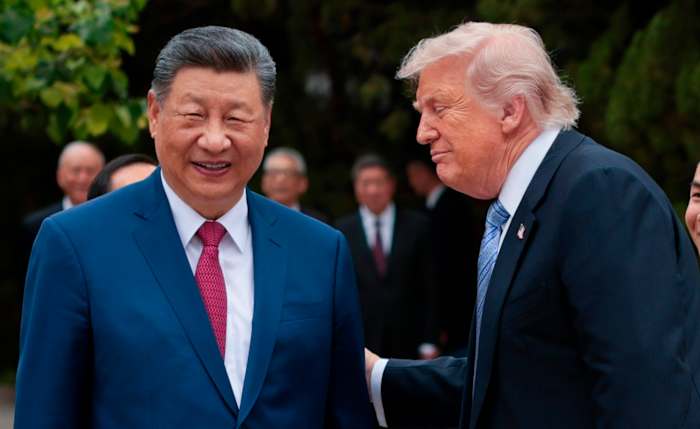
Don't celebrate the headline numbers just yet. The White House announcement that Beijing committed to an annualized purchase rate of $17 billion in American agricultural goods through 2028 sounds like a massive victory. Fresh off his high-stakes summit in Beijing with Chinese leader Xi Jinping, President Donald Trump is touting this as a major breakthrough for a struggling American agricultural sector.
But if you scratch beneath the surface of this latest diplomatic handshake, the reality for US cattle ranchers and poultry producers is far more complicated.
American agriculture took a massive beating over the last year. Tit-for-tat tariffs in 2025 dragged US farm exports to China down to a brutal $8.4 billion, a staggering drop from the $38 billion peak in 2022. Soybeans alone collapsed from $18 billion to a mere $3 billion in that timeframe. While a promised $17 billion yearly baseline for 2026, 2027, and 2028 offers a lifeline, it still leaves the American farm economy well below its historical highs. Beijing holds all the cards here, and their track record on keeping these purchasing promises is shaky at best.
The Beef and Poultry Bottleneck
The real meat of this agreement centers on restoring market access for products that have been entirely blocked by bureaucratic red tape. Last year, Beijing quietly let the export registrations expire for more than 400 US beef plants, effectively locking out corporate giants like Tyson and Cargill, along with hundreds of independent processors. According to the US Meat Export Federation, this move wiped out roughly 65% of all once-registered American plants. Consequently, US beef exports to China plummeted from $2.14 billion in 2022 to less than $500 million in 2025.
The new deal promises to resolve these non-tariff barriers, meaning hundreds of these facilities will finally get their licenses renewed. Interestingly, China’s appetite for beef includes massive demand for specific cuts like hooves, tongues, and variety meats. These are items that American consumers rarely buy but command premium prices in Chinese wet markets and hotpot restaurants. Easing these restrictions directly impacts the bottom line of 17 major cattle-producing states.
On the poultry side, the agreement allows imports to resume from US states that the USDA certifies as free from avian influenza. This is a major shift from Beijing's previous policy of enacting blanket, country-wide bans whenever a single bird flu case popped up. US poultry exports dropped from over $1 billion in 2022 to just $286 million in 2025. Getting back into the Chinese market is crucial for American poultry farmers, but it relies heavily on state-level health certifications remaining spotless.
Beijing Still Refuses to Put It in Writing
Here is the kicker that most mainstream coverage ignores: Beijing has yet to officially confirm the hard figures. While the White House released an optimistic fact sheet detailing the $17 billion commitment, China’s Ministry of Commerce stuck to much more ambiguous language. Their official statement noted that both sides would "actively work" to address mutual trade concerns and make "substantial progress" on non-tariff barriers.
This isn't just a difference in PR strategy. It is a calculated diplomatic play. China is dealing with its own economic pressures and won't lock itself into rigid purchasing quotas if it can avoid them. Under the 2020 Phase One trade agreement, Beijing promised massive agricultural purchases that it ultimately never fully fulfilled, citing global market disruptions. There is very little reason to believe this time will be different if global economic conditions shift again.
Furthermore, China spent the last few years aggressively diversifying its supply chains to reduce its reliance on American food. They don't want to depend on the US for their national food security.
- Soybeans: In 2016, China got over 40% of its soybeans from America. By 2024, that number dropped to roughly 20%.
- Alternative Suppliers: Brazil and Argentina have stepped in to fill the void, building massive logistical pipelines directly to Chinese ports.
- Geopolitical Safety: Buying from South America insulates Beijing from Washington's shifting political winds.
Once a supply chain shifts to South America, it doesn't just snap back overnight because of a two-day summit in Beijing.
The Fertzer Crisis and The Shadow of the Iran War
Even if China buys every single pound of beef and poultry promised in this deal, American farmers are facing an entirely new crisis at home that threatens to wipe out their profit margins. The war launched by the US and Israel against Iran has thrown global shipping into absolute chaos.
With the Strait of Hormuz effectively restricted, the global supply chain for critical raw materials has fractured. Fertilizer prices are skyrocketing right now because key chemical components are stuck behind naval blockades or rerouted on painfully long, expensive shipping journeys around Africa.
Macroeconomic Pressures on US Farmers (2026)
-----------------------------------------------------------
Input Costs: High fertilizer & fuel prices due to Middle East conflict
Logistics: Red sea and Strait of Hormuz shipping blockades
Market Access: Strict Chinese USDA bird-flu state certifications
Competitors: Well-established Brazilian & Argentine supply chains
It doesn't matter if China reopens its doors to Nebraska beef or Georgia poultry if the cost of raising that livestock eats up every cent of profit. High fuel costs and expensive fertilizer mean feed costs for cattle and poultry are higher than ever. Trump’s domestic policies are actively colliding with his foreign policy wins, creating a zero-sum game for the American heartland.
What Both Sides Actually Exchanged
To understand where this trade relationship is going, you have to look at what the US gave up to get these agricultural concessions. This wasn't a one-way victory. For China to reopen its doors to American meat, Washington had to promise to review its own import restrictions on Chinese goods.
Specifically, the US agreed to "actively work" on addressing China's complaints regarding the American detention of Chinese dairy products and seafood. Washington also agreed to look into easing restrictions on the export of potted bonsai trees and officially recognizing China’s Shandong province as a bird-flu-free zone, which would pave the way for more Chinese agricultural products to hit American shelves.
The two nations also agreed to set up two new oversight bodies: the Board of Trade and the Board of Investments. These bodies are intended to handle the day-to-day management of trading "non-sensitive goods" and provide a venue to iron out regulatory disputes. According to the Chinese Ministry of Commerce, the Board of Trade will look at reciprocal tariff reductions on an equivalent scale. Basically, if the US wants China to drop tariffs on beef, Washington will have to drop tariffs on an equivalent amount of Chinese goods.
How Agri-Businesses Should Navigate This Deal
If you are operating a commercial agricultural business, a livestock operation, or an export facility, you need to play this situation incredibly smart. Do not scale up your operations or take on massive new debt based on the assumption that China is suddenly going to swallow $17 billion of US goods annually without a hitch.
First, focus heavily on your local state health certifications. Because poultry access now hinges entirely on state-level bird flu statuses, a single outbreak in your region could instantly shut down your access to the Chinese market while your competitor one state over keeps shipping out product. Strict biosecurity protocols at the farm level are no longer just about protecting your flock; they are now your literal ticket to international trade.
Second, get your facility registrations updated immediately. The USDA and the Chinese General Administration of Customs will be flooded with applications as hundreds of plants try to regain their lost export eligibility. Work closely with trade associations like the US Meat Export Federation or the United States Cattlemen’s Association to ensure your paperwork is flawless. Priority will likely go to facilities that can immediately supply the specific variety meats and offal cuts that Chinese buyers want right now.
Finally, keep a close eye on the upcoming meetings of the newly formed Board of Trade. The real terms of the reciprocal tariff reductions will be hammered out there, not in White House press releases. Until those specific product lines and tariff schedules are published in black and white by both governments, treat this agreement as a fragile framework rather than a done deal. Diversify your own buyer network and don't make the mistake of relying solely on a Chinese market that can vanish with a single political tweet.
China to buy $17 billion of US farm goods each year
This video provides essential background on the steep drop in US agricultural exports to China leading up to the summit and details the specific structural mechanisms of the new trade boards.