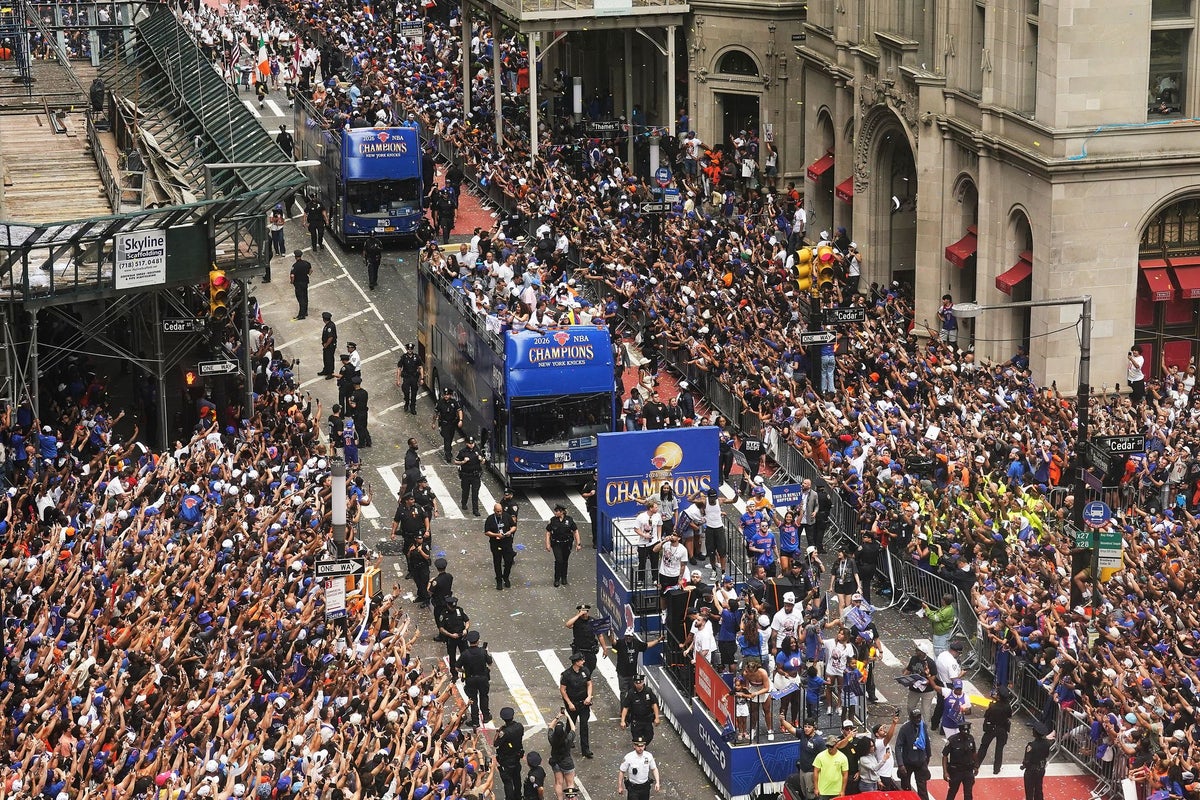
The gates locked before the sun even cleared the skyscrapers. If you woke up at 6 a.m. thinking you would grab a prime spot to see the New York Knicks celebrate their historic championship down the Canyon of Heroes, you already lost the game. By dawn, Manhattan was a gridlocked sea of orange and blue. Police lines were already pushed to their absolute limits.
Thousands of die-hard fans who braved the morning chill found themselves stranded outside the official viewing zones. Security barricades went up early. The city simply ran out of room. It is a classic New York story, but this time it left a bitter taste in the mouths of thousands who waited decades for this moment.
New York City failed to gauge the sheer magnitude of this fanbase. When a championship drought lasts for generations, you do not plan for a standard parade. You plan for sports euphoria bordering on madness.
The Morning Manhattan Ran Out of Room
Crowd control started breaking down around City Hall and along Broadway long before the actual floats started rolling. City officials estimated capacity limits for the designated viewing pens based on previous celebrations. They clearly forgot who they were dealing with. Knicks fans do not show up an hour before kickoff. They camp out.
By 7 a.m., the NYPD officially began closing off access points. If you were stuck behind the secondary barriers, you were completely out of luck. You could not see the route. You could not even move.
Huge crowds packed the entry checkpoints. Tempers flared naturally. People spent hundreds of dollars on commuter trains, took days off work, and dragged their kids out into the cold only to face a wall of blue uniforms telling them to turn back.
It was messy. The sidewalk bottlenecks became genuinely hazardous. When you pack that many hyped-up people into tight architectural corridors, things get sketchy fast.
The Math Behind the Manhattan Bottleneck
Manhattan geography is unforgiving. The Canyon of Heroes is iconic because it is narrow, walled in by massive stone buildings that echo every single cheer. That exact layout makes it a nightmare for modern public safety logistics.
Let's look at how the spacing actually works. The barricaded fan pens hold a fixed number of human bodies safely. City planners use standard formulas allowing a few square feet per person. Knicks fans do not stand perfectly still in their designated squares. They jump. They wave flags. They pack in tighter than transit data ever accounts for.
When the primary pens hit maximum capacity, police had to make a split-second decision. They could either risk a dangerous crowd crush or shut down the incoming streets entirely. They chose the latter. It was the right call for safety, but a massive failure in communication and planning.
The city did not provide overflow zones with big screens. They did not warn people via transit alerts until the trains were already packed. Fans kept pouring out of Penn Station and the subways directly into a wall of people.
Why the City Misjudged the Fanbase
New York hosts major events constantly. Marathon runners fill the outer boroughs yearly. New Year's Eve shuts down Times Square. The city knows how to handle massive crowds in theory.
The breakdown happened because planners treated this like any other parade. It was not. The Knicks are the cultural soul of New York sports in a way the local baseball or football teams rarely capture across all five boroughs simultaneously. Decades of pent-up frustration and regular-season heartbreak meant every single generation of fans wanted to be in that specific spot on Broadway.
Grandfathers who remembered the early seventies titles stood alongside teenagers who only knew the modern era. That cross-generational demand doubles or triples your expected crowd size instantly.
Treating this like a standard corporate ticker-tape event was a massive oversight. The city needed a massive logistical footprint that extended far beyond the traditional lower Broadway route.
How to Handle the Next Massive Championship Parade
If you plan on attending a major victory celebration in New York or any other massive sports city in the future, you have to change your strategy. Relying on official city timelines will leave you standing outside the gates every single time.
Get to the absolute earliest transit hubs before public schedules peak. If the city says gates open at 8 a.m., assume the lines started forming at midnight.
Scout secondary locations along the route that sit further away from the main stages. City Hall and the final rally points always fill up first. The middle stretches of the route often give you a better chance of actually seeing the players, even if the crowd feels just as dense.
Bring your own supplies. Once you secure a spot inside a viewing pen, you cannot leave to find a restroom or grab food. If you step out, your spot vanishes instantly. Pack light but bring water and high-energy snacks.
Cities also need to adapt to this new reality of fan culture. We need massive remote viewing parks in places like Central Park or the Brooklyn Navy Yard to handle the overflow safely. Relying solely on narrow Manhattan streets is an outdated strategy that fails the public.