The air inside the stadium didn't smell like American soccer. It didn't smell like the sterile, suburban youth complexes where orange slices and minivan doors define the culture. It smelled of spilled lager, wet asphalt, and the sharp, metallic tang of pure, unadulterated desperation.
For decades, to love men's soccer in the United States was to participate in a multi-generational exercise in apologizing. You apologized to your friends for the lack of goals. You apologized to the traditional sports landscape for existing. You watched the titans of South America and Europe play with an innate, arrogant grace, wondering when the American machinery would finally produce something that felt alive, rather than merely engineered.
Then came Paraguay. Then came a night where the spreadsheets stopped mattering.
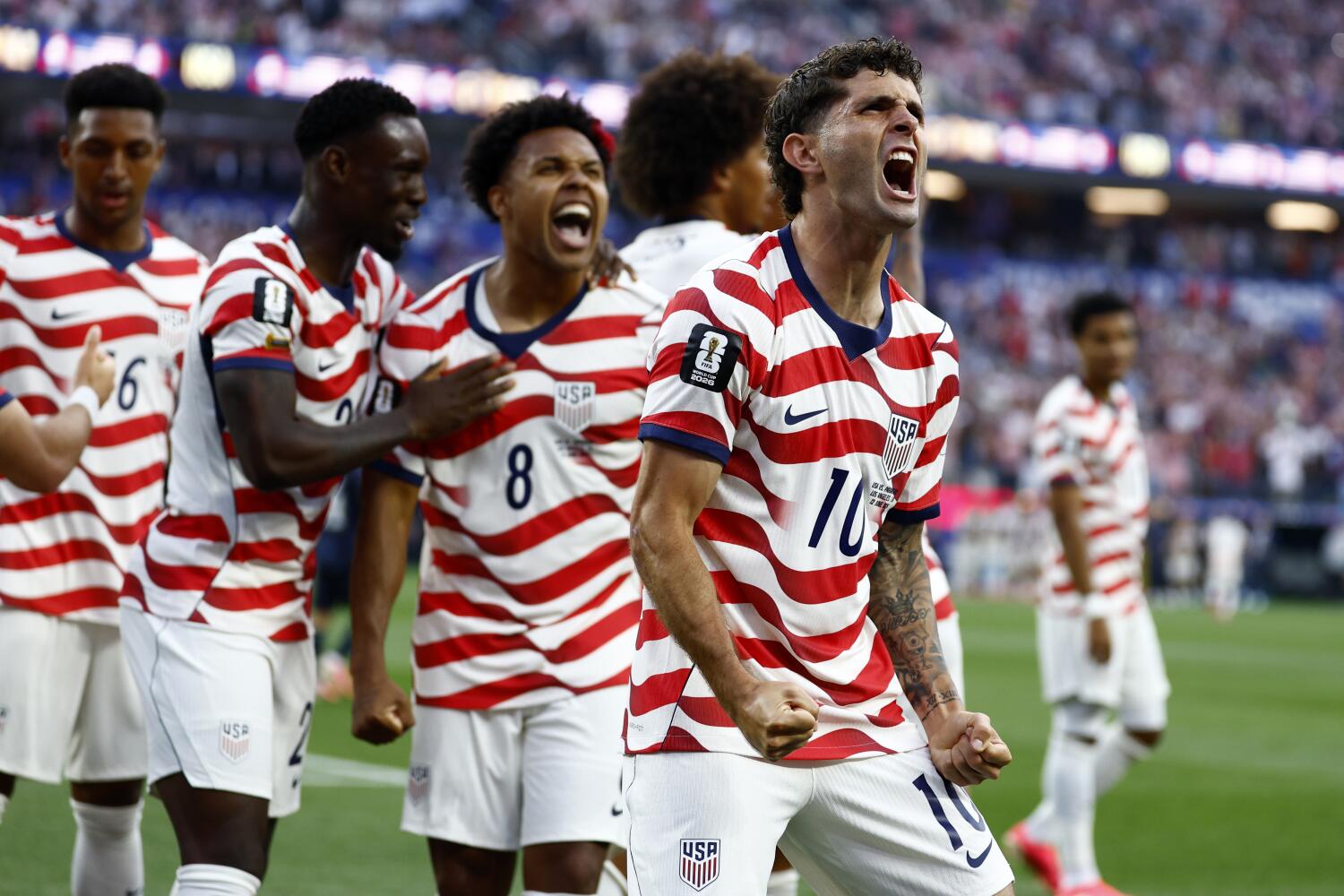
Under the harsh glare of the stadium floodlights, the scoreboard read a victory for the United States. But the numbers—the clinical data points that the sports desks would copy and paste into their morning columns—were the least interesting part of what transpired. The real story was written in the grass stains on Christian Pulisic’s knees and the predatory, ice-cold silence of Folarin Balogun before he struck.
This wasn't just a win. It was an eviction notice served to old doubts.
The Weight of the Captain’s Armband
To understand what happened on that pitch, you have to look closely at Christian Pulisic. Not the poster boy of marketing campaigns, but the man who has spent the last eight years carrying the psychological inheritance of an entire nation's soccer neurosis.
Every time Pulisic laces his boots for the national team, he isn't just playing against eleven men in opposing shirts. He is playing against history. He is playing against the ghost of 2018, the missed World Cups, the cynical pundits, and the suffocating pressure of being labeled the "LeBron James of Soccer" by people who don't know the difference between a corner kick and a throw-in.
Against Paraguay, that weight looked visible in the opening fifteen minutes. The South Americans didn't play gently. They clutched jerseys. They left boots in late. They checked Pulisic into the advertising boards with the kind of cynical, veteran malice designed to break a playmaker's spirit.
In the old days—say, five years ago—the American team would have looked to the referee. They would have complained about the lack of protection. They would have played the victim of South American fútbol dark arts.
Not this time.
Pulisic got up. He didn't yell at the official. He didn't rub his bruised ribs. He simply looked at the Paraguay midfielder who had just leveled him, adjusted the captain’s armband, and spat on the grass.
Consider the anatomy of his opening goal. It wasn’t a product of tactical genius or a meticulously rehearsed training ground routine. It was born from sheer, stubborn refusal to lose. When the ball broke loose near the edge of the eighteen-yard box, there were three white jerseys between Pulisic and the net. The space was microscopic.
He didn't look for a pass. He didn't hesitate. A sudden, violent drop of the shoulder left the first defender lunging at a ghost. A second touch, sharp and precise as a surgeon's scalpel, created a window no wider than a television screen.
Boom.
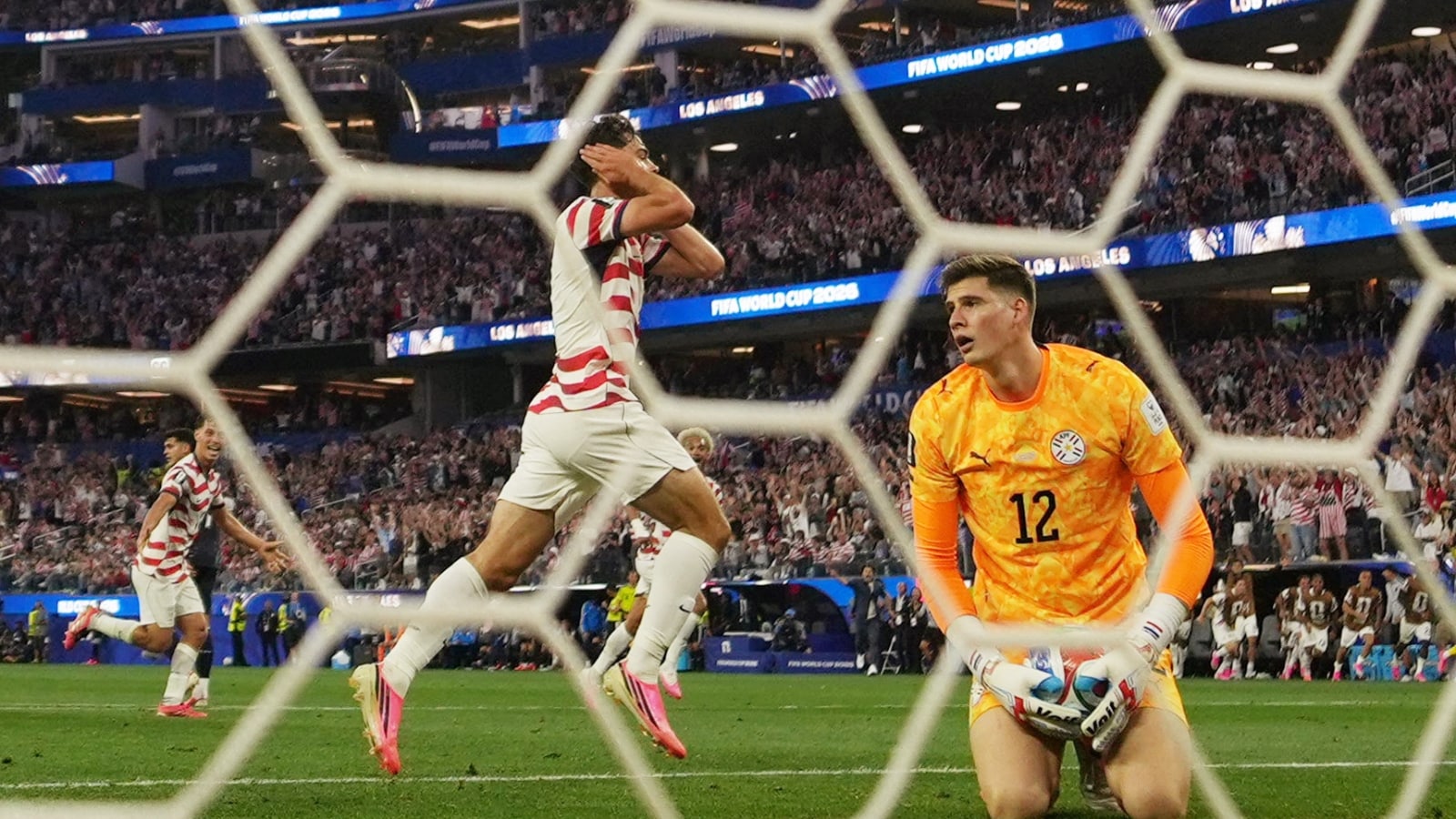
The ball hit the back of the net before the Paraguayan goalkeeper could even fully extend his arms. The stadium erupted, but Pulisic didn't give a theatrical celebration. He slid on his knees toward the corner flag, his face contorted in a primal, roaring release of tension. That is what authority looks like. It is the realization that you are no longer the future of the program; you are the standard.
The Quiet Assassin from London
If Pulisic represents the emotional spine of this team, Folarin Balogun represents its newfound, lethal pragmatism.
For years, the U.S. Men's National Team possessed plenty of industrious midfielders and athletic wingers who could run all day but lacked the killer instinct in the box. They had "project" strikers and hard workers. They didn't have a natural-born killer.
Balogun, raised in the unforgiving crucible of English academy football, brings an entirely different syntax to the American attack. He doesn't waste energy on performative running. He wanders the defensive line like a ghost, waiting for the exact moment the opposition forgets he is there.
Against Paraguay, his performance was a masterclass in psychological warfare. For long stretches of the match, he was nearly invisible. The casual observer might have thought he was having a poor game. The Paraguayan center-backs certainly grew complacent, believing they had handcuffed the young forward.
That was their fatal mistake.
In the sixty-eighth minute, a deflected pass skipped across the midfield. It was an ugly, bouncing ball that required immediate translation. While the defense hesitated for a fraction of a second, expecting the ball to be controlled, Balogun was already moving. He didn't need a perfect setup. He anticipated the trajectory, used his body to shield off a defender twice his size, and struck the ball on the half-volley.
It was a goal scored in complete silence. No hesitation. No doubt.
The ball flew into the upper corner with a ferocity that felt deeply personal. Balogun didn't smile. He just turned around, pointed to the badge on his chest, and walked back to the center circle. It was the demeanor of a man who had simply completed a business transaction.
That is the missing ingredient this program has bled for over two decades: a cold, clinical arrogance in front of goal. The belief that scoring isn't a hope or a statistical probability, but an inevitability.
The Shift in the Dirt
But focusing entirely on the goalscorers misses the tectonic shift that occurred underneath the grass.
Soccer matches between North and South American teams have traditionally followed a predictable script. The Americans bring the fitness, the sports science, and the tactical discipline. The South Americans bring the soul, the rhythm, and the street-smart aggression. Usually, the soul wins out when the game gets chaotic.
When Paraguay pulled a goal back early in the second half through a brilliant, curling effort that left the American keeper stranded, the old ghosts started circling the stadium. You could feel the collective anxiety of fifty thousand fans holding their breath. We had seen this movie before. The collapse was supposed to begin now.
Instead, something unfamiliar happened. The Americans became the bullies.
Weston McKennie began patrolled the midfield like a junkyard dog, turning every 50-50 challenge into a physical confrontation. Tyler Adams anchored the spine, breaking up plays with an aggressive, borderline disrespectful intensity. The Americans weren't just surviving the Paraguayan onslaught; they were dictating the terms of the violence.
They matched the dark arts blow for blow. They wasted time intelligently. They crowded the referee when necessary. They showed a collective snarl that has been noticeably absent from the American soccer lexicon for generations.
This team has finally stopped trying to earn the respect of the footballing world through good behavior. They are earning it through points.
The Unseen Horizon
When the final whistle blew, echoing through the humid night air, there were no wild celebrations. There was no sense that a miracle had been pulled off. The players exchanged weary high-fives, hugged their opponents, and walked toward the supporters' section with the measured steps of workers who had put in a solid shift at the factory.
That indifference to their own achievement might be the biggest victory of all.
For the longest time, a win against a quality South American side in a major tournament environment would have been treated as a historic milestone, a defining moment to be analyzed for years. Tonight, it felt like a Tuesday. It felt normal.
We are watching the death of American soccer inferiority. It isn't happening because of a new youth curriculum or an influx of corporate sponsorship. It is happening because a group of young men, scattered across the top leagues of Europe, have forgotten how to be afraid. They don't look at the powerhouses of world football and see gods; they see colleagues. They see opponents whose weaknesses can be exploited.
The road ahead remains treacherous, filled with tactical traps and the unpredictable cruelty inherent to tournament football. A single bounce of the ball can still ruin a summer. No amount of narrative momentum can change the physics of a deflected shot or a referee's mistaken whistle.
But as Christian Pulisic walked down the tunnel, his jersey torn at the collar, a deep bruise forming on his left cheek, and three points secured in the standings, the reality of the new landscape became undeniable. The United States is no longer just inviting guests to the party. They are finally learning how to wreck it.