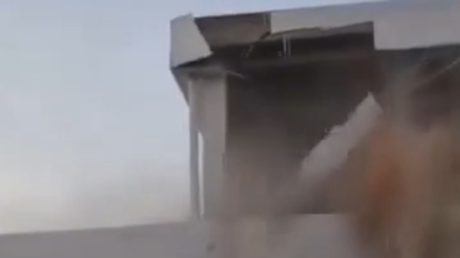
The sea does not always whisper. Sometimes, it tears apart.
Midnight in the island chain rarely brings true stillness. There is the low-frequency hum of cicadas, the rhythmic slap of warm water against wooden hulls, and the steady breath of sleeping families curled beneath woven mats. Then came the wrenching sound. It was not a rumble you heard with your ears. It was a pressure that built behind the eyes, a sickening lurch in the stomach, a sound like a cathedral falling inward on itself.
Beneath the seabed, two massive plates of the earth collided, locked, and violently slipped. A magnitude 7.7 earthquake.
Numbers on a seismograph are clean. They are neat little rows of data transmitted via satellite to air-conditioned desks thousands of miles away. But a 7.7 is not a number. It is an invisible giant standing up beneath your living room floor. It is the sudden, terrifying realization that the ground you have trusted your entire life is nothing more than a thin crust floating over a furnace.
When the shaking finally stopped, the dark was heavier than before.
In coastal villages where the power grid collapsed instantly, the world shrank to the circle of a flashlight beam. In one small home, a mother—let us call her Ani, though her face is mirrored in a thousand homes across the archipelago—found herself pinned beneath a fallen beam. She did not scream immediately. Survival instinct is quieter than panic. She listened. She listened for the ragged breathing of her youngest child.
Silence.
That is the true terror of tectonic violence. It is not just the motion that breaks things; it is the vacuum left behind. Within minutes, radio waves carried the preliminary metrics. The epicenter was offshore. Deep enough to mute the worst-case tsunamis, shallow enough to throw a devastating punch at the nearby shorelines. Five lives snuffed out before the coffee pots could cool in the morning. Five souls erased from the ledger of the living.
To understand why a 7.7 earthquake kills five people instead of fifty thousand, you have to look at the geometry of luck and the architecture of survival.
Geology is an unforgiving teacher. The Indo-Australian plate constantly grinds northward beneath the Sunda plate, a slow-motion collision that has sculpted some of the most breathtaking island landscapes on earth at a horrific biological cost. Every century, stress accumulates along these fault lines like a pulled rubber band. When it snaps, energy releases in seismic waves that ripple outward like stones thrown into a pond.
Depth matters. Had this rupture occurred five kilometers closer to the surface, the masonry walls of coastal villages would have turned to powder instantly, burying whole communities. Instead, the focus sat deeper down, dampening the surface acceleration just enough to keep most concrete structures standing, even as they cracked open like dry clay.
Luck. It is a terrible thing to rely on, yet millions do.
Consider what happens next in the quiet hours after the mainshock. Aftershocks. The earth refuses to settle at once. It shivers, resetting its bones in a series of smaller tremors that keep every nerve ending raw. People sit on plastic chairs in the middle of dirt roads, refusing to re-enter homes with hairline fractures tracing down their mortar. They look out at the black ocean, waiting to see if the water will pull back.
In the capital cities, experts analyze the telemetry. They talk about fault mechanics and slip vectors. They map the coordinates on glowing monitors. But out here, where the salt air stings fresh plaster dust, the metrics mean nothing. The only metric that matters is whether the roof over your head will stay put when the next tremor hits.
We build our lives on the edges of monsters. We plant gardens on volcanic ash and raise children above ticking geological clocks. We do this because humanity is stubbornly, brilliantly optimistic. We mistake the quiet years for permanent peace.
When the sun finally clawed its way over the horizon, it revealed a landscape of fractured concrete and overturned fishing skiffs. Neighbors emerged from the brush, dust-covered and blinking in the harsh light, carrying shovels and bottled water. No grand speeches were made. No sweeping policy changes were announced in that first hour. There was only the heavy, calloused work of lifting beams, tending to the injured, and counting the missing.
The earth will shift again. It is a geological certainty. The plates do not sleep, and the fault lines do not heal.
Yet as the dust settled over the broken coastline, smoke began to curl from a makeshift stove set up beside a tent of blue tarpaulin. Someone was boiling water. Someone was laughing, nervously, at a child's scraped knee. The world had broken, but it had not ended.