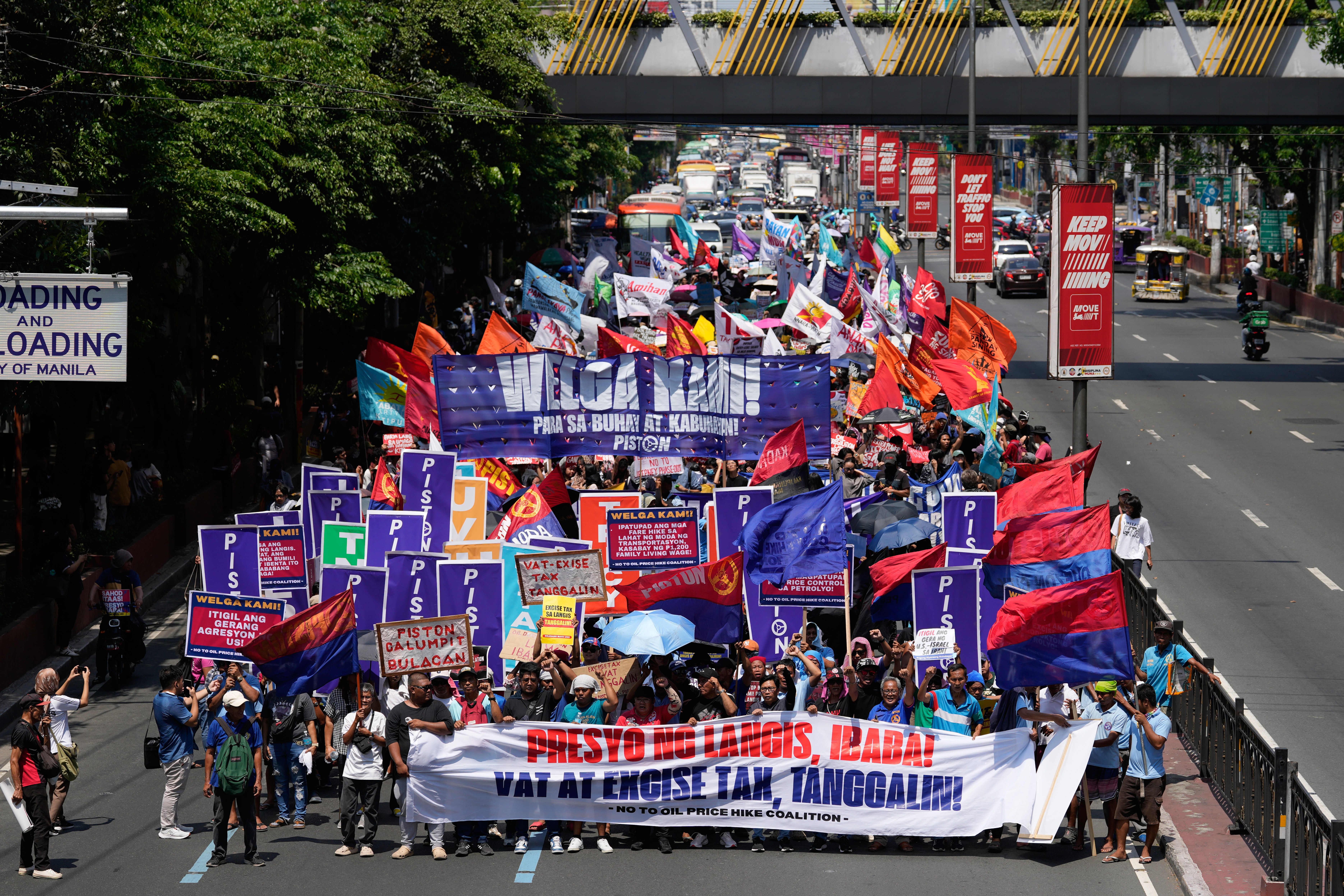
In the humid heart of Jakarta, a street vendor named Aris watches the blue flame of his portable stove flicker and die. It isn't a mechanical failure. It isn't a clogged valve. It is a geopolitical tremor originating seven thousand kilometers away, traveling through subsea pipelines and state-owned refineries until it finally reaches his small cart. When Iran turns the tap, Southeast Asia feels the thirst first.
For decades, the relationship between the Middle East's energy giants and the tiger economies of Southeast Asia was a predictable pulse. Oil flowed east; capital flowed west. But that pulse has skipped a beat. Iran’s recent decision to throttle its oil and gas exports hasn't just moved numbers on a Bloomberg terminal. It has fundamentally altered the chemistry of daily life for half a billion people.
The Invisible Cord
We often talk about energy in the abstract, as if it were a weather pattern we can only observe. In reality, it is a physical cord. This cord connects a drilling rig in the Persian Gulf to a semiconductor plant in Vietnam and a tuk-tuk in Bangkok. When that cord is cut, the reaction is instantaneous.
Southeast Asia is uniquely vulnerable because of its own success. The region’s explosive industrial growth outpaced its domestic energy production years ago. Indonesia, once a proud member of OPEC, is now a net importer. Thailand and Vietnam are sprinting toward carbon neutrality, but their grids are still anchored by the heavy, reliable pull of fossil fuels. Iran was the pressure valve—the supplier that kept prices within the realm of the manageable.
With that valve closed, the "manageable" has become the "impossible."
The math is brutal. Energy costs don't just add up; they multiply. When the price of crude spikes because of a supply vacuum, the cost of transporting rice from the paddy to the city spikes with it. The plastic packaging for that rice, derived from petrochemicals, becomes more expensive. The electricity used to mill the grain follows suit. By the time a mother in Manila reaches for a bag of food, the geopolitical spat in Tehran has taxed her twenty percent of her daily wage.
A Grid on the Edge
Consider the sheer scale of the engineering at play. In Singapore, energy security isn't a policy goal; it’s an existential requirement. The city-state imports nearly all of its energy. While they have diversified with Liquefied Natural Gas (LNG) from various sources, the sudden removal of Iranian volume from the global market creates a "bidding war" environment.
When Iran cuts off the supply, it isn't just their direct customers who suffer. It’s a game of musical chairs. Traditional buyers of Iranian oil suddenly pivot to the same sources Singapore or Malaysia rely on. Prices skyrocket as everyone scrambles for the remaining chairs.
The technical strain on the power grids is the most terrifying silent consequence. Power plants are designed to run on specific grades of fuel. When a refinery in East Java has to suddenly switch from the heavy Iranian crude it was calibrated for to a lighter, more expensive grade from West Africa or the United States, the efficiency drops. Maintenance cycles accelerate. The "spinning reserve"—the extra power kept on standby to prevent blackouts—thins out.
The result is the brownout. It starts as a flicker in a high-rise. Then, the air conditioning units in a garment factory in Phnom Penh groan and stop. For the owner of that factory, a four-hour power cut isn't an inconvenience. It is a broken contract. It is a week of lost wages for three hundred workers. It is the sound of a supply chain snapping.
The Human Cost of High Octane
Let’s look at a hypothetical but entirely representative figure: Siti, a logistics coordinator in Kuala Lumpur. Her world is built on the assumption of cheap movement. She manages a fleet of delivery bikes that weave through the city's notorious traffic.
When the news of the Iranian cutoff hit the wires, Siti didn't look at maps of the Strait of Hormuz. She looked at her fuel spreadsheet. Within forty-eight hours, her margins vanished.
"We can't just raise prices on the customers," she might tell you. "They are already struggling with the price of eggs. If I charge more for delivery, they stop ordering. If they stop ordering, my drivers don't eat."
This is the "energy poverty" trap. It isn't just about whether the lights stay on; it’s about whether the economy has enough friction-free movement to grow. Iran’s withdrawal acts as a giant bucket of sand thrown into the gears of Southeast Asian progress.
The Pivot to the Unknown
For years, the narrative in Hanoi and Jakarta was about the "Green Transition." The idea was to slowly, methodically move toward solar, wind, and geothermal power. It was a twenty-year plan.
The Iranian cutoff has turned that twenty-year plan into a twenty-week emergency.
Governments are now forced to make impossible choices. Do they subsidize fuel to prevent civil unrest, draining their national treasuries and stalling infrastructure projects? Or do they let the market dictate the price, knowing it will crush the lower middle class?
Vietnam, for instance, has been a darling of foreign investment, attracting tech giants away from China. But those factories require one thing above all else: stability. If the energy supply is dictated by the whims of a Middle Eastern power play, the "Vietnam Miracle" starts to look fragile.
There is an irony here. The very crisis that makes fossil fuels look like a liability also makes it harder to afford the transition to renewables. Solar panels and wind turbines require massive upfront capital. When a nation is spending its reserves just to keep the current coal and gas plants running, there is nothing left in the chest to build the farm of the future.
The Shadow Market
When the front door is locked, people look for a window. The cutoff has birthed a sprawling, shadowy network of energy "laundering." Tankers turn off their transponders in the middle of the ocean. Oil is swapped from ship to ship in the dead of night, mixed with other crudes, and re-labeled.
It is a dangerous, desperate game. For Southeast Asian nations, the temptation to buy this "gray" oil is immense. It’s cheaper. It’s available. But it comes with a cost that doesn't show up on an invoice: the risk of international sanctions and the degradation of the rule of law.
In the ports of the Riau Islands, the horizon is dotted with ships that officially do not exist. They are the ghost fleet of the energy crisis, carrying the lifeblood of a region that is slowly being choked by a distant hand.
The Resonance of the Silence
Walking through a night market in Bangkok today feels different. The neon is still bright, but the hum of the generators is louder. There is a tension in the air, a collective holding of the breath. Everyone is waiting for the next headline, the next escalation, the next reason for the price of a bowl of noodles to climb another five baht.
The true impact of the Iranian cutoff isn't found in the speeches of ministers or the white papers of think tanks. It is found in the silence of a factory that has sent its workers home early. It is found in the dark windows of a village that can no longer afford the diesel for its communal generator.
We are witnessing the end of an era of easy assumptions. For half a century, Southeast Asia grew on the back of a globalized energy market that felt as reliable as the tides. We now know the tide can be turned off.
Aris, the vendor in Jakarta, eventually finds a new canister of gas. It costs him twice what he paid last week. He adjusts the price of his satay, watches a regular customer look at the new sign, shake their head, and walk away. He sits on his stool and waits. He is a small man in a large world, waiting for someone he will never meet to decide if he can afford to cook tomorrow.
The blue flame is back, but it burns with a new, expensive fragility.


