The lobby smells like damp wool and expensive gin. It is that specific, electric New York humidity that clings to your skin just before the curtain rises. People are shuffling. They are checking their phones one last time, a digital tether to a world that is about to disappear for two hours. There is a woman in the third row, clutching a playbill so tightly the ink might transfer to her palms. She isn't here for "entertainment." She is here because she needs to remember how to breathe.
We have been told for years that the stage is dying. That the glow of a tablet can replace the sweat of an actor. They were wrong.
The pulse of the city isn't found in its skyscrapers or its subway arteries; it’s found in the dark, crowded rooms where strangers sit shoulder-to-shoulder to watch a miracle. Right now, six specific stories are vibrating through the floorboards of Manhattan. These aren't just shows. They are mirrors. They are screams. They are quiet whispers in the dark that tell us we are not as alone as we feared.
The Ghost in the Machine
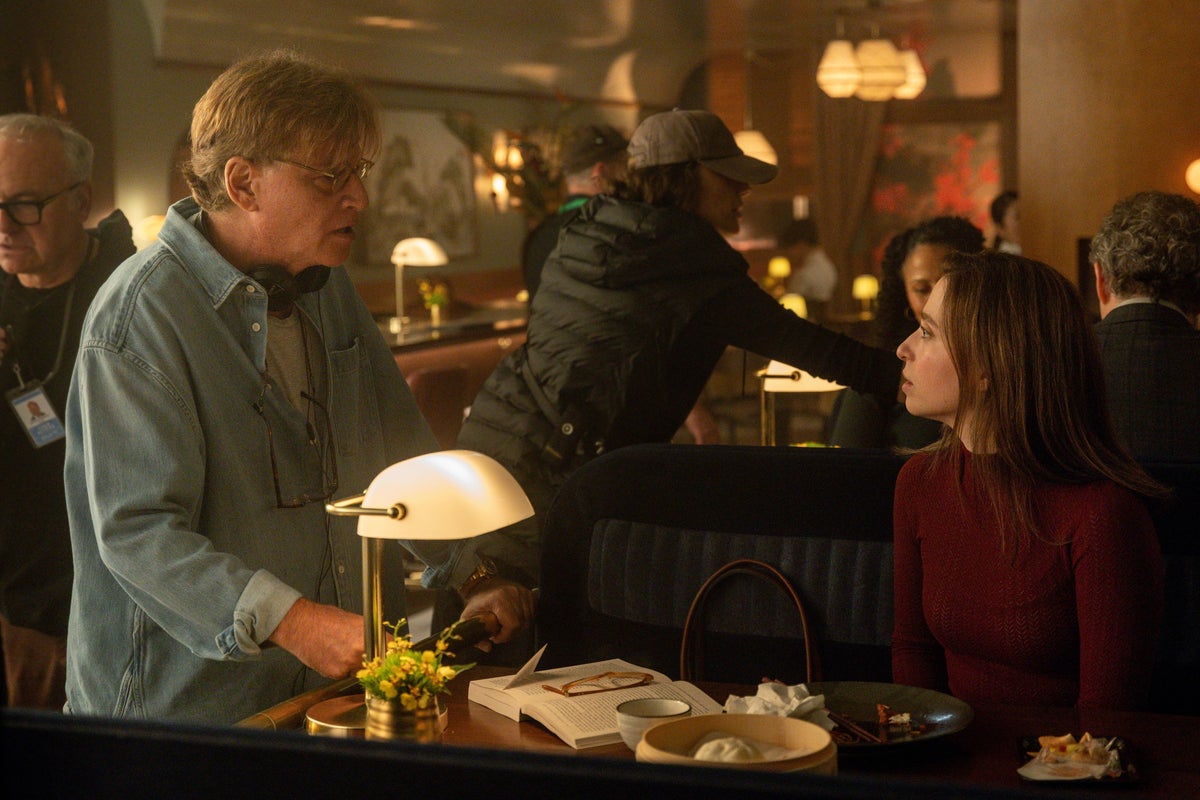
Consider the silence that falls when a legend steps into the spotlight. In McNeal, Robert Downey Jr. isn't playing a hero in a metal suit. He is playing a writer—a man whose mind is a crumbling cathedral. The story swirls around the terrifying, blurred line between human creativity and the cold, calculating hunger of Artificial Intelligence.
It feels personal. It feels like we are watching a man fight for his soul in real-time. The play asks a question that keeps us up at night: If a machine can write your life story better than you can, do you still exist? When McNeal stares into the abyss of his own fading relevance, the audience doesn't just watch. They lean in. They recognize that frantic search for meaning. We are all McNeal, trying to prove we are more than just a series of inputs and outputs.
A Carnival of Broken Hearts
A few blocks away, the air changes. It becomes thick with the scent of sawdust and the bittersweet ache of a lost era. Water for Elephants isn't just a spectacle of acrobatics and soaring melodies; it is a study of what we do when the world breaks us.
Imagine a young man who has lost everything—his family, his future, his sense of gravity. He jumps on a moving train because staying still is a death sentence. The circus he finds is a beautiful, violent lie. But within that lie, there is a truth about how we protect the things we love. The way the performers move—defying physics, risking their necks for a gasp from the crowd—serves as a brutal metaphor for survival. We are all tightrope walking. We are all one misstep away from the hard ground, hoping someone is there to catch us.
The Weight of the Crown
Then there is the sheer, exhausting brilliance of Suffs. It is easy to look at history as a series of dates on a dusty page. It is much harder to look at it as a bloody, exhausting marathon run by women who were told their voices were noise.
The stage is filled with fire. Not literal flames, but the kind of internal combustion that happens when a human being decides they will no longer be invisible. You feel the fatigue in their bones. You hear the cracks in their harmony when the infighting starts. It reminds us that progress isn't a straight line. It’s a jagged, ugly crawl. Watching them, you realize that the rights we take for granted were paid for in a currency of sheer, unadulterated stubbornness.
The Quiet Room
Not every story needs a chorus line. Sometimes, the most deafening sounds are the ones made in a kitchen at 3:00 AM. In Appropriate, the ghosts aren't wearing sheets. They are tucked away in photo albums and hidden in the floorboards of an old plantation house.
The play is a pressure cooker. A family returns to their ancestral home, only to find a past that refuses to stay buried. It is uncomfortable. It is supposed to be. As the characters tear into one another, you see the inheritance of hate and the desperate, failed attempts to scrub the blood off the walls. It forces the audience to look at their own basements. What are we hiding? What are we hoping our children never find? The tension in the room is a physical weight, a collective holding of breath that only releases when the house—literally and figuratively—begins to groan under the weight of its secrets.
The Music of the Ordinary
If Appropriate is a scream, Hell’s Kitchen is a heartbeat. It’s the sound of a girl finding her power in the middle of a concrete labyrinth. Alicia Keys didn't just write a musical; she mapped the soul of a neighborhood.
There is a hypothetical girl in the balcony tonight. Let's call her Maya. She’s seventeen, she’s angry, and she thinks the world is too small for her. She watches the stage and sees a version of herself that isn't a "problem" or a "statistic." She sees a girl whose rebellion is actually a symphony. The rhythm of the drums mimics the subway under our feet, reminding us that there is art in the grit. There is beauty in the struggle of a mother trying to hold onto a daughter who is already halfway out the door. It captures that fleeting, agonizing moment when childhood evaporates and something harder, sharper, and more beautiful takes its place.
The Final Act of Defiance
Finally, we find ourselves at Stereophonic. This is not a play about a band. It is a play about the cost of perfection.
The set is a recording studio. It is a fishbowl. For three hours, we watch five people lose their minds trying to capture lightning in a bottle. They fight over snare sounds. They break up. They make up. They snort lines of white powder and lines of bitter dialogue.
But then, they play.
And in that moment, all the cruelty and the ego vanish. The music is the only thing left. It is a reminder that humans are flawed, terrible, selfish creatures who are somehow capable of creating something divine. You leave the theater feeling raw. You leave feeling like you’ve been through the wringer with them.
The lights go down. The actors take their bows, shedding their characters like old skin. The audience stands, a sea of clapping hands and tear-streaked faces. We walk out into the New York night, back into the humidity and the noise. But something has shifted. The stranger walking next to you isn't just a stranger anymore. They are someone who sat in the dark with you. They are someone who saw the same ghosts.
The subway ride home feels different. The city is still loud, still chaotic, still indifferent to our existence. But for a few hours, we were part of a story. We were the characters. We were the stakes. And as the train rattles toward the next stop, you realize the lights never really went out. They just moved inside of you.
The girl from the third row is on the platform now. She isn't clutching her playbill anymore. She’s tucked it into her bag, a small paper souvenir of the night she remembered how to breathe. She looks at the person next to her and smiles. It’s a small gesture, almost invisible. But in this city, in this life, it’s everything.