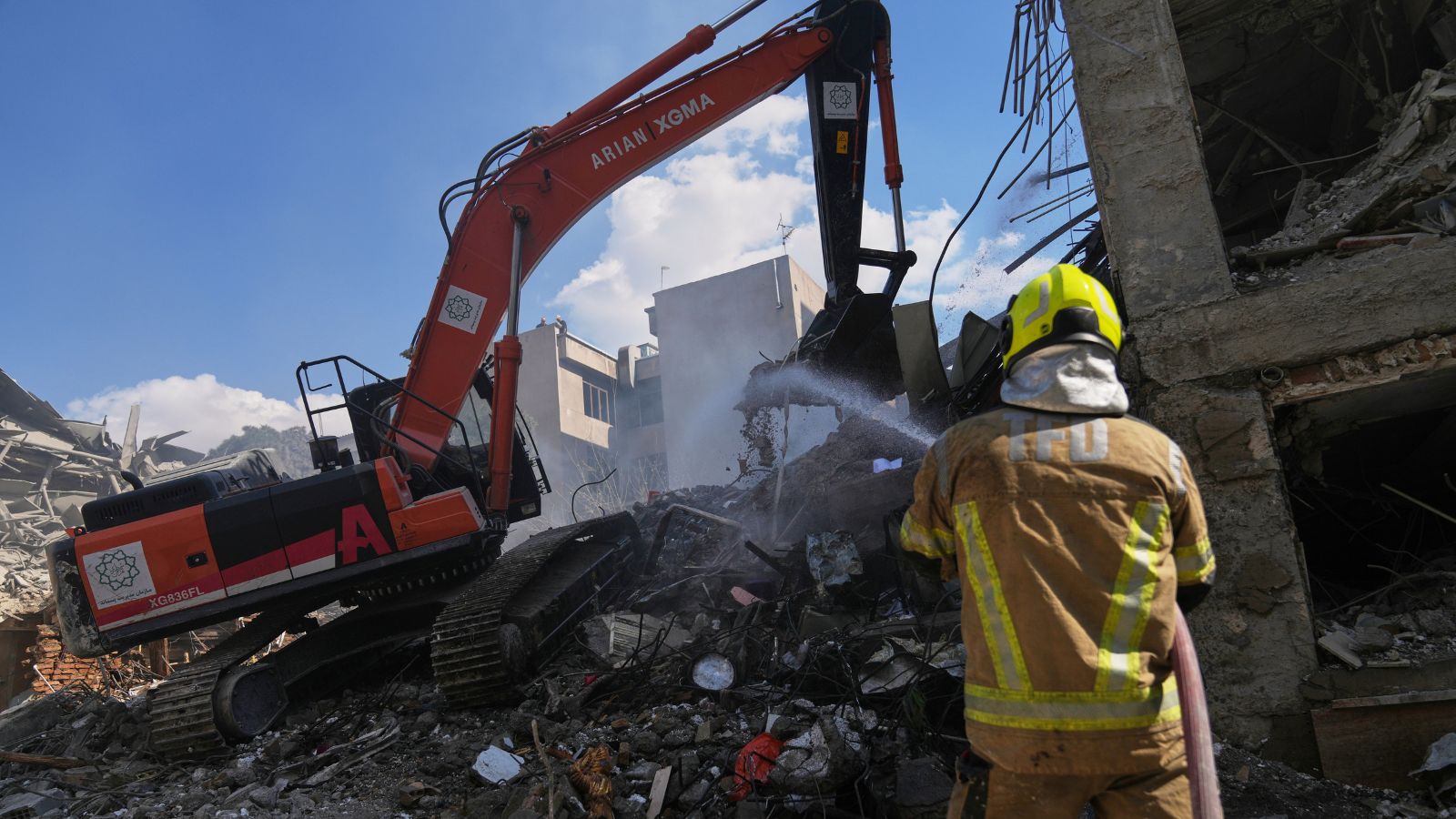
The sea at Kharg Island used to be a mirror for the stars, but tonight it reflects only a jagged, orange fever. It is 3:00 AM. For the people living on this coral outcrop in the Persian Gulf, the world didn’t end with a whimper. It ended with a sound like the sky tearing in half.
Thirt-nine days ago, the first domino fell. Now, we are watching the table collapse.
Kharg Island is not a place most people can find on a map, yet it is the jugular vein of the Iranian economy. It handles nearly 90% of the country’s crude exports. When the missiles struck the loading terminals just hours before the dawn deadline, they weren't just hitting steel and concrete. They were hitting the pulse of a nation. They were also hitting your gas tank, your grocery bill, and the fragile peace of every kitchen table from London to Los Angeles.
Consider a crane operator named Reza. He is a hypothetical man, but his reality is shared by thousands. Reza spent his life maintaining the pipes that feed the world's hunger for energy. When the sirens wailed, he didn't think about "geopolitical leverage" or "strategic deterrence." He thought about the vibration in his boots. He thought about the fact that the Strait of Hormuz, a narrow strip of water through which a fifth of the world’s oil flows, was about to become a graveyard for tankers.
The fire on the horizon is the physical manifestation of a clock running out.
The Architecture of Total War
The rhetoric coming out of Washington has shifted from the transactional to the apocalyptic. This isn't the surgical diplomacy of decades past. We are now hearing phrases that suggest the end of civilization itself. When a leader vows to erase the very foundations of a society, the language of "proportional response" dies.
It is replaced by the math of the void.
The logic of Day 39 is simple and terrifying. If Iran cannot export its oil because Kharg is a smoking ruin, it has no reason to let anyone else’s oil pass through the Strait of Hormuz. This is the "Hormuz Deadline"—a line in the sand that has been washed away by the tide. Tehran had warned that any strike on its energy infrastructure would trigger a total blockade.
Now, the blockade is no longer a threat. It is a mathematical certainty.
Imagine the global supply chain as a delicate web of glass threads. We have spent forty years polishing it, making it leaner, faster, and more efficient. But "efficient" is just another word for "fragile." There is no backup for the Gulf. There is no magic switch to flip that replaces 20 million barrels of oil a day. When that flow stops, the glass shatters.
The Ghost of 1973
History isn't a straight line; it’s a spiral. We have been here before, though the stakes were lower then. In 1973, an oil embargo sent the West into a tailspin. But in 1973, the world wasn't powered by hyper-connected data centers and just-in-time delivery systems.
Today, if the price of crude doubles overnight—which is the floor, not the ceiling, of current projections—the ripple effect is instantaneous. The truck driver in Ohio can't afford the diesel to deliver grain. The price of bread in Cairo spikes, sparking bread riots. The electronics factory in Shenzhen loses power.
We are seeing a collision between 21st-century technology and 19th-century territorial aggression. It is a mismatch that the world is not prepared to handle.
The attack on Kharg Island happened just hours before the deadline expired. It was a preemptive strike designed to decapitate Iran’s ability to fund a long-term war. But in the Middle East, "preemptive" often translates to "permanent." There is no going back from a blackened terminal. There is no "reset" button for a sea filled with oil slicks and sunken destroyers.
The Human Cost of the Invisible Stake
War is often discussed in the abstract—"assets," "targets," "theaters." But the real war is fought in the silence of a darkened room.
In Tehran, a grandmother sits by a radio, wondering if the medicine her grandson needs will arrive before the ports close for good. In Washington, a junior staffer stares at a monitor, watching the global markets bleed red, realizing that the "economic pressure" they helped design has finally ignited a fire they cannot put out.
We often think of "ending civilization" as a sudden flash of light—a nuclear event. But civilization ends in smaller ways first. It ends when trust evaporates. It ends when the systems we rely on for our basic needs—food, warmth, movement—fail because two powers decided that total victory was better than a messy peace.
The strike on Kharg was the match. The Strait of Hormuz is the powder keg.
The ships are currently turning around. Satellite imagery shows a line of tankers, billions of dollars in cargo, drifting in the Indian Ocean. They are afraid to enter the Gulf. They are waiting for a signal that isn't coming. They are the heralds of a new, colder era.
The truth is that neither side can afford this, yet both sides feel they cannot afford to stop. It is the tragedy of the sunk cost. Having lost so much in the first 38 days, the 39th day demands a higher price. The rhetoric has become a prison. When you vow to end a civilization, you leave yourself no room to negotiate a ceasefire.
Beyond the Point of No Return
If you walk along the coast of the Gulf today, the air smells of salt and burnt petroleum. It is a heavy, cloying scent that sticks to your skin. It is the smell of the old world burning.
The "civilization" that is being threatened isn't just a collection of buildings or a set of laws. It is the ability to plan for tomorrow. For thirty-nine days, that ability has been shrinking. Today, it vanished.
We are no longer talking about who won the day or who gained a few miles of coastline. We are talking about what remains when the smoke clears. If the heart of the world’s energy supply is silenced, the silence will spread. It will move through the power grids and the shipping lanes until it reaches the quietest corners of the globe.
Reza, the crane operator, is likely gone now, or hiding in a bunker beneath the scorched earth of Kharg. He doesn't care about the headlines. He cares about the oxygen in the room. He is the human element we forget when we talk about "Day 39." He is the one who pays the bill for the vows made in high-ceilinged rooms thousands of miles away.
The sun is rising over the Gulf, but it is obscured by a plume of black smoke that stretches toward the horizon. It looks like a mourning shroud for the 21st century.
We used to wonder what the end would look like. We thought it would be a grand, cinematic finale. Instead, it looks like a quiet island on fire, a narrow strait empty of ships, and the terrifying realization that the people in charge have forgotten how to speak any language but flame.
The mirror of the sea is broken. The stars are gone. There is only the fire.