The fluorescent lights of a data-consulting firm do not care about political revolutions. They hum with a flat, clinical indifference, illuminating rows of dual-monitor setups, half-empty energy drinks, and columns of numbers that refuse to bend to human desire.
In the shivering, anxious weeks of late December 2020, a handful of highly paid econometricians and data scientists sat in rooms like this. They had been hired by Donald Trump’s campaign under a frantic directive: find the phantom in the machine. Prove that the 2020 election was stolen.
The campaign paid firms like the Berkeley Research Group hundreds of thousands of dollars to scour six battleground states. They chased every ghost whispered about on late-night talk radio and internet forums. Dead voters. Malfunctioning voting terminals. Illicit ballot harvesting. Foreign algorithms flipping percentages in the dead of night.
The scientists did not approach this with a partisan sneer. They approached it with cold, hard models. They looked under every digital rock.
Then came the briefing.
Picture the scene on that conference call. On one end, desperate political operatives and a president hungry for vindication. On the other end, the data guys. The analysts cleared their throats and delivered the verdict. Yes, they found minor anomalies—the statistical noise that haunts every massive human undertaking. A few clerical errors here, a couple of administrative omissions there. But it went in both directions. There was no grand conspiracy. The numbers were solid. The election was lost.
The response from the political camp was not gratitude for the clarity. It was rage. Operatives complained that the researchers simply weren't looking hard enough. The report was buried, shoved into the deepest drawer of corporate confidentiality, while the public rhetoric outside grew louder, angrier, and more dangerous.
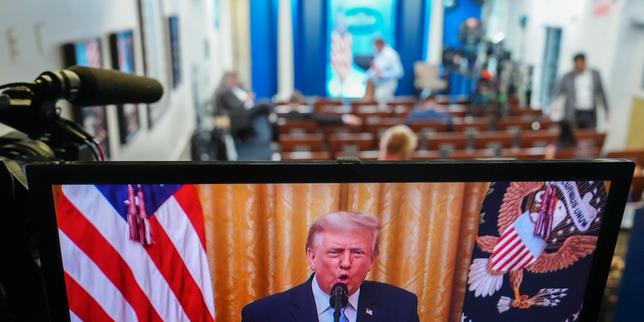
Fast forward to a prime-time television address. The stage was set for a dramatic unveiling. The promise was monumental: a mountain of newly declassified intelligence documents that would finally expose the deep vulnerabilities of American democracy and validate years of grievances.
But when the heavy black ink of the declassification stamps was revealed, a strange thing happened. The documents didn’t support the narrative. They collapsed it.
The papers detailed foreign intelligence threats, specifically focusing on Chinese data collection efforts and the theoretical vulnerability of centralized voter registration systems. They proved that hostile nations wanted to mess with the system. But look closer at what the intelligence community actually wrote in those secret files. Because individual states and counties manage their own voting processes, executing a coordinated attack wide enough to alter an election outcome is practically impossible.
The very intelligence declassified to prove a stolen election explicitly stated that no such manipulation occurred.
This is the exhausting, heavy irony of modern political theater. The ghost-hunting expedition didn't fail because of a lack of effort. It failed because the ghosts weren't there.
Consider what happens next when a narrative is disconnected from its own evidence. The strategy shifts from proving a past crime to engineering future defenses against an imaginary one. The documents are used as leverage to demand sweeping, restrictive voting laws, framed as an urgent shield against a crisis that the declassified pages themselves debunk.
It leaves the observer with a profound sense of vertigo. We are asked to ignore the conclusions of the very experts hired to find the truth, and instead stare at the scary, redacted headlines of intelligence briefs that tell a completely different story when read to the end.
The data scientists have long since moved on to other projects, analyzing corporate logistics or supply chain efficiency under the same indifferent office lights. They know what the political machine refuses to accept: you can scream at a spreadsheet for as long as you want, but the math will never lie to you just to make you feel better.