Rain slicked the asphalt of Taipei’s Xinyi District, reflecting the neon glow of a city that never seems to sleep, even when the rest of the world is holding its breath. High above the street level, in a nondescript office building where the hum of cooling fans provides a constant soundtrack, a young analyst named Chen stares at a screen. He isn't looking at stock tickers or social media trends. He is looking at a map of Ukraine. Specifically, he is looking at the glowing dots that represent incoming Shahed drones—slow, lawnmower-sounding relics that shouldn't, by any logic of modern warfare, be winning.
But they are winning. Not by destroying every target, but by existing. By being cheap. By being so numerous that the high-tech, multi-million-dollar interceptors designed to stop them are literally running out of targets to kill before they run out of money to spend.
Taiwan has long viewed its defense through the lens of a "porcupine strategy." The idea was simple: make yourself too painful to swallow. For decades, that meant big, shiny toys. Patriot missiles. Indigenous Defense Fighters. Massive radar arrays that can see deep into the mainland. But the lessons bleeding out of the Donbas and the skies over Isfahan have flipped the script. The porcupine is realizing that its quills are expensive, while the predator is learning to attack with a cloud of gnats.
The Arithmetic of Attrition
War is often romanticized as a clash of wills, but for those tasked with defending an island of 23 million people, it is a cold, hard math problem. Consider the Iranian attack on Israel in early 2024. Hundreds of drones and missiles were launched in a choreographed swarm. Israel, with the help of allies, intercepted nearly all of them. On paper, it was a triumph of technology. In the ledgers of the accountants, it was a warning.
The interceptors used—the Arrows, the Davids, the Patriots—cost millions of dollars per shot. The drones they knocked out of the sky cost less than a mid-sized family sedan. If you are Taiwan, looking across a hundred miles of water at a neighbor with the world’s most robust manufacturing base, that math is terrifying. You cannot win a fight where you spend $3 million to stop a $30,000 piece of flying plastic. Eventually, you run out of millions.
This is the "asymmetric" reality that Taipei is now forced to digest. The lesson from Ukraine isn't just that drones are effective; it's that air defense must be tiered like a wedding cake. You don't use the top-tier, long-range missiles for every threat. You save those for the bombers and the ballistic missiles—the city-killers. For everything else, you need something grittier.
The Return of the Flak
In the 1940s, the sky was filled with black puffs of smoke from anti-aircraft guns. We moved away from that because missiles were more "elegant." They were smarter. But elegance is a luxury Taiwan can no longer afford.
The island is now looking backward to move forward. There is a renewed interest in short-range systems—the kind of stuff you can bolt to the back of a truck and hide under a bridge. Think of the Gepard self-propelled anti-aircraft guns that have become legendary in Ukraine. They use twin 35mm cannons to shred drones with a stream of lead. It’s loud. It’s messy. It’s incredibly cheap compared to a missile.
For a person living in Taichung or Kaohsiung, this shift changes the very "vibe" of defense. It’s no longer just about invisible missiles launched from a secret mountain base. It’s about a distributed, grimy network of defenders embedded in the landscape. It’s about being able to lose one node, or ten, and still have the "eyes" to see what’s coming.
The Invisible Shield and the Human Eye
One of the most profound, yet least discussed, lessons from the Iranian barrage was the role of information. It wasn't just about having the best missiles; it was about having the best picture of the sky. Taiwan is an island of mountains and valleys. These are beautiful for hikers, but they are a nightmare for radar. Drones can hug the terrain, slipping through the "shadows" where traditional radar cannot see.
To counter this, the strategy is moving toward what experts call "distributed sensing." In Ukraine, this has taken the form of thousands of acoustic sensors—essentially high-powered microphones—linked to a central app. When a grandmother in a rural village hears the buzz of a drone, she can report it. When a sensor picks up the frequency of an engine, it triangulates the position.
Imagine a Taiwan where every cell tower, every lighthouse, and every fishing boat is part of a giant, listening ear. This isn't just a technological shift; it's a psychological one. It involves the entire population in the act of looking up. It turns the "cold facts" of air defense into a collective civic duty.
The Burden of Choice
The hardest part of this new reality is the choice. If a swarm of fifty drones is heading toward a coastal city, and you only have twenty interceptors ready, which ones do you save? The power plant? The hospital? The semiconductor fab that keeps the global economy running?
This is the "saturation" tactic that Iran has perfected and Russia has adopted. They don't expect every drone to hit. They expect you to use up your ammo. They want to exhaust your nerves and your inventory.
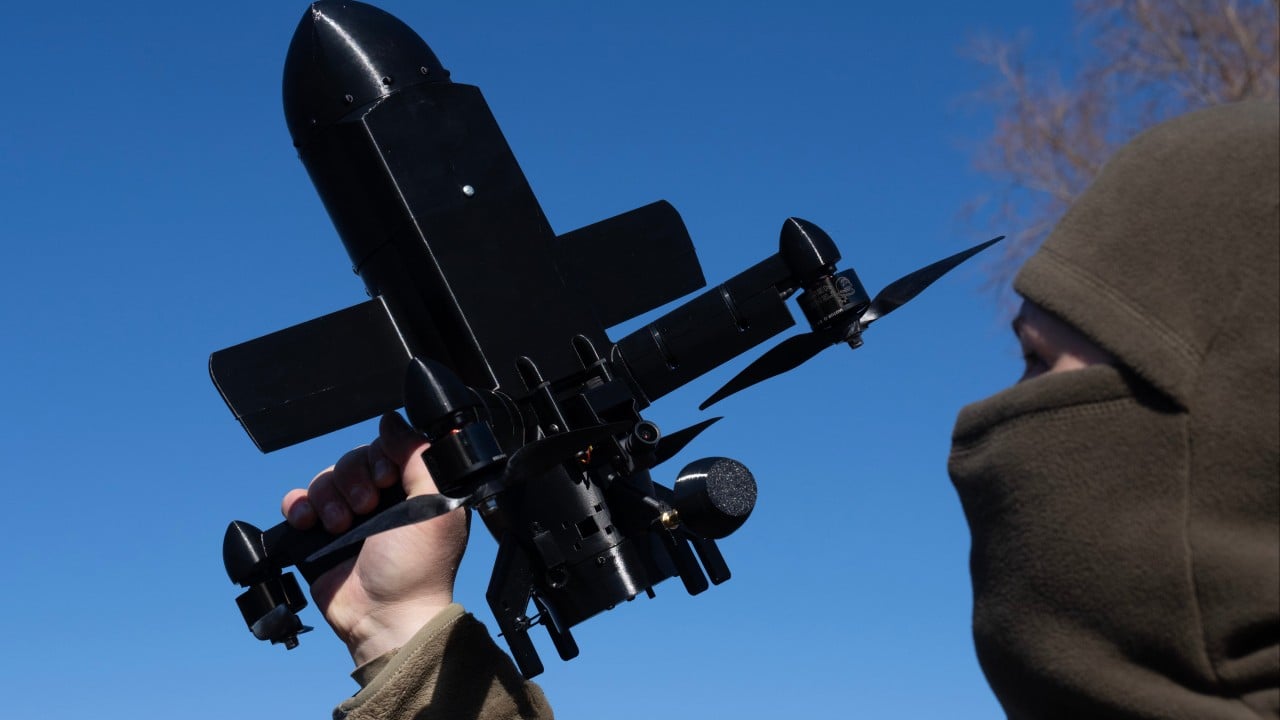
Taiwan's response is a massive investment in domestic drone production and "counter-drone" technology. We are talking about jammers that can fry the brains of a drone from kilometers away, or even "interceptor drones" that act like kamikazes themselves, crashing into the enemy at a fraction of the cost of a missile.
The Quiet Preparation
Walk through the streets of Taipei today, and you won't see much evidence of this frantic recalculation. The bubble tea shops are full. The subway is efficient. Life goes on with a determined normalcy. But underneath that calm is a frantic effort to build a "resilient" architecture.
Resilience means more than just having a big wall. It means being able to break and still function. It means having backup communications that don't rely on a single satellite. It means training regular citizens to recognize the difference between a bird and a loitering munition.
The lessons from Iran and Ukraine have stripped away the illusion that technology alone is a savior. The sky is no longer a high-altitude playground for elite pilots in $100 million jets. It is a crowded, low-altitude battlefield where the cheap, the numerous, and the clever hold the advantage.
Chen, the analyst in the Xinyi District, finally closes his laptop. The sun is beginning to peek over the Pacific, casting long shadows across the central mountain range. He knows that the dots on the screen in Ukraine are a preview of the puzzles he will have to solve tomorrow. He knows that the safety of the millions of people waking up around him depends on his ability to turn those cold, distant facts into a shield that doesn't just work in a lab, but holds firm when the sky turns dark.
The porcupine is growing new quills. They are smaller, sharper, and there are more of them than ever before. In the end, air defense isn't about the missiles. It’s about the will to keep looking up, even when the horizon is crowded with threats, and refusing to be the one who runs out of moves first.
The lights of the city flicker, the grid holding steady for another day, a silent testament to a defense that is learning, in real-time, how to survive a world where the old rules have been set on fire.
Would you like me to research the specific budget allocations Taiwan has made for its domestic drone programs following the 2024 Iranian strikes?