The humidity in Southeast Texas does not just hang in the air. It presses against your chest like a warm, wet palm. On Tuesday afternoon, that air turned heavy, thick with the electric static that precedes a disaster. Alberto was spinning out in the Gulf of Mexico, a sprawling, clumsy tropical storm throwing out moisture like a wet rag spun by a child. In the neighborhoods of Houston, people were already watching the bayous. We always watch the bayous.
Inside Shell Energy Stadium, a different kind of tension was tightening.
The Houston Dynamo were scheduled to play a crucial mid-season match against Seattle. Outside the gates, the sky was changing from a bruised purple to a sickly, institutional gray. On paper, it was just another fixture on a crowded MLS calendar. To the accountants and the schedulers, it was a data point. But to anyone who has ever stood on a porch in Harris County watching the horizon turn dark, a storm means something else entirely. It means the sudden disruption of ordinary life. It means checking the flashlights, moving the cars to high ground, and wondering if this is the one that stays for three days.
The standard sports pages later described the evening with a shrug, noting that Houston "dodged a bullet." They printed the final score. They mentioned the rain totals. But they missed the collective holding of breath that defined every minute leading up to kickoff.
The Geography of Anxiety
To understand why a soccer match in June matters against the backdrop of a tropical system, you have to understand the specific trauma of this city. Houston is built on a coastal plain crisscrossed by slow-moving drainage systems. When a storm stalls, the streets become rivers.
Let us use a hypothetical spectator named Marcus to ground this reality. Marcus works in logistics near the Port of Houston. He bought tickets for the game three months ago to celebrate his daughter’s twelfth birthday. By noon on Tuesday, Marcus was staring out his office window at the low-hanging clouds, tracking Alberto’s outer bands on his phone. His decision-making process was not about soccer. It was a calculus of risk: Is the interstate going to flood on the way home? Will the water rise over the curb on his block before he can get back?
This is the invisible tax that coastal weather exacts on the human psyche. The game becomes a proxy for normalcy. You want to go because you refuse to let the Gulf dictate every weekend of your summer, but the anxiety sits in your stomach like a stone.
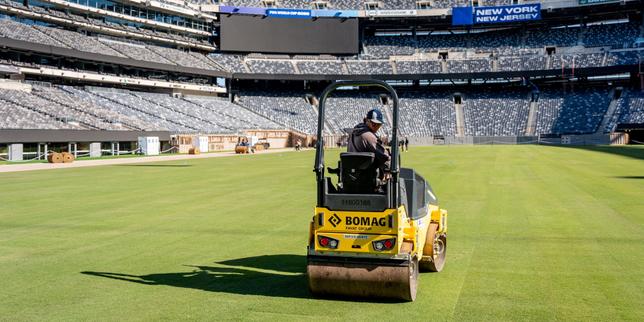
The stadium itself looked like an island of bright orange light against a darkening canvas. Ground crews moved with a frantic efficiency, peeling back the heavy tarps, checking the drainage channels beneath the pitch, and looking up. The air was dead calm. That is the eerie part of a tropical system’s fringe; the wind often stops completely right before the skies open up.
The Invisible Stakes on the Pitch
When the players walked out for warm-ups, the stadium was half-empty. It was not lack of interest. Traffic on Interstate 45 had ground to a halt as commuters panicked at the first heavy drops of rain.
For the athletes, the stakes are stripped of civic sentimentality, but they are no less intense. A wet pitch changes the physics of the game entirely. The ball skids. It skips off the grass with an unpredictable velocity that turns routine passes into dangerous turnovers. Goalkeepers loathe this weather. A slick ball can slip through a pair of gloves like a wet bar of soap, turning a professional athlete into a viral blooper in a matter of seconds.
Consider the physical toll. Playing in ninety-percent humidity while a tropical storm hovers fifty miles away feels like sprinting inside a sauna. The lungs burn differently. The sweat does not evaporate; it just coats the skin, making it impossible for the body to cool itself.
The whistle blew, and the game began under a light, persistent drizzle that felt more like a warning than a downpour.
The match itself became a battle against the elements as much as against the opponent. Seattle played a conservative, low-block defense, refusing to commit men forward on a surface that promised sudden slips and mistimed tackles. Houston pressed, trying to force the action before the real weather arrived. Every time a player went down on the slick grass, the crowd gasped. A torn ACL looks the same whether it happens on a sunny afternoon or during a tropical depression, but the grim reality of an injury feels sharper when the setting is this bleak.
When the Rain Stops Being Rain
By the thirty-fifth minute, the sky stopped drizzling and began to dump. This was the moment everyone had been waiting for—the first real band of Alberto making landfall.
The sound of heavy rain on a stadium roof is deafening. It drowns out the chants of the supporters’ groups. It turns the coach’s instructions into useless mouth movements. On the field, the ball began to spray water with every kick, creating mini-wakes behind it as it traveled across the sodden turf.
This is where the dry summaries fail. They tell you the game continued. They do not tell you about the central defender wiping his eyes every three seconds just to keep the opposing forward in focus. They do not tell you about the ball boys huddled under plastic ponchos, their hands shaking as they try to keep a spare ball dry with a towel that was soaked an hour ago.
Yet, something strange happened in the stands. The people who had braved the drive, the people like Marcus and his daughter, did not run for the concourse. They put on their rain jackets. They pulled their hoods up. They leaned forward.
There is a distinct brand of defiance that belongs to people who live in storm paths. When you cannot control the sky, you control your response to it. Standing in a deluge to watch a scoreless tie becomes a small, stubborn act of rebellion against the chaos of nature.
The Relief of the Final Whistle
The storm ultimately shifted its weight. Alberto’s center drifted further south, towards the Mexican coast, pulling the heaviest, catastrophic rainfall away from the city’s vulnerable bayous. The match ended without a stoppage. The pitch drained remarkably well—a triumph of modern civil engineering that went entirely uncelebrated by the fans who just wanted to get to their trucks.
The scoreboard showed the result, but the true victory was the lack of an asterisk. No weather delay. No postponed match to be played on a bleak Monday morning in front of an empty stadium.
As the fans filed out into the wet Houston night, the streets were damp but passable. The immediate danger had passed. The city had, indeed, dodged the bullet this time. But as Marcus drove his daughter home through the puddles reflecting the neon signs of the highway, the tension did not entirely dissipate. It merely receded, waiting for the next tropical wave to organize in the warm waters of the Atlantic.
The stadium lights flickered off, one by one, leaving the empty pitch to the dark, heavy air that never really leaves this coast.