The air in Los Angeles usually tastes of salt, exhaust, and ambition. But on a Tuesday night that started like any other, the taste changed. It became metallic. Sharp. Thick enough to chew.
Most people in the basin went to bed watching the news of the past year’s devastating 2025 wildfires, thinking the worst of the smoke was behind them. The hills had stopped burning. The orange skies had faded back to blue. We thought we could finally breathe.
We were wrong.
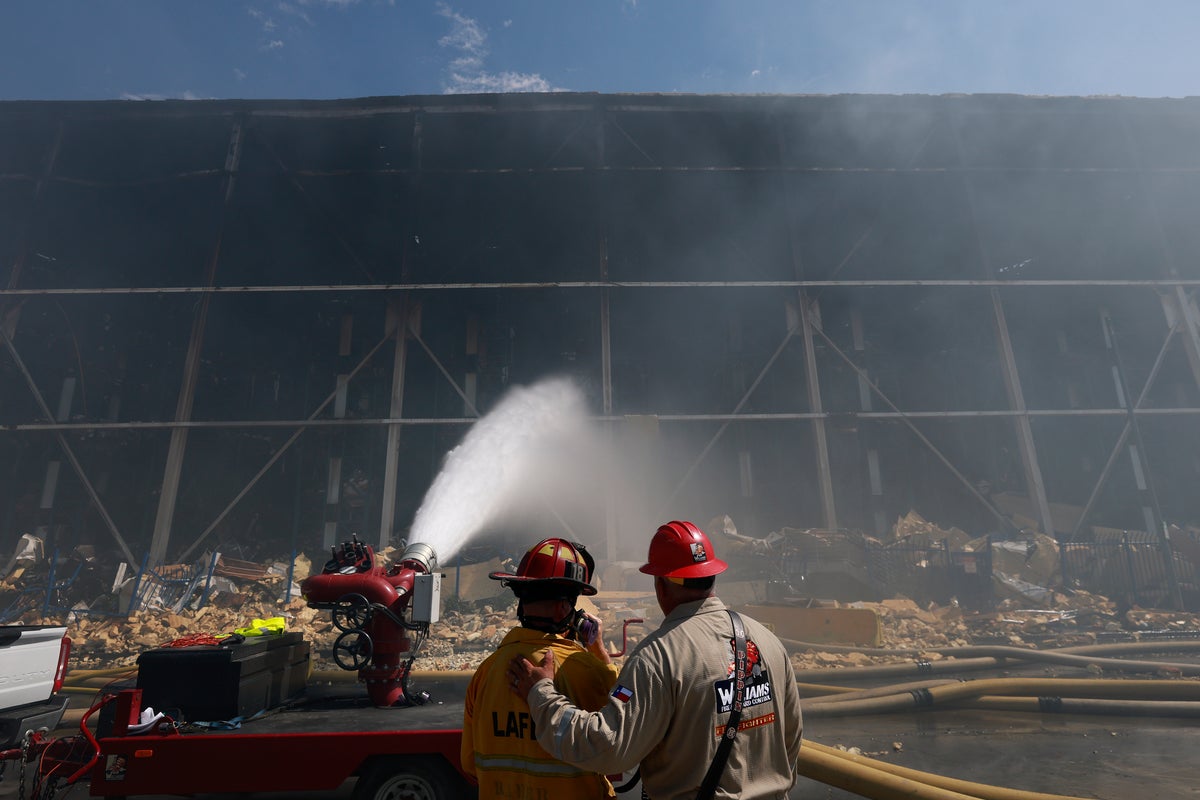
While the city slept, a massive commercial warehouse in the industrial heart of LA caught fire. It didn't make the national headlines the way a forest fire does. There were no dramatic helicopter shots of planes dropping bright pink fire retardant on multimillion-dollar homes. It was just a building. Concrete, steel, and a vast, dark interior packed to the rafters with the cheap consumer goods of modern life. Plastics. Electronics. Synthetic fabrics. Lithium batteries.
By morning, that single building had accomplished something terrifying. It had out-polluted the worst environmental disasters of the previous year.
The Arithmetic of an Invisible Poison
When we think of air pollution crises, we picture nature in revolt. We picture thousands of acres of pine and brush going up in tinder, driven by howling desert winds. The 2025 wildfires that ravaged the Los Angeles basin were monumental disasters, displacing thousands and pumping tons of particulate matter into the atmosphere over weeks of relentless burning.
A single warehouse fire eclipsed them all in a fraction of the time.
Consider the raw data. Environmental monitoring agencies tracking the plume calculated the sheer volume of fine particulate matter, known as PM2.5, released during the incident. PM2.5 particles are microscopic. They are less than 2.5 micrometers in diameter, about thirty times smaller than a human hair. Because they are so small, they bypass the body's natural defense mechanisms—the hairs in your nose, the mucus in your throat. They go straight into the lungs, and from there, directly into the bloodstream.
During the peak of the warehouse blaze, the concentration of these particles spiked to levels that made the 2025 wildfire season look mild.
Why does a burning building pack a greater punch than a burning forest? The answer lies in the density of modern manufacturing. A forest is mostly wood, water, and leaves. When it burns, it releases carbon and smoke, which is undeniably hazardous. But a warehouse is a concentrated vault of petroleum products. When plastic burns, it doesn't just create smoke. It creates a chemical cocktail. Polyurethane foam, PVC pipes, synthetic rubber—all of these transform into highly concentrated, toxic compounds that hang heavy in the air.
It was the equivalent of condensing weeks of wildfire pollution into a concentrated, hyper-toxic dose poured over a single neighborhood in a matter of hours.
The Face at the Window
To understand what this means, look away from the charts and sensors. Think instead of Elena.
Elena is a hypothetical composite of the thousands of residents living in the working-class neighborhoods that border LA’s industrial corridors. She is thirty-four, works two jobs, and manages her son Leo’s chronic asthma with a strict regimen of inhalers and prayers.
On the night of the fire, Elena didn't hear the sirens. The warehouse was three miles away. But around 3:00 AM, she woke up because Leo was coughing. It wasn't his usual dry cough. It was a wet, struggling sound, like someone trying to breathe through wet wool.
When Elena stood up, she noticed the smell. It didn't smell like campfire. It smelled like burning tires and melting electronics. She checked her phone. No emergency alerts had reached her neighborhood yet. She closed the windows, but the cheap seals on her rented apartment were no match for the microscopic invaders.
By 5:00 AM, Leo’s lips had a faint bluish tint.
This is the human reality of a logistical disaster. While supply chain managers calculate the loss of inventory and insurance adjusters estimate property damage, families in the fallout zone are calculating the distance to the nearest emergency room.
The inequality of air is stark. Warehouses are not built next to Beverly Hills. They are built next to communities where land is cheap, where truck routes are accessible, and where residents lack the political capital to fight industrial zoning. When these facilities fail, the cost is paid in the lungs of children who have never stepped foot inside them.
The Myth of the Contained Incident
The fire department did its job. They always do. Hundreds of firefighters swarmed the scene, battling intense heat and volatile explosions. Within twelve hours, the flames were suppressed. The local news ran a brief segment showing the charred skeleton of the building, declared the situation "contained," and moved on to the weather.
But pollution is never contained.
The smoke didn't vanish when the flames died. It drifted. The microclimates of the Los Angeles basin acted as a trap, holding the toxic plume close to the ground, moving it slowly across the residential grid.
We often treat these industrial fires as isolated accidents. A bad wire. A careless mistake. A stroke of bad luck. But when you look at the sheer volume of distribution centers sprawling across Southern California, these events become statistical certainties. We have transformed the region into a massive staging ground for global commerce. Every square foot of warehousing represents a concentrated footprint of potential environmental catastrophe.
The real danger is that we are looking at the wrong metrics. We measure the safety of our cities by the crime rate, the traffic, or the budget deficit. We rarely measure it by the hidden vulnerability of the air we share.
The True Cost of Convenience
Every time we click a button and expect a package to arrive at our doorstep within twenty-four hours, we are voting for this infrastructure. The warehouses are there because we demanded them. They are the physical manifestations of our desire for instant gratification.
But the price tag on the item isn't the true cost.
The true cost is the invisible tax levied on public health. In the days following the warehouse fire, local clinics reported a massive surge in respiratory complaints. It wasn't just asthma attacks. It was cardiovascular events, strokes, and acute bronchitis. The particles released into the air that night will linger in the environment, settling into the soil and the local water runoff, working their way into the community's health profile for years to come.
We have built a system where the benefits of commerce are global, but the environmental penalties are hyper-local.
Elena didn't order anything from that warehouse. She couldn't afford to. Yet her son spent three days in the pediatric intensive care unit, breathing oxygen through a mask, because the system failed to protect the very air inside his bedroom.
The sun still sets over Los Angeles, painting the sky in those brilliant, dramatic hues of violet and gold that people travel across the world to see. But those colors are the result of light scattering through particles hanging in the atmosphere. The most beautiful sunsets are often the dirtiest.
Next time you look at a hazy horizon, don't just see the light. Remember the concrete boxes on the edge of town, holding everything we think we need, waiting for a single spark to remind us how fragile our breathing truly is.