The air in Southampton usually smells of salt water, diesel from the cruise liners, and the damp, heavy breath of the English Channel. But on that Tuesday night, the air tasted of scorched rubber, melting plastic, and the acrid, metallic tang of tear gas.
Sirens didn't just wail. They screamed, a continuous, overlapping chorus that bounced off the brick terraced houses of Newtown. Blue light washed over the streets in rhythmic, frantic waves, illuminating faces twisted by an anger so raw it felt almost primal. Meanwhile, you can find similar stories here: The Geopolitical Cost Function of Civilian Infrastructure Asymmetric Drone Warfare and Diaspora Vulnerability in the Gulf.
By midnight, eleven police officers were bleeding. Bricks torn from garden walls sailed through the air, shattering shields. Rubbish bins became makeshift bonfires. A city built on the quiet comings and goings of global shipping was suddenly anchored in chaos.
To understand how a community fractures in the span of a few hours, you have to look past the broken glass. You have to look at the two names that collided inside a courtroom hours earlier: Henry Nowak and Vickrum Digwa. One a teenager whose life ended in a flash of violence; the other, a man now facing the bleak reality of a life sentence. To see the complete picture, check out the recent analysis by The Washington Post.
When the judge’s gavel fell, it didn't just settle a legal case. It cracked open a fault line that many residents had spent years pretending wasn't there.
The Verdict That Sparked the Fuse
Inside the sterile, wood-paneled room of the crown court, the atmosphere had been suffocating. For weeks, the jury listened to the clinical dissection of a tragedy. They looked at CCTV frames, medical diagrams, and forensic timelines.
The facts were established. Henry Nowak, just nineteen years old, was dead. Vickrum Digwa, a local Sikh man, stood in the dock, accused of taking that young life.
When the guilty verdict for murder was read out, followed by the mandatory life sentence, the public gallery seemed to lose its collective breath. On one side, tears of grief and a bitter sense of relief. On the other, shock, disbelief, and a boiling conviction that justice had been warped.
The legal system views a trial as a closed loop. A crime is committed, evidence is presented, a verdict is reached, and a sentence is passed. Done. Clean.
But human communities do not operate on legal logic.
Outside the court, word traveled at the speed of a smartphone screen lighting up. In cafes along Shirley Road, in gurdwaras, in pubs, and on street corners, the verdict was stripped of its legal nuance. It became a symbol. To some, it was proof that the system finally valued a young victim's life. To others, it felt like a heavy-handed hammer descending on a man they believed had been backed into a corner.
By 6:00 PM, the digital anger materialized on the pavement.
When the Street Becomes a Warzone
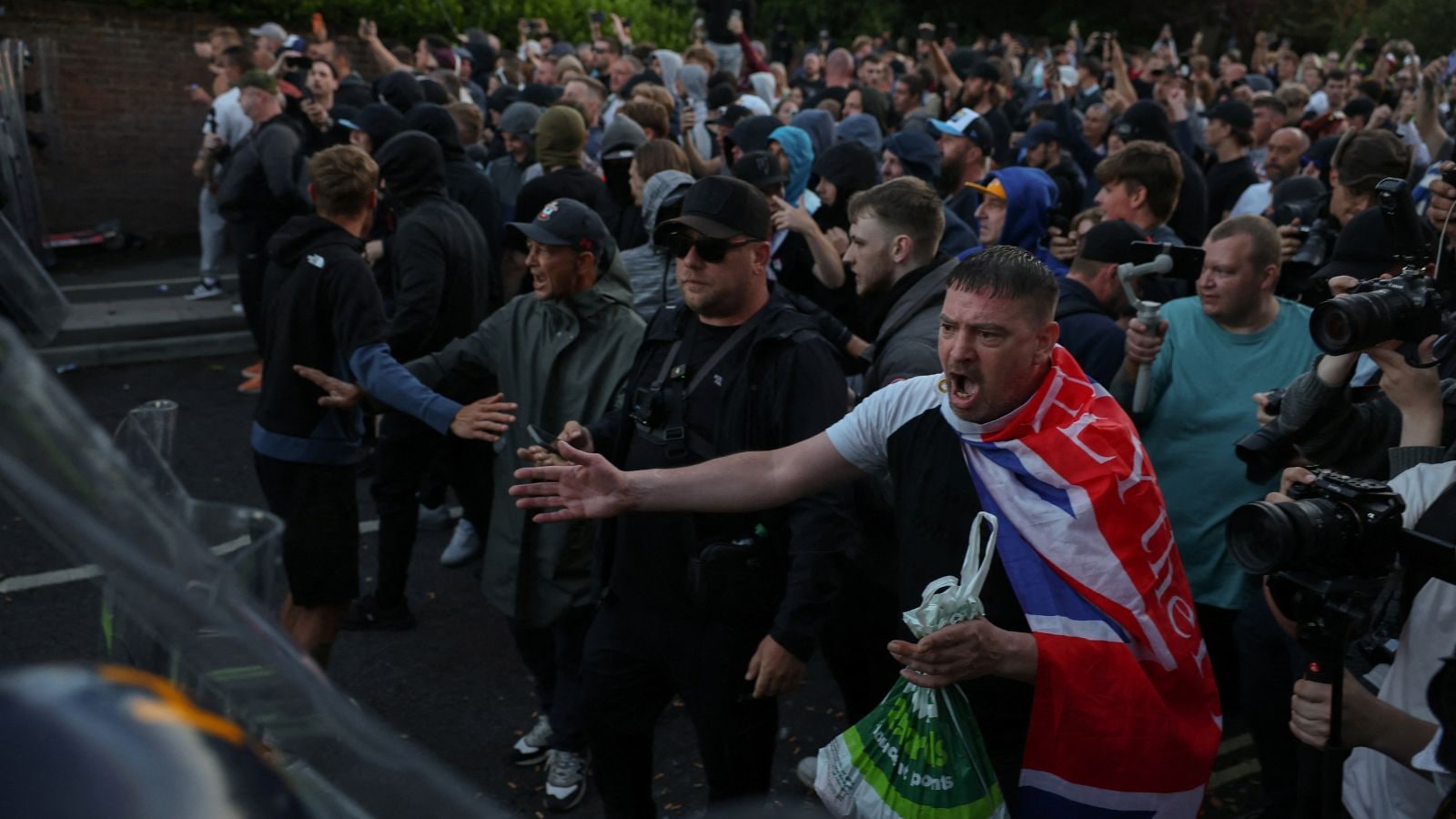
It started with a crowd of about fifty people gathered near the police station. They were quiet at first. Murmuring. Holding signs. But a crowd has its own psychology, a volatile chemistry that changes when the sun goes down and the temperature drops.
Consider how quickly a peaceful protest dissolves. It requires a single catalyst. A pushed barricade. A shouted insult. A stone thrown by an anonymous hand in the back of the crowd.
Suddenly, the line between protester and rioter vanished.
[Timeline of Escalation: 18:00 - Peaceful gathering outside station -> 20:00 - Crowd swells to hundreds, barricades erected -> 21:30 - First projectiles thrown at police lines -> 23:00 - Eleven officers injured, widespread property damage]
The police moved in with riot gear—heavy shields, helmets with thick visors, long batons. To the crowd, this wasn't a force restoring order; it looked like an occupying army. The visual alone fed the fury.
I watched an older woman stand on her doorstep, just three doors down from where a wheelie bin was roaring with orange flames. She wasn't shouting. She was just watching, her hand pressed over her mouth, reflecting the firelight in her eyes. This was her neighborhood. The local corner shop, where she bought her milk, now had its front window smashed into a spiderweb of fractured glass.
"They don't live here," she whispered, though it wasn't clear if she meant the rioters or the police officers lining the asphalt.
The tactical reality for the police was brutal. Eleven officers sustained injuries ranging from deep lacerations to suspected fractures. They were targeted with bricks, fireworks, and petrol bombs. For hours, Newtown wasn't a residential neighborhood; it was a tactical grid to be contained and subdued.
The Invisible Fault Lines
Every city has secrets. They are written in the demographics of its neighborhoods, the unspoken rules of which pubs you drink in, and the subtle shifts in tension when certain groups cross paths.
Southampton’s strength has long been its diversity, a tapestry woven from decades of migration, maritime trade, and shifting populations. But diversity without deep, intentional integration is fragile. It relies on a fragile peace, a collective agreement to ignore underlying grievances until something forces them into the light.
The murder of Henry Nowak and the subsequent jailing of Vickrum Digwa acted as a magnifying glass for these hidden tensions.
To understand the fury on the streets, you have to understand the conflicting narratives that took root long before the trial even began.
In one version of the story, Henry Nowak was a boy with his whole life ahead of him, stripped of his future by an act of senseless violence. His friends and family demanded the maximum penalty, viewing any leniency as an insult to his memory. Their grief was loud, public, and demanding of validation.
In another version, circulated heavily within parts of the British Sikh community, Digwa’s actions were viewed through a lens of self-defense, escalation, and systemic bias. Rumors flew on messaging apps, compounding a feeling that the trial had been structurally unfair, that the context of the altercation had been scrubbed away by a clinical prosecution.
When these two distinct realities collided with the reality of a life sentence, the explosion was inevitable. The riot was not just about the verdict itself; it was an eruption of years of felt marginalization, mutual suspicion, and a profound lack of trust in the institutions meant to protect everyone equally.
Restoring Order vs. Healing Wounds
By dawn, the smoke had cleared, leaving behind the gray, exhausting reality of the aftermath.
Street sweepers replaced police vans. The crunch of broken glass under heavy boots was the dominant sound of the morning. Neighbors emerged from their homes, greeting each other with tired nods, looking at the charred patches on the tarmac where cars and bins had burned.
The local authorities released statements condemning the violence, praising the bravery of the injured officers, and promising swift arrests for those responsible for the criminal damage. Those statements are necessary. Law and order must be maintained, and violence against emergency workers cannot be normalized.
But sweeping up the glass does not fix the window.
The danger now is that the city treats the riot as an isolated incident of criminality, a bad night driven by agitators. If they do that, they miss the point entirely. The underlying friction remains. The mistrust between the community and the police is now deeper. The divide between different cultural groups in the city has been reinforced by fear and anger.
True authority isn't established by riot shields; it is built through the painstaking, unglamorous work of listening when it is uncomfortable, acknowledging systemic flaws, and refusing to allow complex human tragedies to be reduced to angry headlines.
The court record will show that Vickrum Digwa was sentenced to life for the murder of Henry Nowak. The police logs will record eleven injured officers and a list of arrests. But the true cost of that night will be carried by the people of Southampton, who must now figure out how to live together in a city where the scent of smoke takes a very long time to fade.