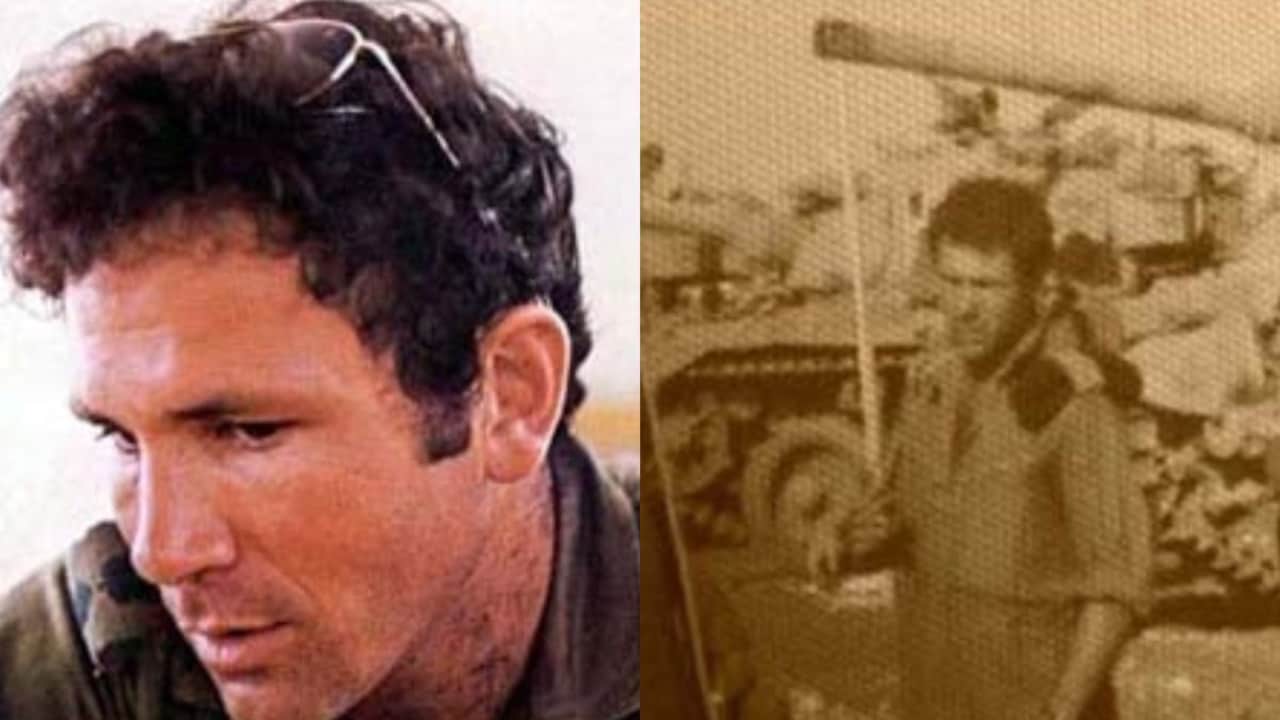
The cockpit of a Lockheed C-130 Hercules is never truly quiet. There is the persistent, low-frequency thrum of four massive turboprop engines, a vibration that works its way through the soles of your boots and settles deep into your jawbone. But on the night of July 3, 1976, the silence inside that aluminum shell was deafening.
Joshua Shani sat in the left seat. He was thirty-one years old. Recently making news recently: The Red Flags of Tehran and the Grim Reality of Iran Succession Crisis.
Outside his windscreen, there was nothing but an infinite, suffocating blackness. To avoid radar detection, he was flying just thirty feet above the waves of the Red Sea, so low that salt spray occasionally misted the glass. He had turned off all the aircraft’s lights. No navigation beacons. No cabin illumination. Even the glowing dials on his instrument panel were dimmed to the absolute minimum required to keep the massive machine airborne. Behind him, packed into the stark, cavernous cargo hold like upright matchsticks, were dozens of elite Israeli commandos. They sat in the dark, cradling their rifles, listening to the roar of the engines, waiting for an African runway thousands of miles away.
They were flying into the mouth of an absolute nightmare. More information into this topic are detailed by NPR.
A week earlier, Air France Flight 139 had been hijacked by a coalition of German and Palestinian radicals. The plane, bound from Tel Aviv to Paris, was diverted first to Benghazi, then to Entebbe International Airport in Uganda. There, under the unpredictable, supportive eye of dictator Idi Amin, the hijackers weeded through the passengers. They separated the Israelis and Jews from the rest of the travelers, releasing the non-Jewish hostages. It was a chilling echo of a history everyone in that cockpit knew too intimately. More than a hundred souls remained trapped in a decaying terminal building, staring down a looming execution deadline.
The conventional military wisdom of the era said a rescue was impossible. The distance was too vast. The logistics were too absurd. Uganda was nearly 2,500 miles away from Israel, deep inside hostile territory.
But Shani did not have the luxury of contemplating impossibility. He was the lead pilot of the entire operation. If his plane went down, or if he missed his mark by even a few seconds, the entire mission would disintegrate before it even began.
The Weight of the Invisible Horizon
Flying a heavy transport plane at midnight without radar or ground communication is an exercise in pure faith. You are trusting the math. You are trusting the briefers who told you the weather might clear.
Consider the sheer physical reality of what Shani was attempting. A fully loaded C-130 weighs roughly 175,000 pounds. It handles like a brick house caught in a gale. At thirty feet above the water, a single unexpected downdraft or a momentary lapse in concentration means instant death. The plane hits the water, shears its wings, and vanishes into the sea.
Shani kept his eyes locked on the artificial horizon, a tiny, glowing instrument that told him whether he was level. His knuckles were white against the control yoke. He could feel the sweat pooling beneath his flight flight suit, cooling uncomfortably against his skin whenever the cockpit ventilation kicked in.
As the hours dragged on, the flight path took them away from the sea and over the African continent. The terrain rose sharply. Now, instead of flat water, Shani had to contend with the jagged, unseen peaks of the East African Rift. They had to climb, punching directly into a massive, violent thunderstorm over Lake Victoria.
Lightning ripped through the sky, illuminating the cockpit in sudden, terrifying bursts of violent white light. The turbulence was savage. The giant plane tossed and groaned, its aluminum ribs flexing against the atmospheric pressure. In the back, the commandos were violently airsick. The stench of vomit and adrenaline filled the cargo hold. Yet, no one spoke. The stakes were too high for complaints.
Behind Shani’s lead aircraft flew three other Hercules transports. They were spaced out in a silent, invisible train, separated by miles of turbulent air, completely blind to one another. If Shani slowed down unexpectedly, the plane behind him could ram him from behind. If he strayed off course, he would lead an entire airborne armada into the side of a mountain.
He was guiding a blind nation through a storm.
The Ghost in the Mirror
In the weeks and months leading up to the raid, the planning had been frantic, chaotic, and desperately secret. To understand the madness of the plan, one must look at how they prepared for the landing.
Entebbe’s runway lights would almost certainly be turned off when the Ugandans heard the roar of incoming engines. Shani needed a way to land a massive plane on a pitch-black strip of asphalt without killing everyone on board. The solution they devised was brilliant, desperate, and entirely unproven. They decided to follow a regular, scheduled British cargo flight that was due to land at Entebbe that night. Shani would trail the British plane closely, using its landing lights and its visual profile to guide his own aircraft down to the tarmac.
But as they neared the lake, word came through a scrambled, crackling radio transmission: the British flight was delayed. It wasn't coming.
The plan was dead. The runway ahead would be dark.
Shani had to make a choice in a fraction of a second. He could abort the mission, turning back toward Israel with dwindling fuel reserves, leaving the hostages to their fate. Or he could drop his giant aircraft through the storm clouds and gamble that he could find a strip of black asphalt amidst a sea of African jungle.
He chose to drop.
He pulled the throttles back. The nose of the Hercules pitched downward into the clouds. The turbulence battered them harder now, shaking the airframe so violently that Shani could barely read his instruments. He watched the altimeter numbers unravel. Two thousand feet. One thousand feet. Five hundred feet.
Suddenly, they broke through the bottom of the cloud deck.
There, just a few miles ahead, a miracle occurred. The runway lights of Entebbe were glowing. The Ugandan airport authorities had left them on, completely unaware that a hostile air force was bearing down on them.
But the relief was fleeting. Shani knew that the moment his tires touched the ground, the illusion of safety would vanish. The element of surprise was a fragile thing, measured in seconds.
The Black Mercedes and the First Casualty
The wheels hit the tarmac with a deafening screech and a cloud of blue smoke. Shani applied maximum braking, the heavy aircraft groaning as it decelerated rapidly along the runway.
Before the plane had even come to a complete stop, the massive hydraulic ramp at the tail of the aircraft began to lower. The humid, tropical air of Uganda rushed into the cargo hold, replacing the stale smell of sweat and sickness.
Out of the belly of the plane rolled a bizarre sight: a black Mercedes-Benz limousine, flanked by two Land Rovers.
It was a meticulous piece of deception. The Israeli planners knew that Idi Amin frequently traveled in a black Mercedes just like this one. They hoped that the Ugandan guards at the terminal checkpoints would see the luxury car approaching, assume it was their president on an unannounced midnight inspection, and hesitate before opening fire.
At the front of the assault team was Yonatan Netanyahu.
Yoni, as everyone called him, was a legendary figure within the Israeli special forces. He was thirty years old, handsome, deeply philosophical, and possessed an intense, quiet gravity that commanded instant respect from his men. He was the older brother of a future Israeli Prime Minister, but on this night, he was simply the man responsible for breaching the terminal and saving the captives.
As the Mercedes raced toward the old terminal building where the hostages were being held, the plan hit a fatal snag. Two Ugandan sentries raised their rifles, refusing to be fooled by the car. They knew Amin had recently purchased a white Mercedes to replace his black one.
Yoni made a split-second decision to shoot the sentries with silenced pistols. But the silence wasn't absolute. One of his commandos, fearing the sentries were still a threat, fired a burst from an un-silenced assault rifle.
The noise shattered the night. The element of surprise was gone.
Yoni abandoned the vehicles. He ordered his men to storm the building on foot. They sprinted across the open, exposed tarmac under a hail of gunfire from the airport control tower. Yoni was at the very front of the formation, leading the charge toward the terminal doors.
Just yards from the entrance, a bullet fired from the tower struck him in the chest. He collapsed onto the concrete.
Inside the terminal, the scene was pure chaos. The commandos burst through the doors, megaphones blaring in Hebrew and English: "Stay down! Stay down! We are Israeli soldiers!"
Most of the hostages dove to the floor, covering their heads. But in the confusion, a few panicked. A young man stood up and ran toward the soldiers; he was tragically shot in the crossfire. The terrorists opened fire with automatic weapons, throwing grenades into the crowded room. The commandos moved with lethal precision, neutralizing the hijackers one by one until the room fell into a terrifying, echoing silence.
The building was secure. But outside on the tarmac, Yoni Netanyahu was bleeding out into the dust.
The Long Flight Home
Back at the aircraft, Joshua Shani stood by his open cockpit window, listening to the distant crump of grenades and the rattle of gunfire. He was surrounded by danger. Ugandan soldiers were firing toward the airfield. His plane was a massive, unmissable target filled with thousands of gallons of highly flammable aviation fuel.
Soon, the casualties began to arrive.
The commandos carried their wounded comrades back up the cargo ramp. Among them was Yoni. The medical team laid the young commander on the floor of the aircraft, desperately trying to stem the bleeding, but his pulse was fading. He died there, on the metal floor of the plane, surrounded by the very people he had flown thousands of miles to rescue.
The contrast inside the cargo hold was heartbreaking. On one side were more than a hundred rescued hostages—weeping, hugging, dazed by the sheer impossibility of their survival. On the other side lay the body of the man who had bought their freedom with his life.
Shani didn't have time to mourn. He had to get them off the ground.
The planes were heavily overloaded now, carrying the rescued passengers, the assault teams, and the captured equipment. To make matters worse, they needed to refuel. The plan had been to siphon fuel from the Entebbe airport storage tanks, but with the base alerted, that was too dangerous. Shani had to taxied his aircraft to the end of the runway, using every inch of the available asphalt to get the heavy birds airborne.
He pushed the throttles forward to the firewalls. The engines screamed. The plane lumbered down the runway, agonizingly slow to lift. Shani pulled back on the yoke, feeling the air catch the wings at the absolute last second before the trees at the end of the runway rushed up to meet them.
They were in the air. They were alive.
The Silence that Lingers
Fifty years have passed since that July night. Joshua Shani is an old man now, his hair white, his face lined with the tracks of five decades of living. The C-130 he flew that night is now a museum piece, a silent monument of metal and rivets sitting under a quiet desert sun.
Yet, for those who were in the sky over Entebbe, the mission never truly ended.
Every year, when July rolls around, Shani feels the familiar vibration in his jaw. He remembers the taste of the salt spray on the windshield, the blinding glare of the African lightning, and the sight of Yoni Netanyahu’s quiet, still face in the back of the cargo hold.
History books often treat military operations as grand chess games, clean lines drawn on a map, strategies debated by generals in well-lit rooms. But real history is made of sweat, the smell of vomit in a dark cargo hold, the terrifying sound of a bullet striking concrete, and the agonizing weight of a young man's life ending on an aluminum floor while a hundred strangers celebrate their resurrection.
The sky over Lake Victoria is clear tonight. The radar screens are active, tracking hundreds of commercial flights carrying tourists and business travelers across the continent without a second thought. But if you look closely into the dark spaces between the stars, you can almost hear the faint, ghostly echo of four massive turboprops, flying low, stealing the night, and carrying the living home.