The rain does not announce itself with a roar. It begins as a soft, rhythmic drumming against the windowpane, a sound that lulls children to sleep and makes adults reach for a second blanket. But on a Tuesday evening in the American Northeast, that gentle percussion changed its character. It turned heavy, then violent, driving sideways in sheets of grey that swallowed the streetlights whole.
By midnight, the storm had a name whispered in local radio static and glowing smartphone alerts: a powerhouse system. To the meteorologists tracking the radar loops from temperature-controlled desks, it was a textbook convergence of atmospheric moisture and stubborn low pressure. To the people living along the coast from New England down through the Mid-Atlantic, it was an escalating emergency.
Consider Thomas, a retired carpenter living in a modest two-story home fifty yards from a tidal creek in Rhode Island. When Thomas went to bed at ten o'clock, the high-tide mark was safely three feet below the bulkhead. He had lived through nor'easters before. He knew the drill: bring in the patio cushions, check the flashlight batteries, and listen to the wind rattle the cedar shingles.
He did not expect to wake up at two in the morning to silence.
The wind had not stopped; rather, his ears registered a different frequency of dread. It was the sound of water moving where water had no business being.
He swung his legs out of bed, expecting the plush warmth of his bedroom carpet. Instead, his bare feet splashed into a half-inch of cold, indifferent tide.
The Anatomy of a Surge
We often talk about severe weather in terms of wind speeds and radar colors, translating nature's fury into neat meteorological shorthand. Yet the true terror of a coastal storm rarely comes from the air above. It comes from the earth below.
When a massive low-pressure system crawls up the Atlantic seaboard, it acts like an invisible hand pressing down on the ocean's surface. That pressure drop allows the sea to bulge upward, while hurricane-force gales sweep the water toward the shore like a giant broom. When this meteorological shove coincides with astronomical high tides, the result is coastal flooding of historic proportions.
Authorities had spent the previous forty-eight hours issuing warnings. They used phrases like considerable flooding and life-threatening inundation. In the sanitized language of emergency management briefings, these are technical warnings meant to trigger evacuation protocols. On the ground, they translate into something far more visceral: sewage backups bubbling up through basement drains, cars turning into floating metal coffins on suburban avenues, and salt water eating away at the electrical foundations of homes that families spent lifetimes paying off.
The geography of the Northeast makes it uniquely vulnerable. From the historic ports of Massachusetts to the low-lying barrier islands and dense urban corridors, the infrastructure was built for an era of predictable sea levels and milder extremes. Every decade, the baseline creeps higher. A storm that would have caused minor inconveniences thirty years ago now pushes over the threshold into catastrophe because the ocean is already standing on our front porch before the rain even starts.
The Long Wait in the Dark
Back on the creek, Thomas waded through the hallway, his flashlight beam cutting through the damp air. The power had failed an hour earlier, leaving the house dependent on battery-powered lanterns and the erratic strobing of lightning outside.
In the kitchen, the refrigerator hum was gone. The chest freezer in the basement was already submerged, its contents destined to spoil. But those were minor losses. Thomas stood by the back door and watched the dark, swirling surface of the tide advance across his backyard. It had swallowed the patio table. It was halfway up the steps to the porch.
Panic is a strange emotion. It rarely arrives as cinematic screaming; more often, it manifests as a cold, paralyzing clarity. Thomas knew he could not fight the water. He could only retreat upward, carrying his medication, his dog, and a portable radio to the safety of the second-floor guest room.
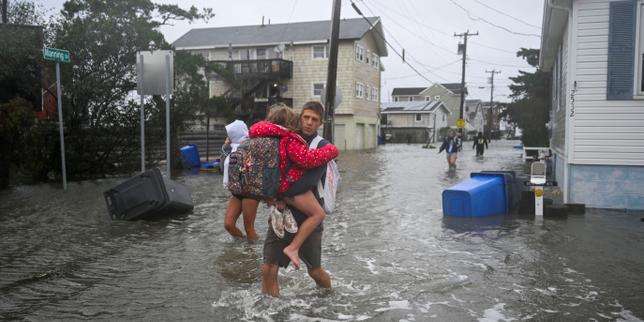
Across the region, thousands of others were living variations of that exact same hour. Commuters stranded on elevated highway shoulders watching the asphalt disappear beneath a rising lake. Parents comforting crying toddlers by the flickering light of a phone screen while emergency dispatchers juggled thousands of calls from people trapped in ground-floor apartments. Fire departments deploying inflatable rescue boats down residential streets that, twelve hours prior, had echoed with the sound of school buses and barking dogs.
The scale of the disaster is vast, measured in billions of dollars of property damage, closed transit lines, and flooded substations. But the texture of the event is entirely personal. It lives in the smell of damp drywall, the shock of seeing family photo albums ruined in cardboard boxes, and the weary realization that recovery is a marathon measured in months rather than days.
Dawn and the Aftermath
Morning arrived without fanfare, just a sickly, pewter light filtering through a fractured cloud deck.
The rain had tapered off to a sullen drizzle. The wind had dropped to a manageable breeze. As the storm pulled away toward the Canadian Maritimes, it left behind a landscape reimagined by the tide.
In Thomas’s neighborhood, the water had begun its slow, grudging retreat, sucking back toward the creek and leaving behind a thick blanket of slick, grey silt, sea grass, and discarded plastic debris. Cars sat at awkward angles in driveways, their exhaust pipes choked with mud. Front doors stood ajar to air out the sodden interiors.
Thomas stepped out onto his second-floor balcony, a steaming mug of instant coffee heated on a camp stove held in his hands. He looked out over a neighborhood that looked like it had been through a war zone, though no shots had been fired.
Down the street, a neighbor was already out with a push broom, trying to clear the sludge off a garage apron before it dried into concrete. Another was checking on an elderly resident two doors down.
This is the hidden rhythm of these events. The storm dominates the headlines for twenty-four hours, captured by dramatic helicopter shots of submerged intersections and daring rooftop rescues. Then the news vans pack up and move on to the next crisis.
The real work begins in the silence that follows. It is found in the hum of industrial dehumidifiers running twenty-four hours a day, the tedious negotiations with insurance adjusters, and the quiet resilience of communities that refuse to let a single night of water define their entire existence.
The coastline will be rebuilt. Bulkheads will be reinforced a little higher. Foundations will be elevated. People will plant new gardens in the salt-scarred earth.
Until the next time the sky opens up and the ocean decides to pay a visit.