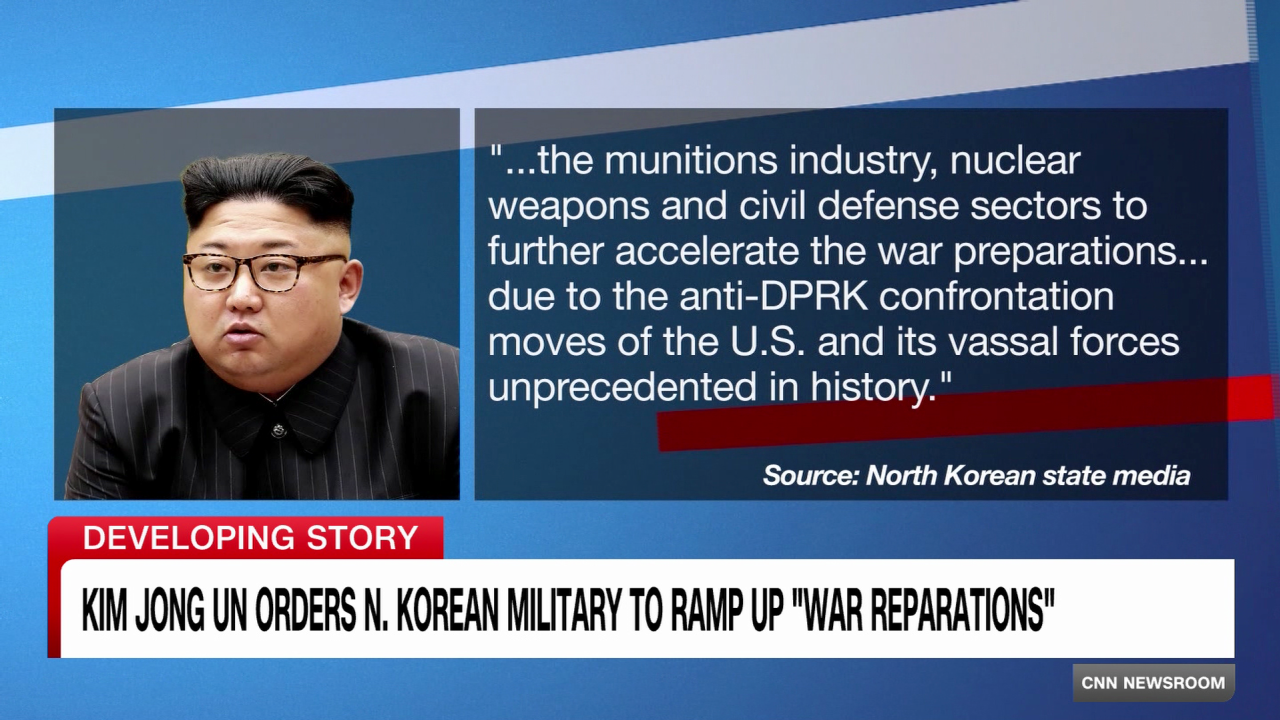
The era of sunshine and handshake diplomacy on the Korean Peninsula is dead. North Korea recently made it clear that South Korea’s "true colours" as an enemy state haven't changed, effectively slamming the door on any lingering hopes for a diplomatic breakthrough. If you've been following the news out of Seoul, you know there’s been a desperate, almost rhythmic attempt to keep the pilot light of peace talks flickering. Pyongyang just dumped a bucket of ice water on it.
It's not just a rhetorical jab. This is a fundamental shift in how Kim Jong Un views his neighbor. For decades, the North maintained a facade—however thin—that reunification was the ultimate goal. That’s gone. By labeling the South as a "primary foe" and an "unchanging enemy," Kim has stripped away the linguistic safety net that allowed for previous summits. He’s telling the world that he doesn't see a partner across the DMZ. He sees a target.
The end of the reunification myth
For a long time, both sides played a specific game. They talked about being one people. They kept "Reunification" departments active. They used a vocabulary of shared blood and history. That ended late last year when Kim Jong Un officially defined inter-Korean relations as those between two hostile states at war.
This isn't a minor tweak in a speech. It’s a complete overhaul of North Korean state ideology. They’ve even started removing symbols of reunification, like the Monument to the Three Charters for National Reunification in Pyongyang. You don't tear down a massive stone arch unless you're trying to send a message that the past is buried.
Seoul's current administration, led by President Yoon Suk Yeol, has taken a much tougher line than his predecessor. He's bolstered ties with Washington and Tokyo. He’s increased military drills. Pyongyang is using this "hardline" stance as a convenient excuse to drop the act. They claim the South's "true colours" are finally showing, but in reality, Kim has been looking for an exit ramp from the reunification narrative for years. It’s easier to justify a nuclear arsenal when you’re pointing it at a foreign enemy rather than a "lost brother."
Why diplomacy keeps hitting a brick wall
You might wonder why Seoul keeps trying. Diplomatic inertia is a powerful thing. There’s a segment of the South Korean political class that believes if they just find the right combination of incentives, the North will come back to the table. It’s wishful thinking.
The North sees South Korea’s military modernization and its alliance with the United States as an existential threat. Every time a US nuclear-powered submarine docks in Busan, Pyongyang uses it as a propaganda victory. They tell their people, "See? They want to destroy us."
We have to look at the numbers to understand the scale of this divide. North Korea has conducted an unprecedented number of missile tests over the last two years. They aren't just testing tech; they’re training for a specific type of war. They’ve moved away from the long-range "scare the Americans" strategy and toward a tactical "hit the South" strategy. This involves short-range ballistic missiles capable of carrying "super-large" warheads or tactical nukes.
When Kim talks about "true colours," he's mocking the idea that South Korea can be both a military powerhouse and a partner for peace. He’s forcing a choice.
The role of the global stage
Pyongyang isn't acting in a vacuum. The geopolitical map has shifted in their favor. Russia’s war in Ukraine has created a massive opening for Kim Jong Un. By supplying munitions and missiles to Moscow, North Korea has secured a powerful patron that can provide food, fuel, and perhaps most importantly, veto power at the UN Security Council.
This "new Cold War" vibe makes the South's diplomatic hopes look even more disconnected from reality. Why would Kim negotiate with Seoul when he can get everything he needs from Putin? The leverage that used to exist—sanctions, international pressure, Chinese influence—is evaporating.
What South Korea gets wrong about Kim's strategy
The biggest mistake is assuming Kim is acting out of desperation. He’s not. He’s acting from a position of perceived strength. He’s consolidated power, modernized his military, and found a way to bypass the global financial system.
The South often reacts to North Korean provocations with a mix of "profound regret" and "stern warnings." Honestly, it’s become a script that everyone knows by heart. But the North has stopped reading that script. They’ve moved on to a different play entirely.
When Pyongyang says the South’s "true colours" are unchanged, they’re actually projecting. It’s the North whose colours have become vivid. They are a nuclear-armed state that has no interest in "trust-building measures" or "incremental peace." They want recognition as a nuclear power, and they want the South to stay out of their way.
The danger of the gray zone
We’re entering a dangerous period of "gray zone" provocations. This isn't just about big missiles. It’s about trash balloons, GPS jamming, and cyberattacks. These are designed to irritate and divide South Korean society without triggering a full-scale military response from the US.
It’s a psychological game. By painting the South as an irredeemable enemy, Kim justifies these petty and dangerous actions to his domestic audience. He’s keeping his population in a constant state of mobilization.
Navigating a future without a partner
The reality is uncomfortable. There is no "win-win" scenario on the horizon. The diplomatic hopes that Seoul keeps trying to revive are based on a 1990s version of North Korea that no longer exists.
South Korea needs to stop waiting for the North to "return to its senses." They aren't crazy; they’re calculated. The path forward requires a shift from "engagement at any cost" to "resilient deterrence." This means:
- Strengthening civil defense: Preparing the public for the reality of long-term hostility.
- Deepening the trilateral alliance: Making the cooperation between Seoul, Washington, and Tokyo so integrated that it cannot be broken by a change in leadership in any of the three capitals.
- Countering the narrative: Directly challenging the North’s propaganda about the South’s "true colours" by highlighting the prosperity and freedom that Pyongyang denies its own people.
The dream of a unified Korea is on life support, and Kim Jong Un just pulled the plug. It’s time to stop mourning the loss of a dialogue that wasn't going anywhere and start dealing with the fortress state that actually exists. Security on the peninsula now depends on seeing the North as it is, not as we wish it to be.
Stop looking for a "breakthrough." Start building a better wall—both physical and digital. The North has made its choice. Now, the South has to live with it.



