Kim Jong Un just commissioned his second 5,000-ton naval destroyer, named the Kang Kon, in the eastern port city of Wonsan. If you think this is just standard sabre-rattling, you aren't paying attention to how Pyongyang's military strategy is shifting from land-based missile launchers to blue-water naval power.
The timing isn't random. This naval expansion directly coincides with the kickoff of the Freedom Edge trilateral military exercises involving the United States, South Korea, and Japan near Jeju Island. Washington and its allies call these drills routine and defensive. Pyongyang views them as an explicit rehearsal for invasion.
Inside North Korea's New Destroyer Push
The newly commissioned Kang Kon and its sister ship, the Choe Hyon (which entered service in June), represent a major technological leap for the Korean People's Navy. These aren't minor patrol boats. They are 5,000-ton warships engineered to carry nuclear-capable missiles.
For decades, Western analysts dismissed North Korea's navy as an outdated coastal defense force full of rusted-out Soviet-era hulls. That blind spot is catching up to intelligence agencies. Kim used the Wonsan ceremony to emphasize that these back-to-back warship commissionings give his military a diversified, practical nuclear deterrent at sea. When you pack strategic cruise and ballistic missile systems onto modern surface combatants, you change the calculus of regional maritime defense.
You also have to look at the domestic messaging. State media photos from the Wonsan event prominently featured Kim alongside his teenage daughter, whom foreign intelligence services eye as his eventual successor. Marrying naval milestones with family succession signals to the domestic elite that the regime's nuclear and military trajectory is locked in for the long haul.
The Trilateral Alliance and the Freedom Edge Factor
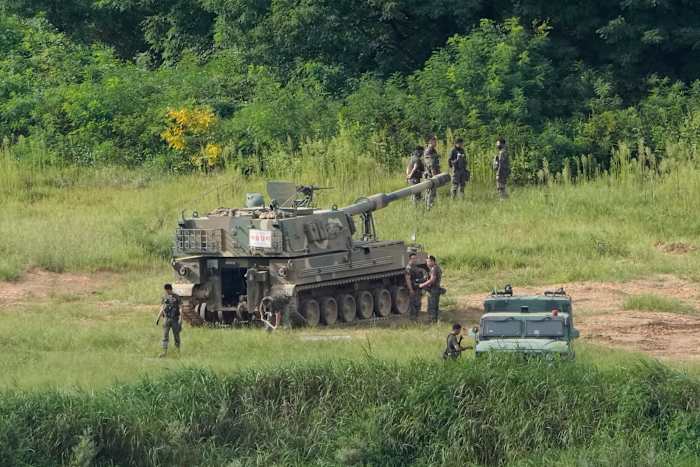
While North Korea builds out its fleet, the maritime waters south of the Korean Peninsula are turning into a crowded chessboard. The Freedom Edge exercises bring together American, South Korean, and Japanese forces for integrated multi-domain operations. We are talking about ballistic missile defense, anti-submarine warfare, and cyber defense drills that run deep into international waters.
Washington's diplomatic signals have been a bit chaotic lately. The White House ordered a substantial reduction in the annual Ulchi Freedom Shield exercises to appease Pyongyang and tempt Kim back to the negotiating table. Did it work? Not even close.
North Korea's senior leadership brushed off the reduction as a superficial gesture. Pyongyang responded by firing off short-range ballistic missiles and speeding up its naval timeline. Kim's administration wants a total rollback of what it labels America's hostile policy, plus official recognition as a nuclear state, before any real talks resume. With backing from deeper alliances with Moscow and Beijing, Pyongyang feels little pressure to compromise.
What This Means for Regional Security
The standard playbook of applying economic sanctions and waiting out the regime is broken. North Korea is executing a multi-year defense plan that aims to roll out even larger vessels, including talk of a 10,000-ton cruiser by the end of the decade.
When naval expansion meets increasingly aggressive trilateral containment drills, the margin for error shrinks. A single miscalculation during routine patrols in the Sea of Japan or near maritime borders could spark a localized kinetic exchange.
Keep an eye on how Washington and Seoul adjust their deterrence strategies. If containment alone just pushes Pyongyang to double down on asymmetric naval and nuclear capabilities, the current standoff is bound to escalate into a permanent, high-stakes arms race across Northeast Asia.