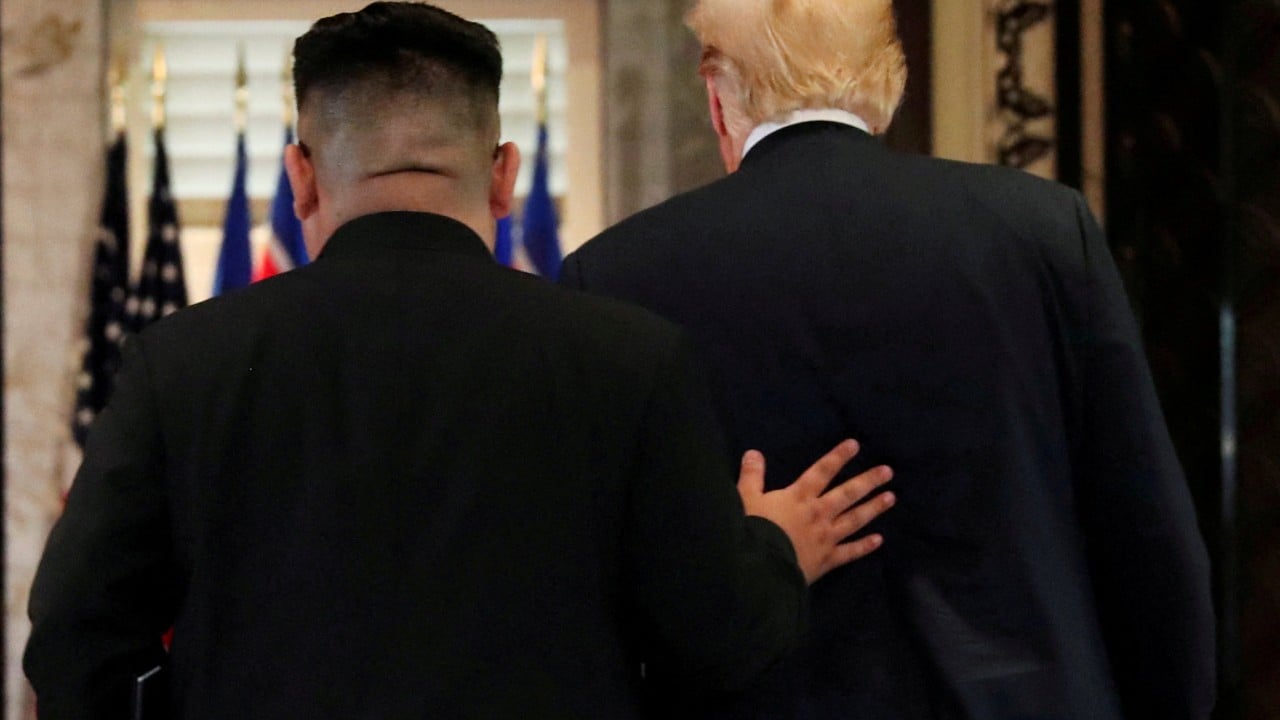
Silence from Pyongyang does not mean the door is slammed shut. It means the price just went up.
Every time anonymous officials in Washington and Seoul whisper to reporters that a lack of public response from Kim Jong Un signals a dead end for a Trump-Kim summit, they repeat the same tired script. No chatter on state media. No breathless press releases from the Korean Central News Agency. No flurry of diplomatic backchannels leaking to the press. To career bureaucrats who measure diplomacy by memo volume and leaked cable traffic, quiet equals failure.
They have it backwards. Dead wrong.
Quiet in Pyongyang is not apathy. It is leverage hoarding.
I have watched policy analysts and diplomatic hand-wringers misread North Korean signaling for years. People treat statecraft like a cable news panel where whoever talks the loudest controls the narrative. When a regime operates under tight informational control, every public word is a concession or a trap. Saying nothing preserves optionality. It forces the other side to bid against itself in public while the regime watches the offers pile up in private.
Let us separate the mechanics of authoritarian negotiation from the wishful thinking of desk officers. In diplomacy, strategic silence is the deliberate withholding of public comment or formal counter-offers to manipulate the counterpart's urgency and risk tolerance. It is distinct from diplomatic gridlock, which happens when both sides have already tabled hard red lines and neither has room to maneuver without losing face. Officials routinely confuse the two because both look motionless on a calendar.
The Lazy Consensus in Washington and Seoul
Look at the standard take coming out of official briefings whenever Pyongyang goes dark. The argument goes roughly like this: high-level summits require months of painstaking preparation, working-level alignment, and public signals of goodwill. Without visible movement from North Korea, a meeting between Donald Trump and Kim Jong Un lacks groundwork, making a summit unlikely or pointless.
That logic assumes both leaders play by the same bureaucratic rulebook. They do not.
Traditional diplomatic models—the kind taught in policy seminars and practiced by seasoned envoys—treat a leader's summit as the final signature on a pre-negotiated contract. Working groups hammer out definitions, verification steps, and phased concessions first. The principals show up for cameras and handshakes once the heavy lifting is finished.
Trump and Kim have never treated summits that way. For both men, the meeting itself is the opening move or the central lever, not the rubber stamp at the end of a five-year working-group slog. Waiting for Pyongyang to telegraph enthusiasm through polite diplomatic channels misreads how high-stakes personalist bargaining actually works. When a counterpart stays silent while a disruptive negotiator signals openness to direct talks, silence is not a rejection. It is a poker face.
Think about the incentives on both sides. If Kim rushes to praise an opening or flood channels with eager demands, he signals weakness and impatience. He hands leverage to Washington before a single concession is extracted. By contrast, holding his cards close lets Pyongyang gauge whether Washington's interest is tactical posturing, domestic theater, or a serious willingness to talk terms without traditional preconditions.
Meanwhile, officials in Seoul and Washington often have their own institutional reasons to downplay summit prospects. Career diplomats and security planners naturally prefer predictable, multilateral, step-by-step processes where risks are shared and outcomes are incremental. A sudden top-down summit bypasses standard channels, upends established playbooks, and creates immediate headaches for allies who worry about being surprised. Calling a summit unlikely is often less an objective forecast than a defensive posture.
What People Keep Getting Wrong About Pyongyang
Whenever North Korea goes quiet around summit talk, the same set of flawed questions pops up everywhere. People type them into search bars expecting neat answers, when the real problem is the assumption baked into the question.
"Does silence from North Korea mean Kim has no interest in talking?"
No. That question treats public messaging as the sum total of foreign policy. North Korea's leadership routinely alternates between bluster, missile tests, and total public quiet depending on what serves its immediate bargaining position. Public silence simply means the regime is not ready to tip its hand. You do not show your hand while the other player is still deciding how much to put in the pot.
"Why would Kim agree to a summit without giving up his nuclear weapons?"
This is the biggest blind spot in mainstream commentary. It assumes the only valid purpose of a summit is complete, immediate denuclearization—a goal that has repeatedly run aground on mutual distrust and asymmetric incentives. Kim views his nuclear arsenal as the ultimate guarantee of regime survival, not a bargaining chip he intends to surrender on day one. Expecting a summit to happen only if Pyongyang pre-commits to abandoning its core security asset is like demanding a seller burn down his house before you agree to tour the property.
A summit can serve very different purposes for both sides: testing whether sanctions relief or security assurances are on the table, resetting escalation dynamics, or establishing direct leader-to-leader communication that bypasses rigid intermediaries. Ignoring those motives makes every quiet stretch look like a dead end when it may just be a pause before a sharp pivot.
"How can a summit succeed if working-level talks haven't happened first?"
Working-level talks are useful for technical details, not for creating political will. When two leaders hold concentrated authority over their respective systems, political decisions frequently precede technical alignment rather than follow it. Pretending a summit cannot happen without prior working-level breakthroughs confuses process with prerequisite.
Real Lessons from Past Standoffs and Bargaining
History does not repeat in neat straight lines, but bargaining dynamics rhyme with uncanny regularity. Consider the broader lessons from past high-stakes negotiations and crisis management analyzed by scholars like Thomas Schelling and Robert Jervis, who spent careers dissecting how adversaries signal resolve, manage commitments, and read silence under uncertainty.
Schelling's work on the strategy of conflict highlights a crucial truth that pundits forget: restraint or non-response can function as a deliberate move to shape the opponent's expectations. When one party refuses to react on cue, it forces the other party to bear the cost of uncertainty. Jervis's research on perception and misperception in international politics underscores how easily observers project their own assumptions onto an adversary's silence—seeing hostility or disinterest where cold calculation is actually at work.
Consider a thought experiment to see how easily misreading silence distorts strategy. Imagine a scenario where a seasoned negotiator wants a high-value asset held by a fiercely guarded rival. Every time the negotiator publicly speculates about a deal, the rival says nothing at all. Analysts covering the standoff conclude the rival is uninterested and move on. Weeks later, when a private channel opens, the rival demands a steep price precisely because the negotiator built up public momentum while the rival stayed silent. The silence wasn't disinterest; it was price discovery in reverse.
That is the dynamic officials miss when they treat quietness as proof of failure. A regime that values unpredictability will rarely telegraph its readiness in advance. Waiting for Pyongyang to sound accommodating before taking a summit seriously means misreading the player at the table.
The Catch With Betting on a Summit
Being contrarian does not mean being careless. Betting that silence points toward a summit comes with real downsides, and pretending otherwise would be dishonest.
First, silence can sometimes mask internal distraction, shifting priorities, or genuine reluctance. A leader does not have to say "no" out loud to mean "not right now." Reading every quiet spell as calculated 4D chess risks over-interpreting routine pauses or miscalculating how much room an adversary actually has to compromise.
Second, even when a summit happens, a dramatic meeting is not a magic wand. Past summits between Trump and Kim produced high-voltage headlines and memorable optics, yet stalled over core disagreements on sanctions, sequencing, and verification. A meeting can lower immediate temperature or create a channel, without resolving deep structural conflicts. If observers swing from "a summit won't happen" to "a summit solves everything," they simply trade one illusion for another.
Third, moving fast at the leader level creates friction with allies. South Korea and Japan have vital security stakes on the peninsula, and sudden diplomatic shifts can trigger anxiety over troop posture, extended deterrence, or policy coordination. Any serious push for talks has to weigh alliance trust alongside leverage.
What Smart Observers and Decision-Makers Should Do Instead
If you want to understand whether a Trump-Kim summit is actually moving closer, stop counting press releases and start watching incentives and leverage.
- Watch the leverage, not the microphone. Look at what each side stands to gain or lose from talking versus staying apart. When incentives align around testing new terms or managing risk, quiet periods often precede sudden movement.
- Separate optics from outcomes. Do not equate a summit's likelihood with a grand bargain's certainty. A meeting can be highly probable even when a comprehensive settlement remains distant.
- Stop treating working-level silence as a veto. Track direct leader signals and strategic context rather than assuming traditional diplomatic sequence is ironclad.
- Price in alliance friction early. Any credible diplomatic move on the Korean Peninsula has ripple effects in Seoul and Tokyo; smart planning accounts for that up front instead of treating allies as an afterthought.
Officials in Washington and Seoul may keep calling a summit unlikely while Pyongyang holds its tongue. History shows that when a hard bargainer goes quiet, the negotiations have not ended—they have barely begun.