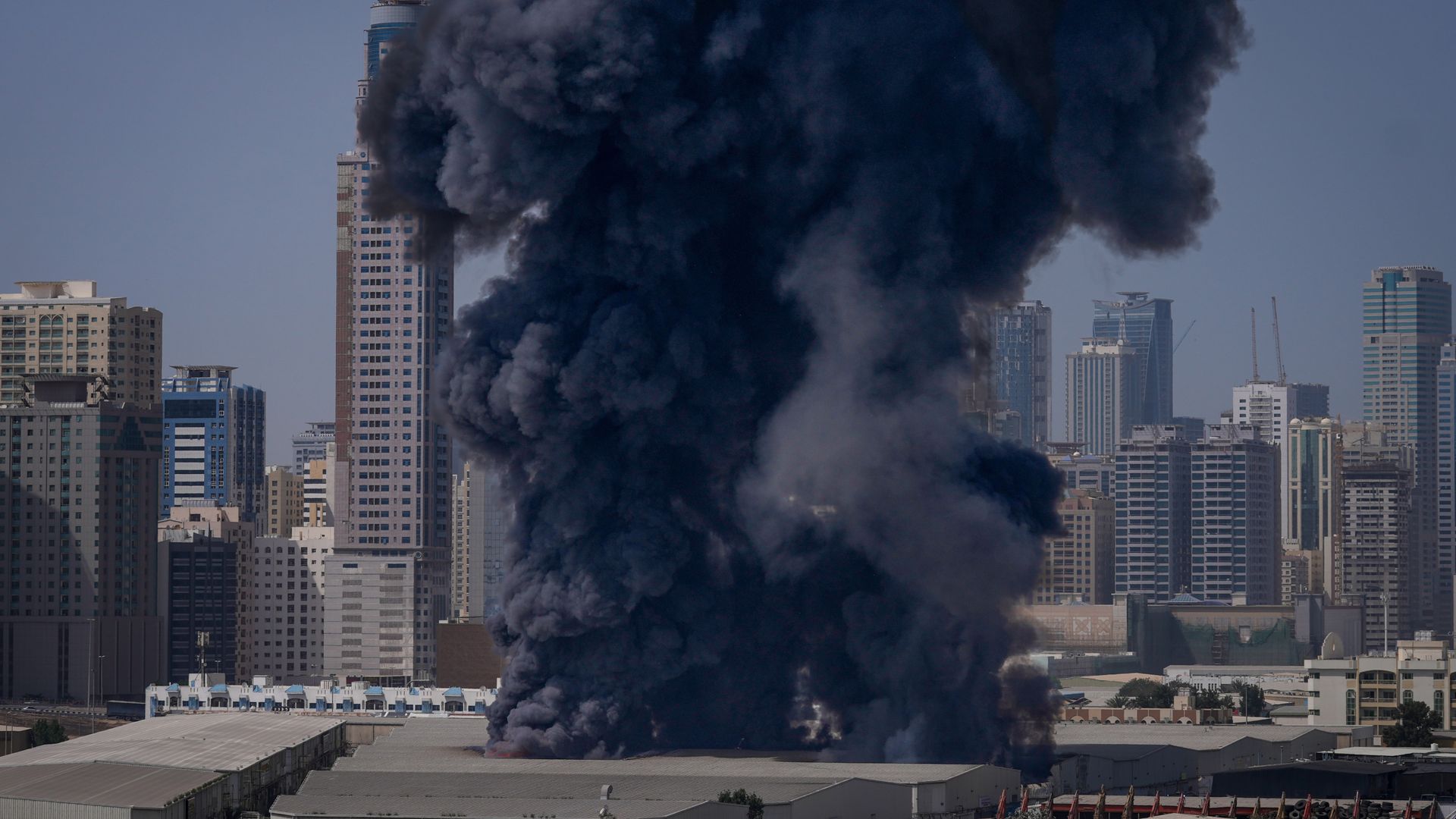
The headlines are predictable. Every time a plume of smoke rises from the Sohae Satellite Launching Ground, the Western media machine churns out the same tired narrative: "Threat to the U.S. Mainland," "Escalation in the Pacific," or "Technological Breakthrough."
It is lazy journalism. It is worse than wrong; it is boring. Also making waves in related news: Finland Is Not Keeping Calm And The West Is Misreading The Silence.
If you are looking at North Korea’s solid-fuel engine tests and seeing a linear path to a functional, survivable intercontinental ballistic missile (ICBM) fleet, you are falling for the theater. You are buying the PR package that Pyongyang spent forty years perfecting. The reality is far more clinical, far more desperate, and significantly more nuanced than the "imminent threat" industry wants you to believe.
The Solid-Fuel Delusion
The "lazy consensus" dictates that solid-fuel engines are a game-changer because they allow for rapid launching. Unlike liquid-fueled missiles—which require hours of volatile fueling on the pad—solid-fuel rockets are essentially giant Roman candles. You pull them out of a cave, you point them up, and you fire. Further information regarding the matter are detailed by BBC News.
But here is what the analysts miss while they are staring at satellite imagery of scorched earth: Reliability is not a binary.
In the aerospace world, solid-fuel chemistry is an absolute nightmare of quality control. A liquid engine can be tested, shut down, and refurbished. A solid motor is a one-shot deal. If there is a single microscopic void in the propellant grain, a hairline fracture in the casing, or an uneven burn rate, the missile turns into an expensive firework three seconds after ignition.
Pyongyang is pivoting to solid fuel not because they have mastered the chemistry, but because their liquid-fuel logistics are a liability. Moving massive fuel trucks across crumbling North Korean infrastructure is a neon sign for U.S. and South Korean intelligence. The "breakthrough" isn't a leap in power; it’s a desperate attempt to hide.
The Re-entry Vehicle Myth
The focus on engine thrust is a classic red herring. We have seen the Hwasong-18. We know it has the "legs" to reach Chicago. That isn't the question. The question is whether anything inside the nosecone survives the trip.
When an ICBM re-enters the atmosphere, it isn't just getting hot. It is hitting a wall of air at Mach 20. We are talking about temperatures exceeding 7,000 degrees Celsius.
To survive this, you need advanced carbon-carbon composites and precise ablative shielding. North Korea’s "tests" almost always involve lofted trajectories—firing the missile nearly straight up so it lands in the East Sea. This proves the engine works. It proves the stages separate. It proves absolutely nothing about the warhead's ability to withstand the horizontal stresses and extreme heat of a standard depressed trajectory toward North America.
Until we see them dump a dummy warhead into the mid-Pacific after a full-range flight, the "mainland threat" is a mathematical abstraction, not a military reality.
The Cost of the "Success"
I have watched defense contractors burn through billions of dollars trying to solve the vibration issues inherent in large-diameter solid motors. These vibrations—often called "pogo oscillations" in liquid rockets, but far more chaotic in solids—can shake a delicate nuclear trigger or a guidance computer to pieces.
North Korea operates on a shoestring budget fueled by cyber-heists and shadow shipping. They do not have the luxury of the thousands of static fire tests required to map the acoustic profile of these engines. They are "guessing and checking" with live airframes.
Why the Threat is Political, Not Kinetic
If you want to understand the engine tests, stop looking at the thrust kilograms. Look at the calendar.
- Internal Legitimacy: Kim Jong Un needs a win every quarter to justify the starvation of his populace. A loud noise and a big flame provide that.
- Leverage in a Vacuum: With the world’s attention fixed on Eastern Europe and the Middle East, Pyongyang is the kid in the back of the classroom throwing spitballs to get the teacher’s attention.
- The Russia Connection: This is the real "nuance" the mainstream missed. Recent geopolitical shifts suggest a massive technology transfer from Moscow in exchange for artillery shells. If the North Korean engines suddenly look like Soviet-era designs, it isn't "indigenous genius." It’s a fire sale of Russian intellectual property.
Dismantling the "People Also Ask" Nonsense
"Can North Korea actually hit the U.S.?"
Physically? Maybe. Accurately? No. With a functioning warhead? Highly improbable. An ICBM is the most complex machine ever built by man. Having a big engine is like having a powerful car with no steering wheel and a wooden gas tank. It’s dangerous, but it isn't a weapon of precision.
"Why don't we just blow up the launch sites?"
Because that plays into the theater. The moment a Tomahawk hits Sohae, the Kim regime achieves its ultimate goal: proof that the "Imperialist Aggressors" are coming. The status quo—where we watch them waste their limited resources on engines that will likely shake themselves apart—is actually the winning move for the West.
The Hard Truth About Deterrence
We are witnessing the birth of a "Paper Tiger 2.0." The more complex these systems become, the more prone they are to failure. A liquid-fueled scud is simple. A multi-stage, solid-fuel ICBM with cold-launch canisters and MIRV (Multiple Independently Targetable Re-entry Vehicle) aspirations is a recipe for a catastrophic "rapid unscheduled disassembly."
The industry insiders who get paid to sell interceptors will tell you the sky is falling. They need the funding. But if you look at the raw physics of North Korea’s manufacturing capabilities, you see a nation that is overextending its technical grasp. They are building the 21st-century equivalent of a cathedral out of mud bricks. It looks impressive from a distance, but you wouldn't want to stand inside it during a storm.
Stop fearing the flame. Start questioning the metallurgy. The real threat isn't that North Korea has a new engine; it's that we continue to validate their propaganda by pretending it's a finished product.
Every engine test is a confession that the previous one didn't quite work. Every "successful" launch is a desperate roll of the dice in a game where the house—physics—always wins.
Stop buying the hype. The engine is loud, but the tank is empty.
The North Korean missile program is a masterclass in strategic bankruptcy: spending your last dime on a sword you can't afford to swing and that will likely break the moment it hits a shield.
Don't blink. They want you to blink.