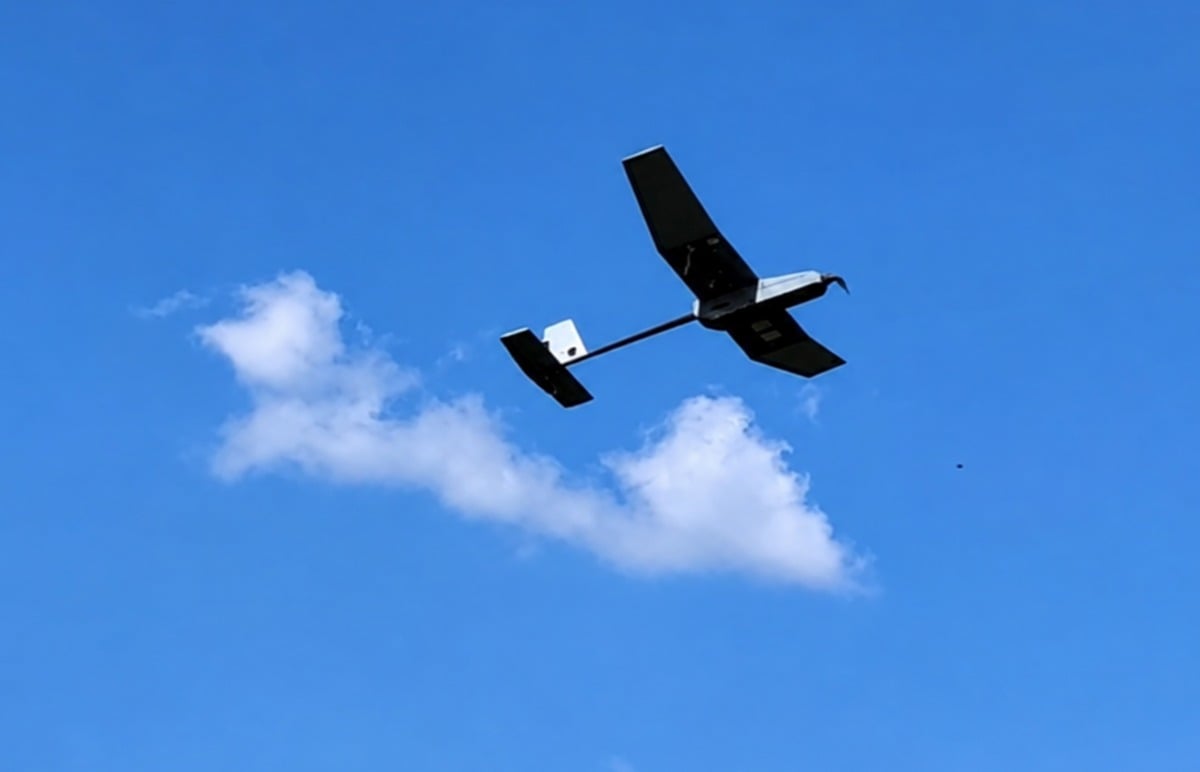
Military blogs are cheering over the latest ultra-cheap reconnaissance drone allegedly pushing 150 kilometers behind enemy lines. The media echo chamber calls it a revolution in asymmetric warfare. They claim a few thousand dollars worth of fiberglass, hobbyist components, and foam is permanently rendering multi-million-dollar air defense systems obsolete.
They are wrong. They are falling for the cheap drone fallacy.
The consensus insists that in modern attrition warfare, low cost equals high efficiency. It does not. Range is a useless metric if your platform is functionally blind, deaf, and mute by the time it reaches its destination. The narrative surrounding long-range, low-cost unmanned aerial vehicles (UAVs) deliberately ignores the invisible wall of Electronic Warfare (EW).
I have watched defense tech startups burn through millions in venture capital trying to deploy off-the-shelf components in contested environments, only to watch their assets drop out of the sky without transmitting a single byte of useful data. The hard reality of the modern battlespace is brutal: if a drone is incredibly cheap, it is almost certainly a flying brick when subjected to targeted radio frequency disruption.
The Myth of the 150 Kilometer Cheap Flight
To understand why the mainstream analysis is flawed, we have to look at the physics of data transmission.
When a commentator celebrates a drone flying 150 kilometers deep, they assume that flight equals utility. It does not. A reconnaissance drone has exactly one job: collect high-value intelligence and transmit it back to command in real time.
Achieving a 150-kilometer analog or basic digital video link requires significant power and a completely clear line of sight. As a drone flies lower to avoid radar tracking, the curvature of the earth and terrain masking degrade the signal. To maintain a connection at that distance without a massive satellite communications array, you need an airborne relay system or a towering ground antenna.
If the drone is relying on internal storage to log coordinates and fly back home, it is no longer a real-time reconnaissance asset; it is an expensive, delayed-gratification film camera. In high-intensity conflict, targeting data expires in minutes. A photo of a missile launcher delivered three hours after the flight ended is a historical artifact, not actionable intelligence.
The Invisible Wall: Why Hobbyist GPS Fails
The absolute biggest vulnerability of the budget long-range drone is its reliance on commercial-grade navigation and control frequencies.
Cheap drones use standard civilian GPS frequencies (like L1/L2) and commercial telemetry bands. Any military force utilizing modern electronic warfare suites—such as the Russian Krasukha-4 or Pole-21 systems—can completely blanket these frequencies across entire sectors.
When a cheap drone hits an EW bubble, three things happen, and none of them are good:
- GPS Spoofing: The EW system feeds the drone false satellite signals. The drone believes it is flying safely in one direction while it is actually drifting directly into an air defense trap or turning around entirely.
- Control Link Jamming: The command signal from the operator is overwhelmed by white noise. Without an expensive, redundant inertial navigation system (INS), the drone loses its orientation and crashes.
- Direction Finding: The very act of a cheap drone broadcasting a high-power video signal back across 150 kilometers serves as a massive homing beacon. Electronic intelligence units can trace that signal back to its source, exposing the launch crew to immediate counter-battery artillery fire.
True military-grade navigation requires anti-jam antennas, such as Controlled Reception Pattern Antennas (CRPA), and high-grade INS chips that do not rely on satellites at all. A single functioning CRPA assembly can cost more than the entire structural frame of twenty "cheap" drones combined.
The Economics of False Efficiency
Let us break down the actual math that the "cheap drone" advocates refuse to publish.
Imagine a scenario where a manufacturer builds a long-range recon drone for $5,000 using commercial carbon fiber, a hobbyist engine, and standard digital links. On paper, trading a $5,000 asset to spot a $10 million radar system is an incredible return on investment.
Here is how that plays out in a heavily jammed theater:
| Asset Layer | Success Rate | Real Cost Per Successful Mission |
|---|---|---|
| $5,000 Unprotected Drone | 5% (1 out of 20 survives EW to transmit data) | $100,000 |
| $80,000 Hardened Drone | 85% (Equipped with CRPA and optical navigation) | $94,117 |
Because the unprotected drone fails 95% of the time due to localized jamming, you must launch twenty of them to get a single successful reconnaissance report. You have not saved money. You have simply shifted the cost into manufacturing logistics, wasted launch windows, and exposed your operators to twenty times the risk of detection.
Furthermore, a drone that gets jammed and crashes intact in enemy territory is a free R&D gift to the adversary. They harvest your frequencies, analyze your software loops, and tune their jamming algorithms to ensure the next iteration has a 0% success rate.
The Flawed Questions People Ask About Drone Warfare
The public discussion around unmanned systems is broken because people are asking questions based on outdated assumptions.
Does a longer range mean a better drone?
Absolutely not. Range is a vanity metric used by defense contractors to win headlines. The real question is spectral resilience. A drone with a 30-kilometer range that can punch through high-power noise jamming is infinitely more valuable than a drone with a 200-kilometer range that drops out of the sky the moment an EW truck turns its key. Range without link security is just a longer path to the scrap heap.
Can mass numbers overwhelm modern electronic jamming?
This is the "swarm" misconception. People think if you launch fifty cheap drones at once, the jammers cannot stop them all. This ignores how area-denial EW works. Systems like the Borisoglebsk-2 do not selectively target individual drones like a sniper rifle. They act like a massive floodlight, blanketing entire frequency bands across kilometers of airspace. If fifty drones are all using the same commercial bands, they all go blind simultaneously. Mass matters for kinetic strikes, but for intelligence gathering, mass without signal isolation is just expensive noise.
The Solution Nobody Wants to Fund
If building cheap foam flyers is an operational dead end for long-range scouting, what actually works? The answer requires abandoning the romantic idea of the garage-built military revolution.
True long-range reconnaissance requires autonomous edge computing. The drone must be smart enough to navigate without GPS and silent enough to operate without transmitting data back to base until it returns to a safe zone.
This means integrating optical navigation systems—software that looks at the ground through a standard camera lens, matches the topography to pre-loaded satellite maps, and calculates its position mathematically without a single external signal. It requires onboard AI chips capable of identifying targets (like a Pantsir system or an ammunition depot) automatically, processing that data locally, and storing only the compressed coordinates.
Yes, this software and hardware stack adds weight. Yes, it drives the cost of the drone from $5,000 to $75,000 or more.
The downside to this approach is obvious: you can no longer brag about building thousands of units in a high school gymnasium. Production slows down. The supply chain requires specialized components rather than parts ordered from global e-commerce websites.
But you stop wasting lives and launch windows on platforms designed to fail.
Stop measuring the value of an aerospace asset by its price tag or its empty-air range test. If a platform cannot survive the electromagnetic reality of the modern frontline, it is not a weapon—it is target practice. Strip away the media hype, open the telemetry logs of failed missions, and face the reality that cheap is often the most expensive way to lose a war.