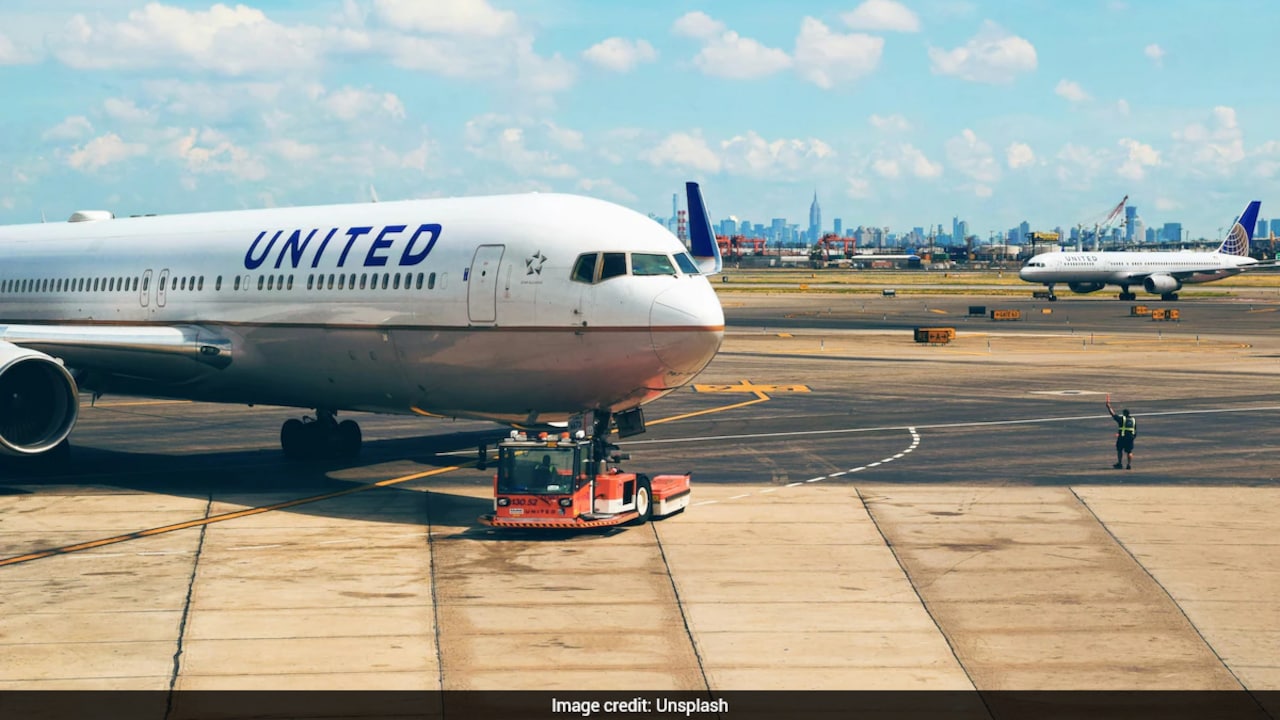
A scary message pops up on a device mid-flight. A United Airlines jet diverts to Las Vegas. Headlines scream about a "chilling" scare.
You read that and feel your stomach drop. You should. Nobody wants a threat in a pressurized tube hurtling through the stratosphere at 500 miles per hour.
Yet the standard coverage gets the danger completely backward. It treats every alarming message as a near-miss catastrophe and every diversion as a dramatic rescue. That framing makes for great clicks. It makes for terrible analysis.
The real story is not that a message sounded terrifying. The real story is how a multi-layered system absorbs noise, burns tens of thousands of dollars in fuel and crew time, and keeps passengers safe without turning the cabin into a war zone.
The "Chilling Threat" Myth
Standard aviation coverage relies on a lazy consensus: if a message uses violent or alarming words, the threat is real enough to treat as an emergency.
That confuses impact on the reader with operational probability. A note or electronic message saying someone is going to hijack a plane sounds chilling on a screen. In commercial aviation, crews do not grade threats by how dramatic they sound to a journalist. They grade them by credibility, corroboration, and whether a real-time risk exists inside the cabin.
Think about the difference between a Hollywood script and an airline operations center. A movie treats a threatening message like a ticking clock with ten seconds left on the wire. Airlines treat it like a signal inside a noisy environment. Most alarming messages turn out to be hoaxes, pranks, misdirected texts, or bad jokes made by people who have no idea what federal felony charges look like in practice.
Still, crews cannot wing it. If a threat cannot be immediately ruled out while airborne, putting the aircraft on the ground at a well-equipped airport like Harry Reid International in Las Vegas makes tactical sense. It moves the problem from a closed aluminum tube to a controlled environment with law enforcement, rescue assets, and space away from congested hub terminals.
Calling that a "chilling" brush with disaster misses the point. A diversion is not proof that the plane was seconds away from being seized. It is proof that the margin for ambiguity in commercial aviation is razor thin.
What People Actually Ask When a Flight Diverts
When a story like this breaks, search feeds fill up with the same predictable questions. Most of them start from a flawed premise.
"Could a passenger actually hijack a modern commercial airliner with a message?"
A message cannot fly a plane or breach a hardened flight deck door. What turns a disruption into a real danger is chaos in the cabin, physical interference with crew or passengers, or a coordinated plot that bypassed ground screening. Post-9/11 cockpit doors are reinforced and locked during flight. Crew training is built around containment and de-escalation, not trading speeches with someone waving a phone or passing a note. The real risk in a cabin incident is rarely a single dramatic takeover; it is escalation, panic, or a concealed hazard that requires ground inspection.
"Why did the plane land in Las Vegas instead of continuing to its destination?"
Because distance to a safe, capable runway beats schedule convenience every single time. Las Vegas offers long runways, major emergency response infrastructure, and plenty of ramp space to isolate an aircraft if needed. Airlines do not pick diversion airports based on which city makes the best headline. Dispatchers and captains look at weather, fuel burn, runway length, law enforcement readiness, and gate availability.
"Does a diversion mean the security system failed?"
No. That is backwards. If a suspicious or threatening message surfaces mid-flight and the aircraft lands safely so authorities can investigate, the system worked as designed. Security fails when real threats go undetected or when procedures break down under pressure. An inconvenient landing in Nevada is a cost of caution, not a collapse of safety.
Inside the Real Mechanics of an In-Flight Diversion
I have spent years watching how airlines, airports, and regulators react when routine operations get knocked sideways. I have seen operators blow millions on reactive security theater that slows lines down without stopping a determined bad actor. I have also watched dispatchers, pilots, flight attendants, and ground teams execute boring, disciplined playbooks while outside observers panicked.
To understand why a threatening message triggers a landing like the one in Las Vegas, you have to look at the mechanics behind the curtain.
1. Credibility Assessment vs. Zero Tolerance
Aviation security runs on a tension that outsiders rarely appreciate. On one side sits zero tolerance for unverified risk in the air. On the other sits credibility assessment, where trained professionals look for patterns, source reliability, and behavioral context.
A threat does not need to be proven real to trigger a response. It only needs to be plausible enough that ignoring it would be reckless. When a message mentions hijacking or violence aboard an active flight, crew members and ground coordinators treat it seriously until proven otherwise.
2. The Hidden Cost of a Precautionary Landing
A diversion looks like a single line in a news brief. On the airline's ledger, it is a chain reaction.
- Fuel and maintenance: Extra flight time burns fuel, adds cycle stress, and can push maintenance checks closer.
- Crew legality: Pilots and flight attendants operate under strict duty-time limits. A diversion can time out a crew on the ground, stranding hundreds of travelers until a fresh crew arrives.
- Network ripple effects: One out-of-position aircraft can wreck tight turnarounds across an entire route map for the rest of the day.
Airlines hate diversions for financial and operational reasons. When a captain decides to put the jet down early anyway, it is not for drama. It is because the operational risk equation tilted toward landing.
3. Containment Beats Confrontation
Modern cabin security is built around containment. Flight attendants are trained to gather information, keep aisles clear, watch for secondary behavior, and coordinate quietly with the flight deck.
Imagine a scenario where a passenger receives or sends a threatening message mid-flight. A bad response turns the aisle into a shouting match, pulling other passengers into a physical scuffle before anyone knows what is happening. A disciplined response isolates the focus of concern, updates the pilots, alerts air traffic control and ground authorities, and sets up a controlled arrival.
Quiet competence looks boring on camera. That is why headlines reach for words like "chilling" instead of explaining how the cabin was managed.
Precision Terms Nobody Bothered to Clarify
Casual reporting blurs distinct aviation terms together. That sloppiness creates confusion about what actually happened.
- Diversion: Landing at an airport other than the scheduled destination. It can happen for medical emergencies, weather, mechanical issues, or security concerns.
- Threat assessment: The structured evaluation of whether a reported threat is credible, specific, and actionable, conducted across airline security, law enforcement, and federal aviation authorities.
- Sterile cockpit: A rule restricting non-essential crew duties and chatter during critical phases of flight, such as takeoff and landing, so pilots stay locked in on flying the airplane.
When articles mash these ideas together, readers walk away thinking every diversion is a hair-raising brush with disaster.
What Heavy Hitters in Aviation Actually Emphasize
Veteran airline captains, aviation safety researchers, and federal security specialists—including experts from groups like the Flight Safety Foundation and former airline chief pilots—repeatedly emphasize one core truth: commercial aviation is built to tolerate single-point surprises without catastrophic outcomes.
No single message, prank, or disruption brings down a modern airliner by itself. Aviation safety relies on defense in depth: pre-flight screening, hardened flight decks, crew training, air traffic control coordination, and ground law enforcement.
When an incident happens mid-flight, the goal is never perfection in the abstract. The goal is reducing uncertainty as fast as possible while keeping everyone on board safe.
The Downside of My Own Contrarian Take
There is a real risk in pushing back against alarmist headlines. If you tell people that most scary messages end with a safe landing and a police interview, some readers will hear: "Nothing to worry about."
That would be a mistake.
Complacency is dangerous in any high-consequence environment. Even when the statistical odds of a real hijacking are tiny, you still want passengers listening to crew instructions, keeping carry-ons stowed, reporting genuine suspicious behavior calmly, and taking threats seriously rather than treating them as a joke. A false alarm is annoying and expensive. Ignoring a real warning can be fatal.
My argument is not that threats do not matter. My argument is that emotional reaction is a terrible measure of actual risk.
Actionable Advice If You Are Ever on That Flight
If you are sitting in row 22 when the cabin mood shifts and the plane starts descending toward an unexpected city, do not act like a spectator in a thriller. Do this instead:
- Stay seated and buckle up. Do not stand up to peer over seats, film people, or play hero. Standing blocks aisles and slows crew movement.
- Listen to the crew, not the rumor mill. Cabin rumors spread faster than facts and are almost always wrong. Follow direct instructions from flight attendants.
- Keep your hands visible and your behavior calm. During a security diversion, law enforcement will board or meet the aircraft. Sudden movements, arguing, or filming officers up close creates needless friction.
- Report real concerns quietly. If you see something genuinely dangerous—not just someone looking nervous—tell a flight attendant discreetly rather than shouting across the cabin.
Skip the viral speculation. Worry less about movie plot twists and more about following simple instructions until the aircraft is safely on the ramp and cleared by authorities.
A scary message can rattle a cabin in seconds. A trained crew and a ground team can handle it without breaking a sweat.