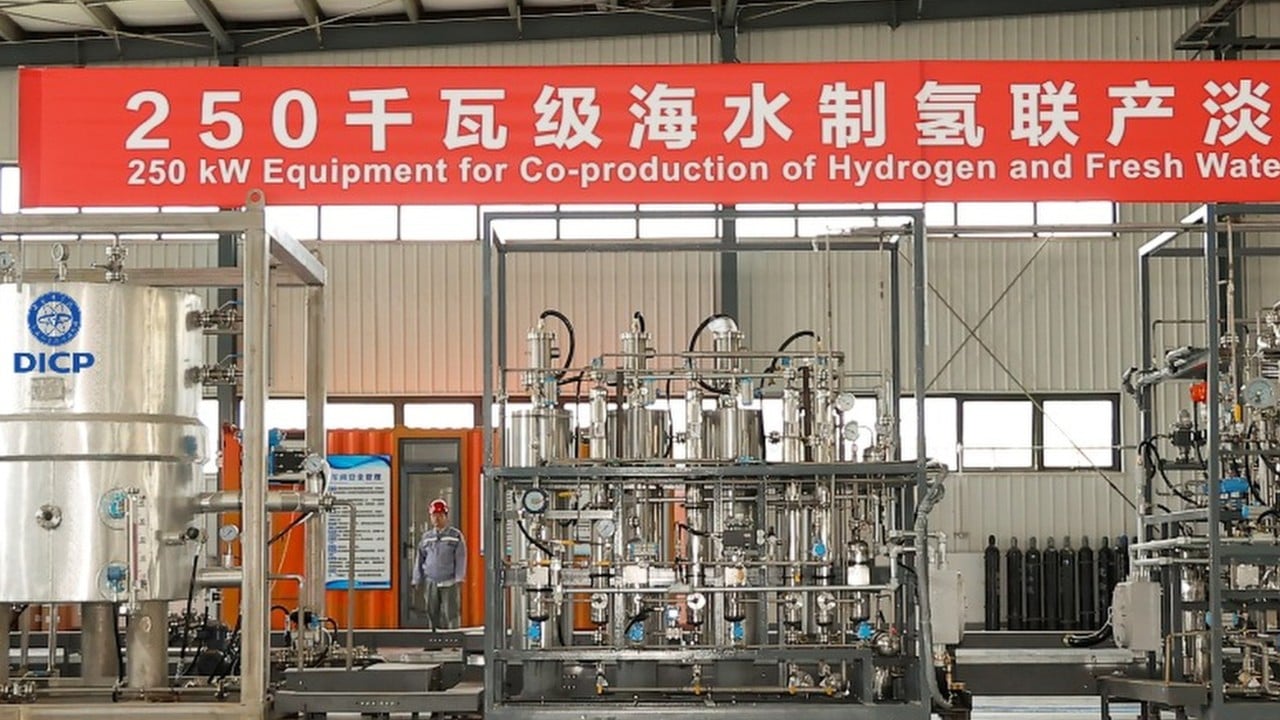
Seawater holds vast wealth. Researchers routinely point to the oceans when discussing critical resource shortages, framing the deep blue as an infinite pantry of energy and raw materials. A recent wave of reporting highlights a new facility or experimental system designed to extract hydrogen, fresh water, and uranium simultaneously from the ocean. It sounds like an industrial fairy tale. Pull clean fuel, potable water, and nuclear feedstock out of the same brine using a unified process.
Look closer at the engineering and economic realities, and the narrative fractures.
Ocean extraction systems face a brutal law of thermodynamics. Dilution. Uranium exists in seawater at concentrations of roughly three parts per billion. Hydrogen requires splitting water molecules, an energy-intensive process that rarely breaks thermodynamic parity unless powered by an external source. Desalination consumes enormous amounts of electricity to strip salt away from water, leaving behind a hyper-saline brine that routinely chokes local marine ecosystems. Trying to combine these three distinct chemical and physical extraction vectors into a single facility creates a monstrous engineering compromise. Each process fights the others.
Energy balance remains the ultimate arbiter of industrial viability. To pull uranium from seawater, engineers submerge specialized absorbent materials that selectively bind uranium ions over weeks or months. That material must then be retrieved, treated with stripping agents, and regenerated. Meanwhile, splitting water for hydrogen demands a stable, high-output electrical grid to drive electrolysis. If the plant draws power from the very grid it intends to supply, the net energy gain shrinks dramatically. Fresh water production requires high-pressure membrane filtration or thermal distillation, adding another massive parasitic load to the facility.
Proponents often cite the sheer volume of the oceans as proof of concept. The numbers are staggering. Billions of tons of uranium, endless cubic kilometers of water, and enough hydrogen potential to power civilization for millennia. Yet total resource abundance matters very little if the energy required to capture a single kilogram exceeds the value of the yield. Mining companies learned this lesson decades ago with low-grade terrestrial ores. When the energy return on investment drops below a viable threshold, the project stops being an industrial asset and starts acting as an expensive science experiment.
The geopolitical pressure driving these announcements tells a different story. Nations facing resource scarcity and fierce competition over supply chains need forward-looking technology narratives. Announcing a multi-purpose extraction plant signals technological dominance and resource security, regardless of whether the economics pencil out on a commercial ledger. Pilot plants operating in controlled environments demonstrate technical feasibility on a micro scale, but scaling those systems to match industrial demand introduces friction points that laboratory settings routinely ignore. Biofouling alone destroys marine infrastructure with ruthless efficiency. Algae, barnacles, and bacterial slime coat submerged membranes and absorbents, degrading efficiency within weeks and demanding relentless chemical or mechanical cleaning.
Environmental consequences add another layer of friction. Pumping millions of gallons of seawater through complex chemical processing arrays alters local temperatures, chemical balances, and salinity gradients. The concentrated brine discharge from desalination components can create dead zones on the ocean floor if not dispersed carefully across massive oceanic areas. Regulators who scrutinize coastal industrial projects will find plenty of reasons to delay or restrict facilities that combine heavy chemical processing with nuclear fuel recovery in fragile marine environments.
Dissecting the hype around multi-output ocean extraction reveals a classic mismatch between scientific capability and economic reality. Can humans pull hydrogen, fresh water, and uranium from the sea? Yes. We have proven that chemistry works in laboratories for decades. Can we do it at a cost that undercuts traditional extraction methods and justifies the staggering capital expenditure of a multi-product marine plant? Not today. Not with current materials science.
The ambition is admirable. The headlines are effective. The math, however, still refuses to cooperate.