The smell of wet red clay never truly leaves your boots in the Colombian countryside. Neither does the sound of a helicopter rotor thumping three valleys away, a low, rhythmic vibration you feel in your teeth long before you see the blades crest the ridge. For half a century, that sound meant only one thing: hide.
Then, in late 2016, the air went quiet.
The silence was terrifying at first. When a war lasts fifty-two years, peace feels less like a celebration and more like walking out onto a frozen lake without knowing how thick the ice is. Thousands of men and women walked down from the mountains of the Revolutionary Armed Forces of Colombia—the FARC—and handed over their rifles. Among them was a man named Diego Tovar.
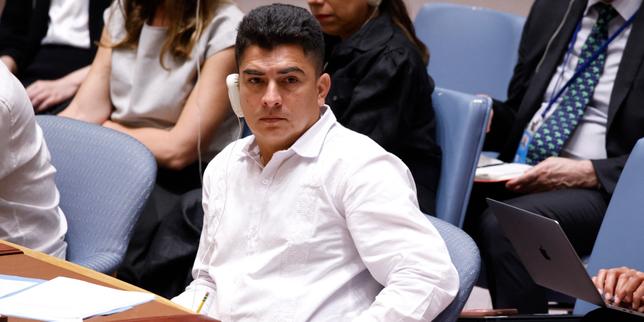
Years later, sitting thousands of miles away from the jungle canopy in the sterile, fluorescent-lit corridors of European diplomacy, Tovar is no longer carrying a weapon. He is carrying a warning. And his message is aimed squarely at Brussels, Paris, and Berlin: Europe cannot afford to look away while the fragile architecture of Colombia’s peace is threatened by hardline political ambition—specifically, figures like the prominent Colombian lawyer and right-wing firebrand Abelardo de la Espriella.
To understand why a former guerrilla fighter is pleading with European Union bureaucrats to pressure a Colombian jurist, you have to strip away the headlines and look at what happens when a peace treaty stops being a living promise and becomes a political punching bag.
The Anatomy of a Fragile Promise
Peace treaties are rarely destroyed by a single explosion. They erode. They die in budget meetings, in delayed land titles, and in the slow, cynical rhetoric of politicians who realize that fear wins more votes than reconciliation.
When the Colombian government and the FARC signed the historic peace accord in Havana in 2016, the world applauded. The European Union didn't just clap from the sidelines; it opened its checkbook and staked its diplomatic reputation on the outcome. Brussels created a dedicated trust fund, pouring hundreds of millions of euros into rural development, demining operations, and reintegration programs. Europe wanted proof that modern diplomacy could end an intractable civil war.
For a former combatant like Diego Tovar, that treaty wasn't an abstract geopolitical milestone. It was a contract. Put down the gun, submit to a transitional justice system, tell the truth about the atrocities of the past, and in exchange, you get a chance to exist as a citizen rather than a corpse or a fugitive.
Now, picture a hypothetical farmer—let’s call him Mateo—living in a remote municipality in Meta or Cauca. For thirty years, Mateo’s dirt road was a front line. After 2016, European-funded agricultural projects helped him switch from growing illicit coca leaves to cultivating specialty coffee and cacao. He took out a loan. He rebuilt his roof. He believed the state had finally arrived with schools instead of soldiers.
Mateo’s entire livelihood rests on one invisible pillar: the political survival of the 2016 accord.
When influential voices in Colombia openly attack the legitimacy of that agreement, call for dismantling the Special Jurisdiction for Peace—the transitional tribunal tasked with investigating war crimes—or frame reconciliation as surrender to terrorism, Mateo feels the tremor immediately. Armed dissident groups and criminal cartels watch those political signals like hawks. The moment the state hesitates, the men with guns walk back down Mateo’s dirt road.
Enter the Hardliner
Abelardo de la Espriella is not a man who deals in quiet diplomacy. A flamboyant, razor-tongued criminal defense attorney, media commentator, and staunch conservative voice in Colombia, he has built a massive public profile by championing uncompromising law-and-order policies and fiercely opposing the concessions made to the FARC.
To his supporters, he represents moral clarity. Why, they ask, should men who kidnapped, extorted, and murdered be allowed to sit in Congress or avoid traditional prison sentences through a specialized peace court? It is an emotional, visceral argument, and it resonates deeply with millions of Colombians who suffered terribly at the hands of the guerrillas. Ignoring that pain would be dishonest. The grief in Colombia is real, raw, and justified.
Yet politics is often the art of choosing between imperfect justice and endless bloodshed.
Tovar’s intervention in Europe cuts right to the heart of this dilemma. By urging the European Union to exert diplomatic and economic pressure on de la Espriella and the broader political current he represents, Tovar is highlighting a truth that many in Washington and Brussels prefer to gloss over: Colombia’s peace is not self-sustaining.
Think of the 2016 accord like a suspension bridge built across a deep gorge. The cables are anchored on both sides—one side held by the Colombian state, the other by the demobilized insurgents and rural communities. International guarantors like the European Union act as the tensioners keeping those cables taut. If powerful political actors in Bogotá start sawing through the anchors on one side, the bridge doesn't gently lower to the ground. It snaps. Everyone on it falls.
Why Brussels Has Skin in the Game
It is easy for a reader in Madrid, Lyon, or Frankfurt to wonder why a domestic political feud in South America should register on Europe’s radar. Europe has war on its own eastern border. Energy costs, inflation, and migration dominate every summit. Colombia feels far away.
That distance is an illusion.
First, there is the cold reality of global narcotics. Colombia remains the world’s largest producer of cocaine, and European ports—from Antwerp to Rotterdam to Algeciras—have become the primary destination for shipments crossing the Atlantic. The illicit economy thrives in chaos. Every time the implementation of the peace accord stalls, coca cultivation expands into the vacuum. Rural crop-substitution programs collapse, and criminal syndicates gain fresh recruits among disillusioned young men who see no future in the legal economy. Pressing for the full implementation of the peace deal isn't charity from Brussels; it is border security at the source.
Second, Europe’s diplomatic credibility is on the line. The EU positioned itself as a global champion of human rights, transitional justice, and multilateral conflict resolution. Over 400 former FARC signatories have been assassinated since the ink dried on the Havana accord—a staggering, tragic number that haunts every demobilized fighter trying to build a normal life. If Europe stands by silently while prominent political figures campaign to gut the very institutions protecting those signatories and investigating state and guerrilla crimes alike, the message to every armed group on earth is unmistakable: Never lay down your arms. The guarantees of the international community expire the moment the political winds shift.
I remember watching the news footage in 2017 when the United Nations mission hauled away the last white shipping containers filled with surrendered FARC rifles. There was a genuine, breathless sense that history had turned a corner. Looking back now, that optimism feels almost naive. Peace wasn't the end of the struggle; it was merely the transfer of the conflict from the jungle to the courtroom, the ballot box, and the international press.
The Uncomfortable Paradox of Reconciliation
There is something deeply unsettling about watching a former guerrilla commander lecture democratic politicians on the rule of law. Many Colombians find it infuriating. How dare someone who once belonged to an organization that planted landmines and took hostages demand that a lawyer respect a treaty?
It is a fair question. It makes your stomach knot because there is no clean, satisfying answer.
Transitional justice is inherently messy. It asks victims to swallow a bitter pill—to accept reduced sentences and political participation for their former tormentors in exchange for truth, reparations, and the guarantee that no more mothers will have to bury their children. When figures like de la Espriella attack that compromise, they tap into a very real reservoir of public anger.
But dismantling the compromise doesn't bring back the dead. It only guarantees new ones.
Tovar’s appeal to the European Union is born out of survival instinct as much as political strategy. He knows that without external pressure—trade conditions, diplomatic scrutiny, targeted political engagement—domestic hardliners face zero consequences for undermining the accord. In Bogotá, attacking the peace deal is free political capital. Brussels has the leverage to attach a price tag to that rhetoric.
The Weight of Silence
Consider what happens next if Europe chooses polite neutrality.
A hypothetical young woman—let’s call her Elena—is an community leader in Chocó, advocating for Afro-Colombian land rights promised under the ethnic chapter of the 2016 agreement. Without international observers watching her municipality, without EU-backed legal protections, her name ends up on a pamphlet slipped under her door at midnight. Three weeks later, she is another statistic in a human rights report that nobody reads.
Diplomacy rarely looks heroic. It consists of tedious meetings, carefully worded communiqués, trade review clauses, and ambassadorial phone calls that never make the evening news. Yet those quiet mechanisms are often the only things standing between a fragile democracy and a relapse into madness.
Diego Tovar walking the halls of Europe is a paradox in a tailored jacket—a man of war begging bureaucrats to save the peace. You don't have to absolve his past to recognize the urgency of his warning. History doesn't repeat itself cleanly, but in Colombia, the ghosts never stray far from the door. And if the world stops listening to the quiet warnings today, it will inevitably wake up to the sound of helicopters tomorrow.