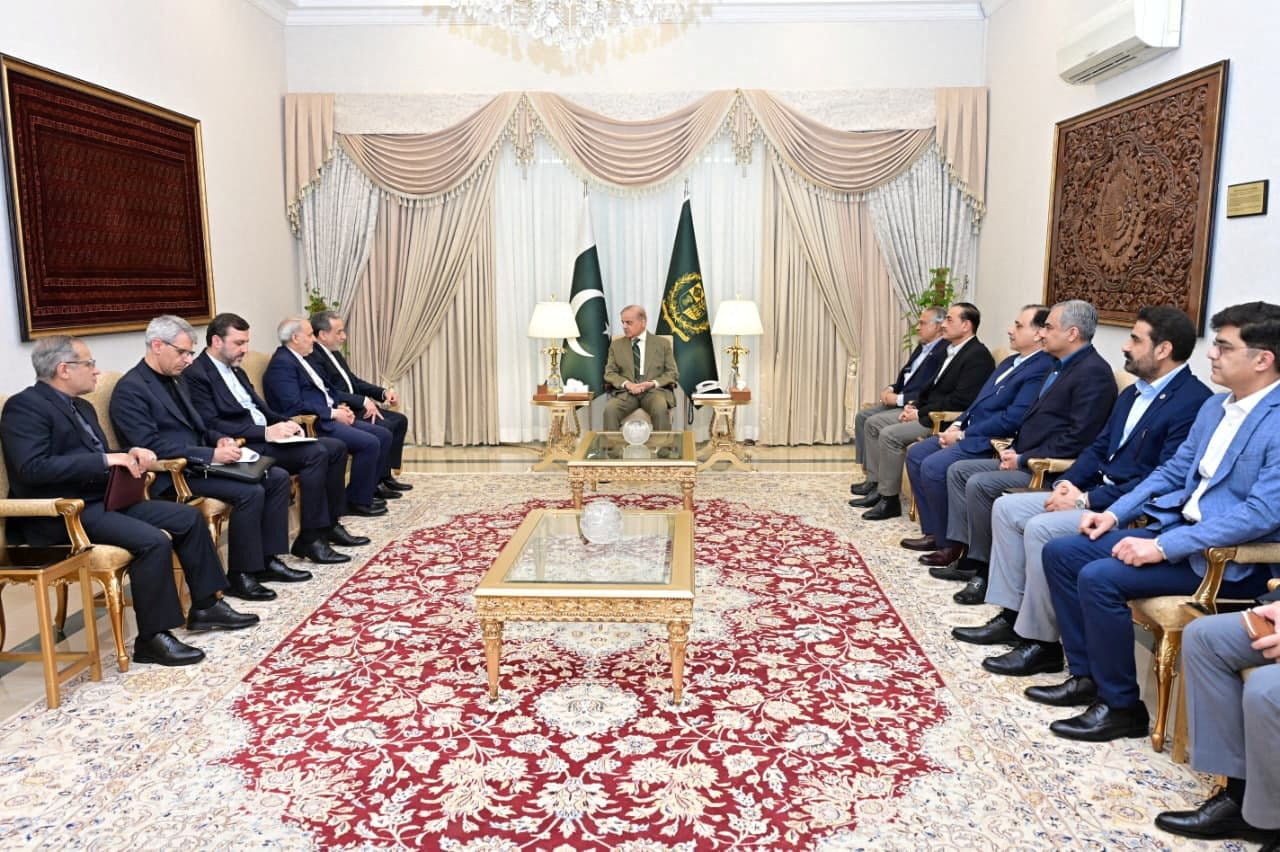
Tehran is currently engaged in a high-stakes diplomatic gamble, utilizing its long-standing "Omani bridge" to signal a readiness for de-escalation that its internal hardliners would never admit to publicly. Foreign Minister Abbas Araqchi’s recent mission to Muscat was not a mere courtesy visit; it was a calculated attempt to use the Sultanate as a pressure valve before the regional conflict reaches a point of no return. Iran is looking for a way to secure its maritime interests in the Strait of Hormuz and halt the widening war without appearing to surrender its regional influence.
The reality on the ground is far more precarious than the polished press releases suggest. While the official narrative focuses on "regional cooperation," the underlying mechanics involve a frantic effort to prevent direct military confrontation with superior forces while keeping the "Axis of Resistance" from total collapse.
The Muscat Pipeline and the Art of Quiet Diplomacy
For decades, Oman has functioned as the primary switchboard between Iran and the West. It is the only place where Iranian officials can sit in one room while American or regional counterparts sit in another, separated only by a thin veil of Omani mediation. Araqchi’s arrival in Muscat signifies that the traditional channels are being pushed to their absolute limit.
This isn't about handshakes. It is about logistics.
Iran needs two things immediately. First, it requires a guarantee that its oil infrastructure—the lifeblood of its struggling economy—remains off-limits in any potential escalation. Second, it needs to ensure that the Strait of Hormuz does not become a graveyard for international shipping, which would trigger a global response that Tehran cannot survive. By engaging with Omani officials, Araqchi is effectively placing a bet on the Sultanate’s ability to relay these "red lines" to Washington and Riyadh.
Security in the Strait of Hormuz as a Bargaining Chip
Tehran has long used the threat of closing the Strait of Hormuz as its ultimate deterrent. However, that threat has become a double-edged sword. If the Strait is blocked, Iran’s own exports vanish.
During the discussions in Muscat, the "security of the Hormuz" was framed as a shared responsibility. Translated from diplomatic-speak, this means Iran is offering to restrain its naval provocations and its proxy interference with global shipping in exchange for a reduction in regional military pressure. It is a protection racket disguised as maritime policy.
The Strait is the world's most important chokepoint. Approximately 20% of the world’s liquid petroleum passes through this narrow waterway. Iran knows that the mere hint of instability here sends insurance premiums through the roof and forces the global community to pay attention. But the leverage is weakening. With increased regional defense pacts and a heavy U.S. naval presence, the "Hormuz Card" is no longer the ace it used to be.
The Proxy Dilemma and the Fragility of Iranian Influence
Araqchi’s mission is complicated by the fact that Tehran does not have absolute control over its regional proxies. While the Iranian leadership wants to avoid a direct war, groups in Lebanon, Yemen, and Iraq have their own local agendas and survival instincts.
Muscat serves as the venue where Iran tries to explain this disconnect. They want the world to believe they are the steady hand guiding these groups, while simultaneously claiming they cannot be held responsible for the "independent" actions of the Houthi rebels or Hezbollah. It is a transparent strategy, yet it provides just enough diplomatic ambiguity to keep negotiations alive.
The Omani officials know this game well. They are not under any illusions about the nature of the Iranian regime. However, for Oman, stability is a matter of national survival. A war in the Gulf would devastate the Sultanate’s economy and its neutral standing. Therefore, they continue to host these talks, acting as the ultimate buffer in a region that has run out of space for error.
Economic Desperation Driving the Diplomatic Push
We cannot ignore the shadow of the Iranian Rial in these meetings. The Iranian economy is suffocating under the weight of sanctions and mismanagement. Inflation is rampant, and the domestic population is increasingly restless.
Araqchi’s "peace offensive" is as much about domestic survival as it is about foreign policy. If Iran can secure even a minor de-escalation, it might see a slight easing of the economic stranglehold. The Muscat talks are a signal to the Iranian people that the government is "doing something" to prevent a catastrophic war, even if that "something" involves begging for mediation from a smaller neighbor.
The "why" behind this sudden surge in Omani-based diplomacy is simple: Iran is running out of options. The military deterrence they built over the last twenty years is being tested and, in many places, found wanting. The diplomatic route, spearheaded by Araqchi, is the only path left that doesn't end in a direct kinetic exchange.
The Limits of Omani Mediation
Oman is an expert at keeping people talking, but they cannot force a resolution. The Sultanate provides the table; it does not provide the food.
The fundamental problem is that the gap between Iran’s regional ambitions and the security requirements of its neighbors is too wide. Iran wants to remain the dominant regional power while maintaining its revolutionary ideology. Its neighbors, supported by Western allies, want an Iran that behaves like a normal nation-state. No amount of Omani hospitality can bridge that ideological chasm.
Furthermore, there is the "Netanyahu Factor." The current Israeli government has shown little interest in the quiet, backchannel diplomacy favored by Muscat. From Israel's perspective, these talks are often seen as a way for Iran to buy time—to regroup, rearm, and wait for a more favorable political climate.
The Calculus of the Gulf Monarchies
While Oman plays the mediator, Saudi Arabia and the UAE are watching with a mix of hope and deep-seated skepticism. They have heard these Iranian overtures before.
In the past, Iranian "thaws" have been followed by sudden freezes. The Gulf states are no longer interested in vague promises of "brotherhood" and "Islamic unity." They want verifiable changes in Iranian behavior: an end to drone transfers, a cessation of cyberattacks, and a tangible reduction in support for militias.
Araqchi’s job in Muscat was to convince these neighbors that this time is different. But he is working with a depleted brand. The credibility of the Iranian foreign ministry is at an all-time low, largely because the world knows the real power resides with the IRGC (Islamic Revolutionary Guard Corps), not the diplomats in suits.
Why the Current Strategy is Different
This isn't 2015. The geopolitical map has been redrawn.
The Abraham Accords, the direct engagement between Iran and Saudi Arabia facilitated by China, and the shifting energy needs of Europe have all changed the stakes. Iran is no longer just fighting for a seat at the table; it is fighting to keep the table from being flipped over entirely.
Araqchi is a veteran. He was a key negotiator for the original nuclear deal. He understands the mechanics of international law and the nuances of Western diplomacy. His presence in Muscat suggests that Tehran is putting its "A-team" on the field. They are sending a message that they are ready for a serious discussion, even if the "seriousness" is born out of a lack of alternatives.
The Role of the Sultan
Sultan Haitham bin Tarik has continued the legacy of the late Sultan Qaboos, maintaining Oman's role as the "Switzerland of the Middle East." This neutrality is Oman’s greatest asset and its greatest burden. By hosting Araqchi, the Sultan is reinforcing Oman’s importance on the global stage.
For the U.S. and its allies, Oman is an indispensable tool. It allows for communication without the political cost of formal recognition. It allows for the exchange of prisoners, the delivery of warnings, and the testing of new diplomatic proposals. Without the Omani channel, the risk of a "hot war" through simple misunderstanding would increase tenfold.
The Fragile State of Regional De-escalation
Every time a diplomat like Araqchi boards a plane for Muscat, the world breathes a small sigh of relief. It means that, for today at least, the talking hasn't stopped.
But talking is not the same as solving. The underlying issues—the nuclear program, the regional proxies, the ballistic missiles—remain untouched. The Muscat talks are a band-aid on a gunshot wound. They might stop the immediate bleeding, but they won't save the patient if the infection isn't addressed.
Iran is currently playing a defensive game. They are trying to preserve what they have while minimizing the risk to the regime's core. The "Hormuz security" they discuss with Oman is a code word for "don't attack us and we won't crash the global economy." It is a fragile peace, built on a foundation of mutual distrust and the shared fear of a total regional meltdown.
The true test of these Omani discussions will not be found in the joint statements. It will be found in the waters of the Gulf and the borderlands of the Levant. If the drones stop flying and the tankers move unhindered, then Araqchi’s trip was a success. If not, then Muscat was just another stop on the long, slow road to a confrontation that nobody wants but everyone seems to be preparing for.
The clerical establishment in Tehran is aware that their traditional methods of asymmetric warfare are hitting a ceiling. They can cause chaos, but they cannot build a stable region that allows them to thrive economically. This realization is what drove Araqchi to Oman. It is a pivot born of necessity, not a change of heart. As the diplomatic theater continues in the marble halls of Muscat, the rest of the world waits to see if Iran is truly looking for an exit or just a place to catch its breath.