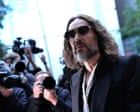
Opening statements are theater. Not proof.
Every time a high-profile defendant walks into a courtroom, live blogs and breaking news alerts treat the prosecution’s opening address as a verdict already read aloud. The words "ruthless" and "calculated" hit the wire, and millions of readers immediately confuse a lawyer’s story with established fact. If you enjoyed this article, you might want to read: this related article.
That is the lazy consensus of modern trial coverage. Speed beats rigor. Headlines reward moral certainty.
When prosecutors frame a defendant’s alleged behavior as calculated and ruthless at the start of a rape and sexual assault trial, they are doing what advocacy requires: presenting their strongest theory of intent and power before a single witness takes the stand under cross-examination. Treating that opening framing as settled truth misleads the public about how criminal trials actually work, what opening statements are legally permitted to do, and why jury rooms rarely turn on dramatic adjectives alone. For another look on this development, check out the latest coverage from Reuters.
The Wrong Question Everyone Asks on Day One
When a major trial begins, people immediately ask: Did the opening statement just sink the defense?
That is the wrong question. It assumes a courtroom is a debate tournament where the sharpest soundbite wins on the spot. In reality, an opening statement is a roadmap of what counsel expects the evidence to show, not evidence itself. Judges routinely instruct jurors—sometimes multiple times—that statements made by lawyers are not proof.
The more useful question is simpler and far less sensational: What specific facts can the prosecution prove beyond a reasonable doubt once memories, texts, timelines, and motives are tested in public?
Public commentary almost always skips that step. Live coverage thrives on momentum. A sharp characterization in a courtroom gets amplified across feeds in seconds, while the tedious, line-by-line testing of witness recollection hours later gets a fraction of the attention. By the time the cross-examination exposes gaps or ambiguity, the initial narrative has already hardened in the public mind.
What People Also Ask—And Why the Premise Is Often Flawed
Does calling someone "calculated" make a conviction more likely?
Not by itself. "Calculated" is a psychological label, not a statutory element that replaces proof of each legal requirement of an offense. Prosecutors use words like "calculated" and "ruthless" to argue against accidental misunderstanding, confusion, or innocent mistake. Yet jurors still have to match testimony, physical or digital records, and legal definitions to a high standard of proof. Rhetoric can shape attention, but it cannot substitute for admissible evidence.
Why do live trial updates sound so decisive on the first day?
Because live coverage is built for real-time consumption, not delayed legal analysis. A prosecutor speaking first sets the frame for the day. Reporters summarizing that speech must capture what was said accurately, which often means repeating forceful language in quotation marks. Readers then mistake accurate reporting of an allegation for confirmation of guilt.
Can a charismatic public figure use fame to sway a jury?
Fame cuts both ways, and rarely in a clean, predictable line. A well-known defendant may arrive with built-in name recognition, loyal followers, or deep public skepticism—sometimes all at once. In my years watching high-stakes litigation and media coverage around public trials, I have seen legal teams and commentators blow enormous energy assuming fame guarantees either sympathy or condemnation. Juries are screened to set outside noise aside, though human bias never vanishes completely. What tends to move a jury isn't celebrity status in the abstract; it is whether the specific witness testimony holds together under pressure and aligns with objective details like messages, locations, and sequence of events.
Inside the Mechanics of Trial Storytelling
To understand why opening statements feel decisive yet remain fragile, look at the structure of a criminal trial.
First comes framing. Prosecutors want jurors to see a pattern or a method rather than isolated, confusing moments. Describing conduct as calculated invites jurors to look at prior context, power dynamics, or preparation as part of a deliberate course of action. Describing it as ruthless signals an indifference to harm or boundaries.
Second comes friction. Once the opening ends, the narrative meets reality. Witnesses answer questions they did not rehearse with the press. Timelines get checked against phone records, travel logs, or third-party accounts. Consent, memory, perception, and credibility get examined under rules of evidence that exclude gossip, speculation, and character assumptions that do not meet strict legal thresholds.
Third comes translation. Legal standards are technical. A juror does not decide based on whether someone seems unpleasant, arrogant, or famous. They decide whether the prosecution proved every required element of each charge to the legal standard required in that jurisdiction.
Thought Experiment: Imagine a scenario where two observers watch the exact same opening statement from a prosecution team. Observer A reads only the headline and the strongest adjectives used in court. Observer B reads the full transcript alongside the judge's instructions reminding the jury that lawyers' remarks are not evidence, then tracks which specific claims are backed by testimony over the next three weeks. Observer A walks away feeling the case is already decided; Observer B sees a set of claims waiting to be tested. That gap between headline certainty and evidentiary proof is where most public misreadings happen.
Expertise vs. Noise: What Trial Coverage Gets Backward
Legal scholars and trial practitioners—figures like Bryan A. Garner on clear legal argument or trial advocacy writers such as Thomas A. Mauet—have long emphasized a basic discipline: persuasive framing only works if the underlying proof carries the weight. A forceful label without matching evidence is a liability once the defense points out the gap.
Here is where conventional trial coverage trips up:
| Common Media Take | What Actually Happens in Court | Why It Matters |
|---|---|---|
| Forceful opening adjectives equal a strong case | Opening remarks are previews, not proof | Overreading day one sets up shock when testimony gets messy |
| Dramatic moments define the trial | Boring timeline and record checks often decide doubts | Credibility lives in small details, not big speeches |
| Public reaction mirrors jury reaction | Jurors hear controlled evidence and legal instructions | Outside outrage or support has no legal standing in deliberations |
Precision matters here. "Ruthless" and "calculated" describe a theory of character and intent. In criminal law, intent and conduct are separate concepts, and each charge has specific legal elements that must be established through evidence admitted at trial. Confusing a prosecutor's characterization with a proven fact turns journalism into a megaphone for whichever side spoke first.
The Downside of Taking the Contrarian View
Pushing back against breathless opening-day coverage has a real cost, and it is worth stating plainly.
If you treat opening rhetoric cautiously and wait for evidence to accumulate, you can sound detached—or worse, indifferent to the seriousness of alleged harm. In cases involving rape and sexual assault, skepticism toward courtroom theatrics can easily be misread as skepticism toward complainants.
That is a serious downside, and I am not asking anyone to confuse evidentiary caution with moral indifference. Allegations of sexual assault are grave. Examining how a trial tests evidence is not the same thing as dismissing a witness or pre-judging an outcome. A contrarian, evidence-first lens can become cold if it forgets that real people and real harm are at the center of the proceeding. The discipline is holding both truths at once: take the allegations seriously, and refuse to treat opening-day arguments as finished proof.
How to Read Trial Coverage Without Getting Played
If you want to follow a high-profile trial without falling for day-one spin, change how you read the updates:
- Separate adjectives from evidence. Whenever you see strong labels in quotation marks, ask what witness, document, or timeline is supposed to back them up.
- Watch cross-examination closely. Opening statements show the best-case version of a side's story. Cross-examination shows where that story bends, holds, or breaks.
- Read the charge elements. Look up what the prosecution actually has to prove for each count rather than relying on shorthand summaries.
- Give multi-week trials room to breathe. Day one is the starting gun, not the finish line.
Wait for the proof.